Maintenance of wooden bathroom vanities: A master's guide to lifelong beauty
Wood in the bathroom is not a vulnerable surface just waiting to be destroyed; it is a living material that gives the room a unique soul and warmth. Many people naturally worry that moisture will warp the wood or that the exclusive walnut finish will fade over the years. But the truth is that well-thought-out maintenance of a wooden bathroom vanity transforms your furniture into a timeless investment that actually becomes more beautiful every day. With the new industry regulations "Säkra Våtrum 2026" (Safe Wet Rooms 2026) as the foundation for a moisture-proof environment, it is your personal care that adds a touch of gold to its durability.
We share your deep respect for raw materials and understand the uncertainty about which cleaning products preserve rather than break down the surface. In this guide, you will learn a simple routine for daily care, and we will show you how to properly oil the wood to maintain its depth and luster. You will discover how small, methodical steps protect against both water and the ravages of time. By balancing technical knowledge with a feel for the material, we create the conditions for a vanity that not only withstands the stresses of everyday life but also ages with an honest and elegant patina.
Key Takeaways
- Learn why immediate wiping of water splashes is the single most important step to protect the wood surface in daily use.
- Discover how regular maintenance of a wooden bathroom vanity with hard wax oil preserves the material's luster and resistance to moisture.
- Gain insight into the differences between solid wood and veneer to adapt your care to the furniture's specific construction.
- Identify signs of dehydration early and learn the correct methods to address white rings and superficial stains.
- Understand the importance of good ventilation as a complement to surface treatment to ensure your investment ages beautifully.
Maintenance Basics: Why Wood in the Bathroom is a Living Investment
Wood is a living material that never stops breathing. When you choose a wooden bathroom vanity, you invite nature into your most private room; an investment that requires an understanding of the material's soul. In a bathroom, the air undergoes constant changes in both temperature and humidity. These fluctuations directly affect the wood's structure. Fibers swell in high humidity and contract when the air becomes drier. Successful maintenance of a wooden bathroom vanity therefore begins with the insight that wood moves and that with proper care, we can harmonize these movements.
The difference between solid wood, veneer, and lacquered surfaces is crucial for how you should approach care. While a lacquered surface acts as a tight seal, an oiled or hard-wax-oiled surface allows the wood to breathe while providing deep protection from within. To understand the technical process behind a durable surface, one can study Wood Finishing Basics, which highlights the importance of preparation and correct application. A solid base treatment from the manufacturer is the foundation. It determines how well the furniture withstands the first few years of water splashes and daily wear and tear.
Unique Wood Properties: Walnut vs. Oak
Walnut is one of the most forgiving materials for the bathroom environment. Its naturally dense fibers and inherent oils create a natural barrier against moisture. It is a wood that exudes understated luxury and whose deep tones effectively hide minor watermarks. Oak, on the other hand, is a symbol of Nordic strength and craftsmanship. Thanks to its high density and natural tannins, oak is extremely durable, provided the surface is regularly saturated. Ash's light, elegant character is beautiful in modern, minimalist bathrooms but requires a more vigilant hand. Without proper protection, ash can darken or lose its crisp tone when exposed to moisture and UV light.
Solid Wood – A Sustainability Aspect
Choosing solid wood is a decision that spans generations. Unlike laminate or simpler composite materials, which are often impossible to repair if damaged, solid wood can be sanded and re-treated. This provides unique assurance that your furniture can regain its original luster even after decades of use. It's about more than just function; it's an emotional connection to genuine natural materials that contributes to a calmer home. For those who wish to delve deeper into the material's benefits, we recommend our guide on solid wood where we explore why quality pays off over time. Proper maintenance of a wooden bathroom vanity ensures that this investment is preserved and that the wood ages with a dignified patina instead of deteriorating.
The Daily Routine: How to Protect Your Vanity from Moisture and Water
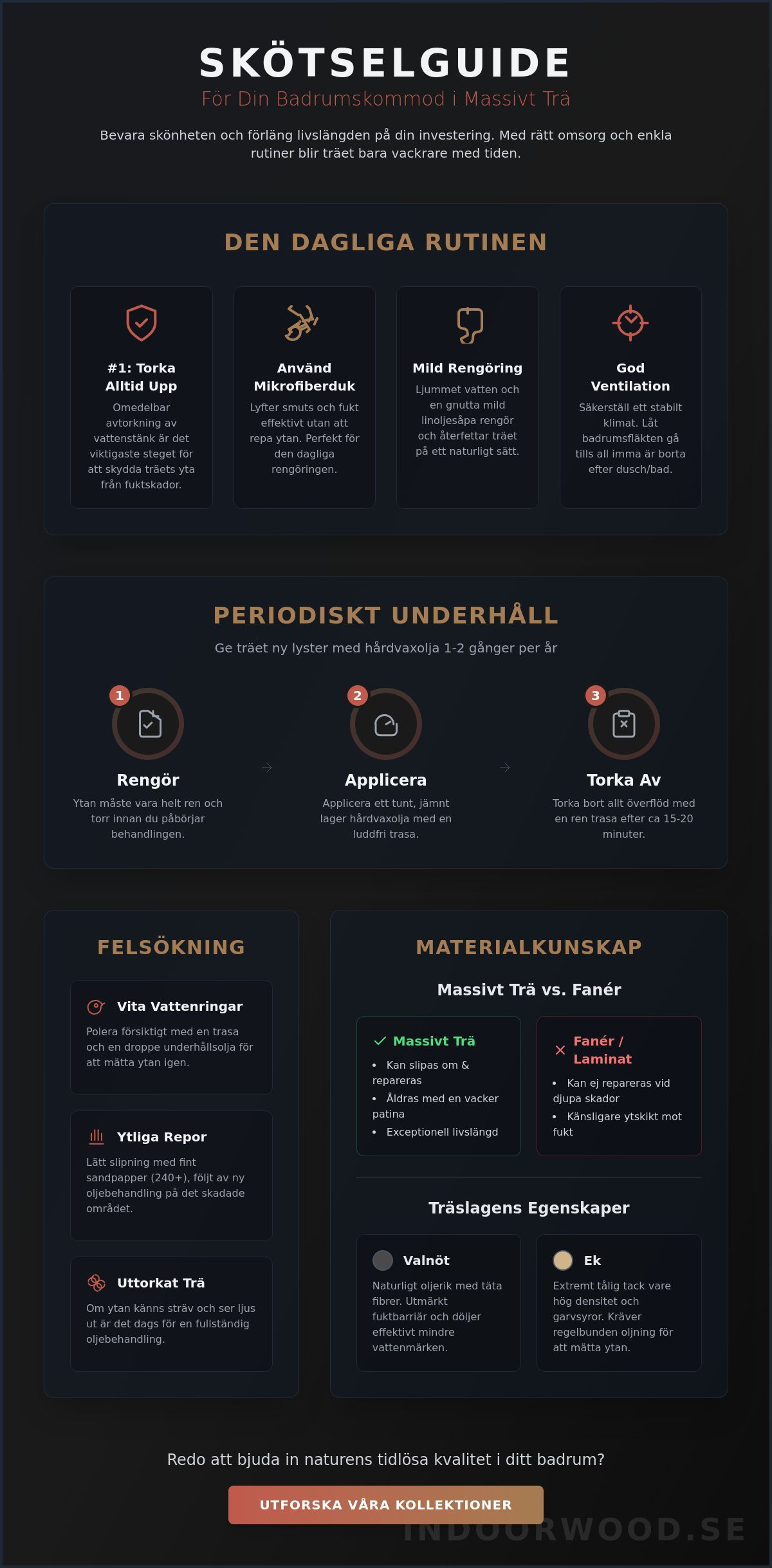
A well-maintained wooden bathroom vanity should feel silky and warm to the touch. It's a tactile experience that testifies to the material's health and the saturation of its natural pores. The foundation for successful maintenance of a wooden bathroom vanity lies not in large, isolated efforts, but in the small gestures you make every day. Wiping away water splashes immediately after use is the single most important habit you can establish. This prevents moisture from penetrating deep into the fibers and causing swelling or unsightly discolorations that can be difficult to remove later.
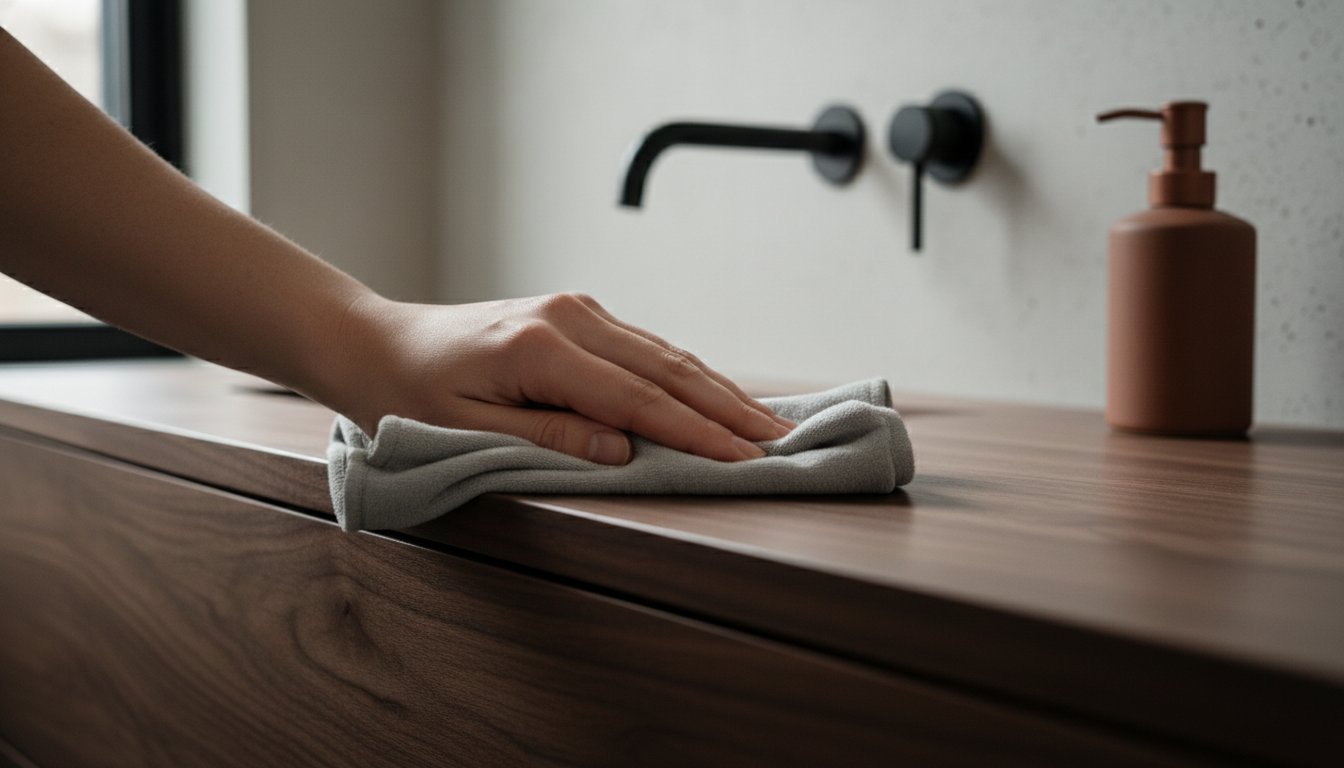
The microfiber cloth is your primary ally in the bathroom. It effectively lifts away dirt and soap residue without scratching the delicate surface. For daily cleaning, lukewarm water and a hint of mild linseed soap are usually sufficient. The soap has a unique ability to naturally re-fatten the wood, enhancing its inherent luster. Scientific studies on how best to Protect Wood from Humidity show that the barrier between the wood and its environment is critical. Your daily care maintains this barrier against the humid bathroom air.
Don't forget the importance of ventilation for the furniture's health. The wood needs an environment where humidity is stable so it doesn't move too much. After a hot shower, the fan should run until the condensation on the mirror is completely gone. This protects not only the vanity but also the entire bathroom structure. If you are looking for furniture designed to withstand these conditions with proper care, you can explore our walnut bathroom vanities that combine craftsmanship with sustainable design.
Cleaning step-by-step
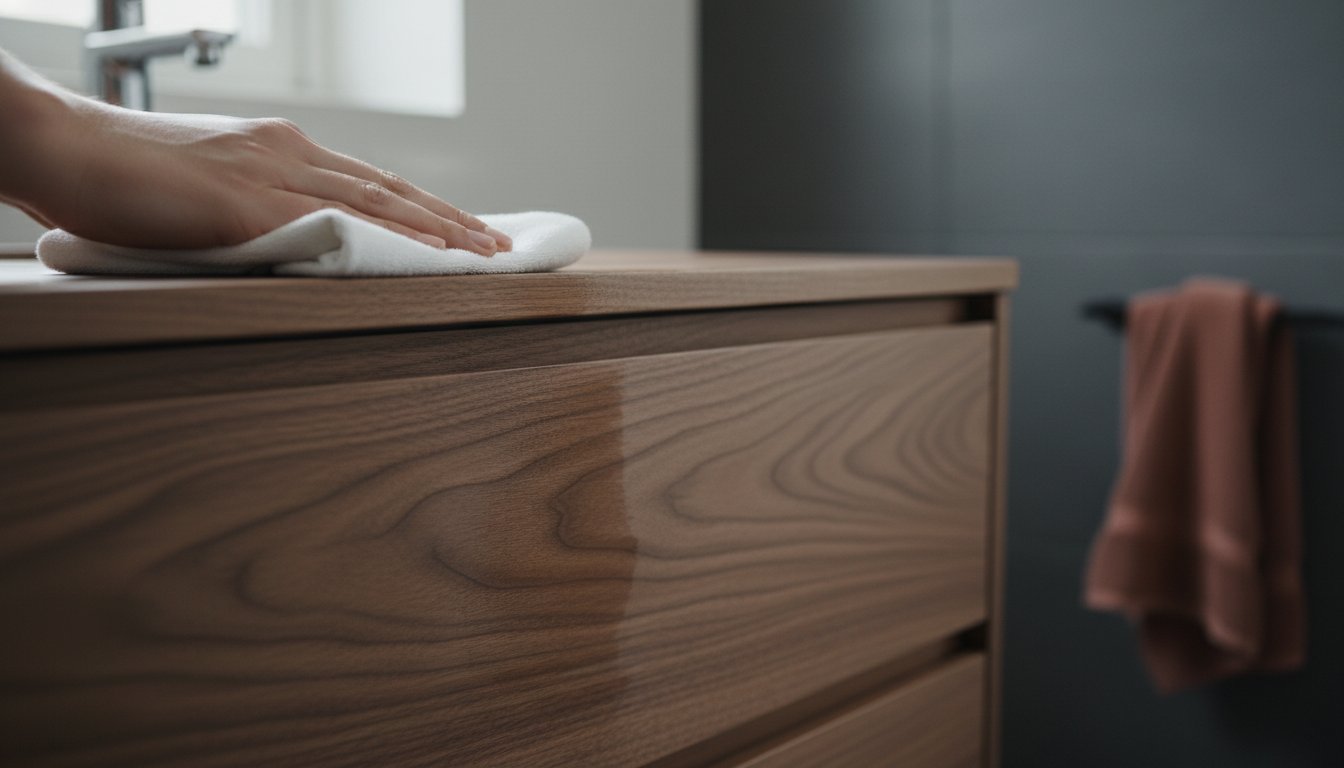
Start by dampening a soft cloth in lukewarm water mixed with a mild soap solution. Always wipe in the direction of the wood grain. This preserves the texture and prevents dirt from being rubbed into the pores. Finish by wiping with a dry, lint-free cloth so that no moisture remains on the surface. Be extra careful around joints and corners where water easily collects. Never leave wet towels hanging against the wood; it is a sure way to create lasting moisture damage that requires more extensive maintenance of a wooden bathroom vanity.
What to avoid in the cleaning cupboard
Certain agents do significantly more harm than good to natural materials. Acidic cleaning agents and lime removers are aggressive to the wood's natural protection and can leave dull, grayish stains. Steam cleaners are another tool that should never come near your bathroom furniture. The hot steam forces moisture extremely deep into the wood and can cause glue joints to release and veneer to bubble. Use too little water rather than too much; the surface should never be wet, only lightly moistened during the actual cleaning process.
In-depth Maintenance: Giving Your Wooden Vanity New Life with the Right Oil
When the wood in your bathroom starts to lose its luster and feels rough to the touch, it's time to re-evaluate the surface protection. A clear sign that your wooden bathroom vanity needs more intensive maintenance is the so-called water test: if a drop of water is absorbed by the wood instead of beading up, the protective barrier has broken down. Understanding The Science Behind Wood Protection is crucial here. It's about creating a surface that both repels liquid and allows the material to breathe, a delicate balance that requires the right products and a methodical approach.
Preparation is the foundation for a lasting result. Before you even open the oil can, the surface must be clinically clean and completely dry. We recommend allowing the furniture to rest for at least 24 hours after cleaning to ensure no residual moisture remains deep within the pores. A light sanding with fine sandpaper opens up the wood fibers, making them receptive to the new treatment. It's a meditative task where your touch guides the result and prepares the wood for its new protective layer.
The re-oiling process
To achieve a professional result, you should follow a strict order. After the surface has dried, lightly sand with grit 240 to 320 in the direction of the wood grain. Then apply the hard wax oil thinly with a lint-free cloth or a high-quality brush. Allow the oil to work for 15 to 20 minutes before polishing off any excess with a clean cloth. This step is critical; leftover oil can create a sticky surface that attracts dirt.
The magic of hard wax oil
At Indoor Wood, we exclusively prefer hard wax oil, and specifically brands like OSMO, for our bathroom furniture. Unlike traditional wood oil which only saturates the surface, hard wax oil combines the penetrating properties of oil with the protective surface of wax. This creates a diffusion-open protection that is extremely resistant to both water and household chemicals. The choice between a matte, satin, or glossy finish determines how light is reflected and how the wood's depth is perceived in the room.
By performing this in-depth maintenance of a wooden bathroom vanity one to two times a year, or as needed, you ensure that the furniture retains its resistance. It is an investment in time that pays off through furniture that not only withstands the harsh bathroom environment but actually becomes more beautiful and gains more character over the years. Properly executed, the treatment becomes a natural part of the wood's life cycle and a guarantee of its lifelong beauty.
Troubleshooting: How to Handle Stains, Scratches, and Drying Out
Even the most careful owner can experience minor mishaps in everyday life. A forgotten toothbrush mug or a leaking perfume bottle can leave marks that disturb an otherwise perfect surface. When performing maintenance of a wooden bathroom vanity, it's important to know that most damage can be remedied without the furniture losing its essence. White rings are one of the most common problems; they occur when moisture penetrates beneath the outermost layer of hard wax oil but does not reach the wood itself. Often, a very light sanding and a fresh drop of oil are enough to make the ring disappear and the surface regain its uniform luster.
Dark stains are more demanding. They often indicate that moisture has remained for too long, causing a reaction deep within the wood fibers. Patience is required here. The wood must be allowed to dry completely before carefully sanding down to healthy wood and restoring the protection. If the wood feels rough or looks grayish, it's a clear sign that the surface protection is depleted and the wood is thirsty for new nourishment. Acting promptly at these signs is the core of sustainable maintenance of a wooden bathroom vanity; it prevents small imperfections from becoming permanent damage.
Emergency measures in case of water damage
If an accident occurs and a larger amount of water is spilled, speed is your best friend. Absorb the liquid immediately with paper towels; press firmly but do not rub, as this can force moisture deeper into the pores. A common pitfall is to use a hairdryer to speed up drying. Never do that. The intense heat can cause the wood to dry unevenly, leading to cracking and stress in the construction. Instead, let the room's natural ventilation do the work at a calm and steady pace.
Surface repair
For deeper cuts in solid wood, wax sticks work excellent as a repair method. By blending different shades of wax, you can imitate the wood's natural color variations and make the repair almost invisible. To understand how the wood reacts in depth, we recommend reading more about walnut bathroom vanities to get a better understanding of the material's composition and properties. If the damage feels too extensive for a simple spot treatment, it may be time to assess the entire piece of furniture and carry out a full re-treatment.
Do you need to upgrade your bathroom with materials that can withstand aging and maintenance? Discover our solid walnut vanity cabinets, built with craftsmanship to last for generations.
Indoor Wood's Philosophy: Quality That Ages with Dignity
Our philosophy rests on a deep respect for nature's own timeline. We don't chase fleeting trends that fade after a season; instead, we create furniture designed to withstand the test of time, both aesthetically and functionally. In this context, proper maintenance of a wooden bathroom vanity is not a burden, but a way to care for an investment that only grows in character. By combining traditional craftsmanship with modern surface treatments, we create conditions for an everyday life where luxury and practical function live in total harmony. Each passing year leaves its mark on the wood, but with proper care, these marks become a beautiful patina rather than a sign of decay.
We see ourselves as your advisory partner throughout the furniture's lifecycle. Our surface treatments are specifically developed to simplify your daily life and make wooden bathroom vanity maintenance feel both intuitive and manageable. It is this uncompromising commitment to longevity that defines Indoor Wood. We believe in honesty in material choices and transparency in execution, which provides you, the customer, with the assurance that your interior is built to last for generations. Our expertise is always available for your questions, whether it concerns a simple stain or a more comprehensive surface re-treatment.
The craftsmanship behind your vanity
Every piece of furniture begins with a careful selection of raw materials, where we handpick the pieces of walnut and oak that have the best potential to meet the unique challenges of the bathroom. The precision in every joint is about more than just aesthetics; it's a technical necessity to minimize the risk of moisture cracks and unwanted movements in the wood. To gain a deeper understanding of how we apply the same high standards of quality to other areas of the home, you can explore our guide to wooden kitchens. It clearly shows how the breadth of craftsmanship and our passion for detail create a consistent thread of quality throughout your interior.
Your next step towards a more beautiful bathroom
Choosing the right wood for your bathroom is a decision best made by experiencing the material with all your senses. We invite you to our showrooms where you can feel the tactile surfaces and see the craftsmanship up close. To ensure you feel completely confident in your choice, we offer the opportunity to order color samples, so you can see how the wood reacts in your specific lighting and against your other material choices. We believe in personal meetings and are happy to offer a consultation for your bathroom renovation. Together, we create an environment that is not only beautiful for the moment but is designed for a lifetime of beauty and function.
Invest in a future of natural beauty
Wood in the bathroom is a choice that testifies to a fondness for authentic materials and timeless design. By establishing a simple routine for daily wiping and performing thorough maintenance of a wooden bathroom vanity with hard wax oil, you ensure that your furniture retains its luster for decades. It's about working with the material rather than against it; understanding its need for a balance between moisture and ventilation. Your care transforms a functional piece of furniture into an heirloom that only becomes more beautiful with time.
As a family-owned company with a genuine passion for craftsmanship, Indoor Wood offers custom-made solutions in fine wood, designed to withstand the challenges of everyday life without compromising on elegance. Feel free to visit our showrooms in Stockholm or Gothenburg to experience the quality firsthand. Discover our exclusive walnut bathroom vanities and let us help you realize your vision of a harmonious home. With the right knowledge and materials, the path to a lifelong beautiful bathroom is both inspiring and simple.
Frequent Questions About Wood Care
How often do I need to oil my wooden bathroom vanity?
You should oil your vanity once or twice a year, or as soon as the surface starts to feel rough and loses its luster. In a humid bathroom environment, it is crucial to keep the wood saturated to prevent water from penetrating the pores. A simple way to test the need is to drop a little water on the surface; if the water does not bead up, it's time for a new treatment with hard wax oil.
Can I use regular cleaning products on my wooden vanity?
Avoid strong chemicals and instead use a mild soap solution or linseed oil soap for daily cleaning. Acidic cleaning agents and limescale removers can quickly break down the wood's natural protection and leave unsightly dull spots that are difficult to repair. By using a well-wrung microfibre cloth, you ensure that the surface is clean without exposing the wood to unnecessary liquid during your cleaning routine.
What do I do if there's a water stain on the wood?
A light water stain is best remedied by a very light sanding with fine sandpaper followed by a new application of hard wax oil. If the stain is dark, it indicates that moisture has penetrated deeper into the fibers, which requires the wood to dry out completely before starting the repair. Speed is key in wooden bathroom vanity maintenance; always wipe up spills immediately to avoid permanent marks.
Is solid wood better than veneer in the bathroom?
Solid wood offers superior longevity as it can be sanded and renovated endlessly if needed. Veneer is often dimensionally stable but has a limited wear layer that does not allow for the same in-depth repairs as a solid piece of furniture. For an exclusive environment where the furniture should age with dignity, solid walnut or oak is the obvious choice thanks to the material's natural weight and genuine feel.
How does underfloor heating affect my wooden bathroom furniture?
Underfloor heating can cause the wood to dry out faster, which places higher demands on keeping the surface well-oiled and saturated. The warm air rising from the floor lowers the relative humidity around the furniture, which can lead to small tensions in the wood's structure. Ensure good ventilation and check the surface extra carefully during the winter months when indoor air is generally drier in our Nordic homes.
Can I change the color of my wooden vanity by sanding and re-staining it?
It is entirely possible to change the character of your furniture by sanding it down to bare wood and applying a new stain or colored oil. However, this requires great craftsmanship to achieve an even result, especially on large surfaces where the wood's absorbency can vary. We recommend that you always test on a hidden surface first to see how your particular piece of wood absorbs the pigments before treating the entire vanity.
What oil do you recommend for walnut bathroom furniture?
We exclusively recommend hard wax oil from brands like Osmo to preserve the deep, warm tones of walnut. This type of product combines the oil's ability to penetrate deep into the pores with the wax's protective surface that repels water. It provides a breathable protection that is necessary for sustainable wooden bathroom vanity maintenance in environments where splashes and high humidity are part of everyday life.
How do I prevent the wood from fading due to sunlight in the bathroom?
To minimize fading, you should use a finish with built-in UV protection and avoid placing the furniture in direct, strong sunlight from large windows. Wood is a natural material that naturally changes hue over time when exposed to light; walnut tends to lighten while oak often darkens slightly. Thin curtains or UV film on the window are effective ways to preserve the wood's original color without hiding its natural beauty.