Preventing Moisture Damage to Wooden Bathroom Furniture: Expert Guide 2026
What if the secret to a timeless bathroom isn't about avoiding wood, but about understanding how it breathes? Many harbor a justified concern that an exclusive investment in hardwood might be lost due to water splashes or inadequate ventilation, but the truth is that natural materials can thrive even in demanding environments. Successfully avoiding moisture damage to wooden furniture in bathrooms fundamentally involves working with the material's natural properties rather than against them, especially now that the new industry regulations, Säkra Våtrum 2026 (Safe Wet Rooms 2026), set clearer requirements for both floor slope and wet zones to protect the home's most sensitive surfaces.
We share your passion for genuine craftsmanship and understand the uncertainty that can arise concerning the choice of cleaning products or how to handle moisture challenges in existing environments. In this guide, you will learn how to preserve the elegance of your solid walnut or oak furniture through conscious material choices and professional care. We promise a deep dive into how to create a harmonious climate where the wood can shine, complemented by a practical checklist for daily care and knowledge on how to choose the right quality from the very beginning to ensure a sustainable investment.
Here's what you'll learn in this guide:
- Understanding how wood's cell structure reacts to humidity and how to protect it from long-term exposure.
- Insight into why solid oak and walnut are the most durable material choices for the bathroom's unique climate.
- Concrete methods to avoid moisture damage to wooden furniture in bathrooms through strategic placement and optimal air circulation.
- Simple yet effective maintenance routines that preserve the material's natural luster and tactile feel over time.
- Knowledge of how genuine craftsmanship and proper construction create a safe and timeless investment in your home.
Why does moisture damage occur in wooden bathroom furniture?
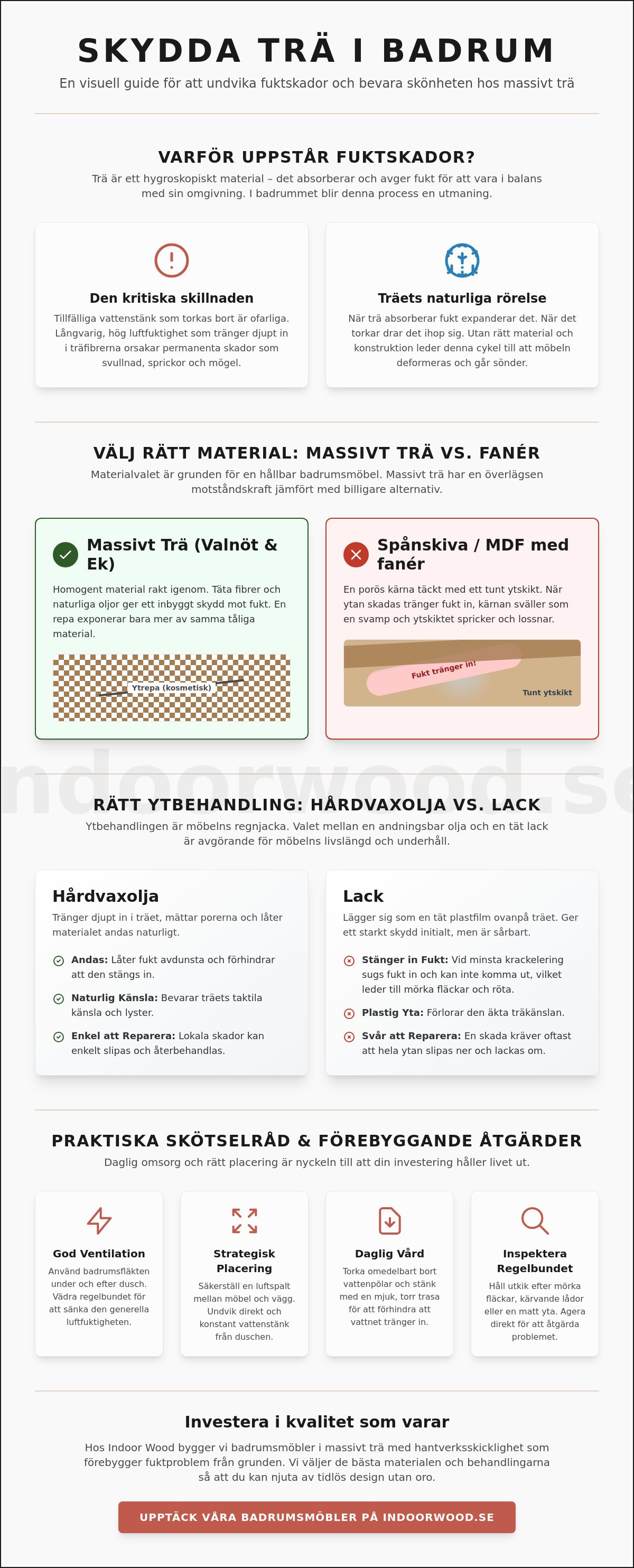
Wood is a living, hygroscopic material that constantly strives to be in equilibrium with its surroundings. This means that wood absorbs and releases moisture depending on the relative humidity of the air. In a bathroom, this balancing act is particularly challenging. When the warm steam from the morning shower fills the room, the wood fibers absorb microscopic water molecules, causing the cell structure to expand. This is a natural process, but problems arise when moisture persists. To successfully avoid moisture damage to wooden furniture in bathrooms, an understanding of the difference between temporary water splashes, which are easily wiped away, and long-term, high humidity that penetrates deep into the material is required.
A critical factor is the choice of material. Cheaper furniture made of particleboard or MDF is particularly vulnerable at edges and joints. If water penetrates under a thin laminate or veneer surface, the porous material absorbs the liquid like a sponge, causing the furniture to swell and the surface layer to crack. Solid wood, such as oak or walnut, has completely different resistance. By studying various wood preservation methods, we see that the right surface treatment combined with the wood's natural oils creates a barrier that protects the core. According to the new industry regulations, Säkra Våtrum 2026, the entire floor area is classified as Wet Zone 1, emphasizing the importance that furniture not only tolerates steam but also the moisture that can migrate upwards from the floor.
Capillary action and the natural movement of wood
Water finds its way in where resistance is lowest, usually through end grain and open pores. Capillary action causes moisture to be drawn inwards, which can cause tension in the construction. Unlike inert materials, solid wood moves logically. It expands and contracts in a predictable rhythm. The risk of permanent damage increases dramatically if the furniture is installed without an adequate air gap against the wall. Without circulation, moisture becomes trapped, creating a breeding ground for rot in the hidden parts of your bathroom vanity.
Signs of incipient moisture damage to watch out for
It is wise to act at the first sign of change. Small, dark spots in the wood are often the first warning signs that mold spores have begun to adhere to the surface. You should also be aware if drawers or doors suddenly start to stick, as this indicates an expansion in the wood that has not had time to recede. If the finish begins to look dull or crackles, the protection has weakened, and it is time for maintenance before moisture penetrates deeper into the noble wood fibers.
Choose the right wood species and finish for maximum durability
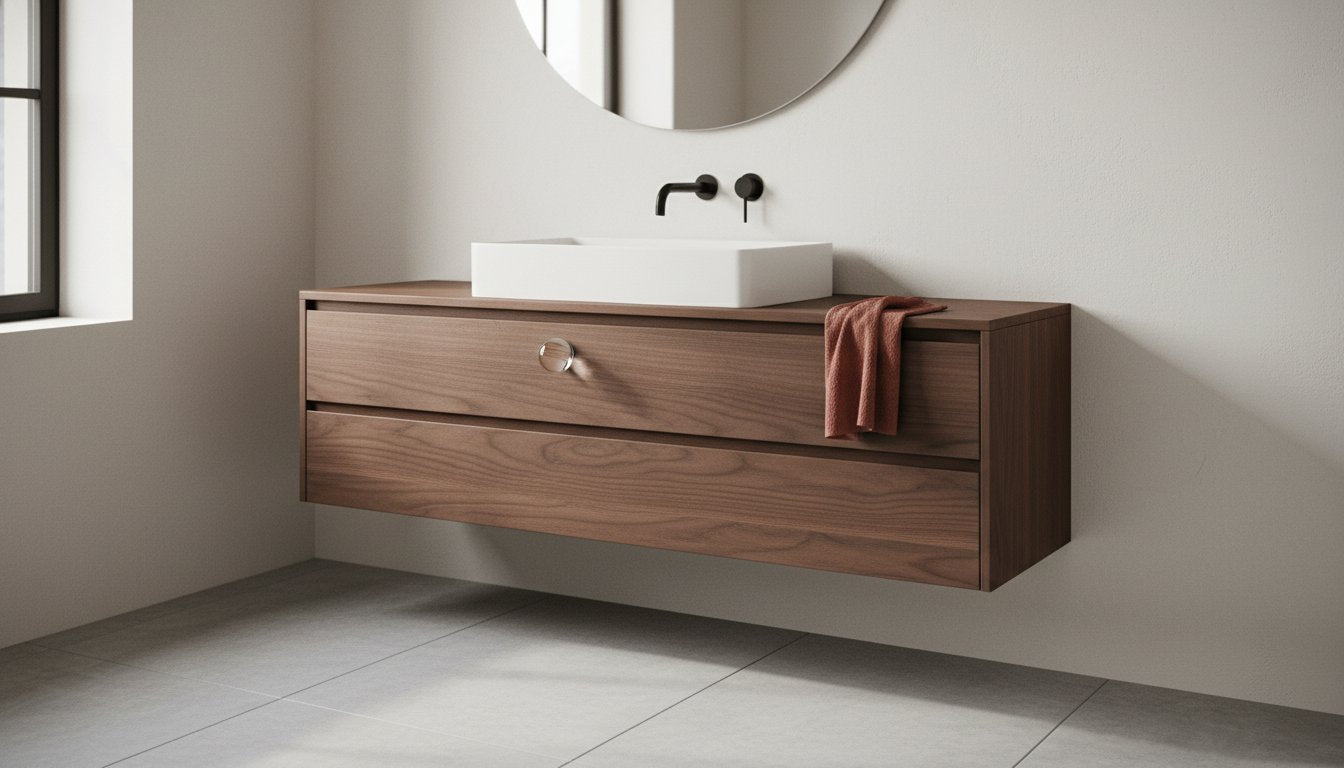
The choice of material is the foundation for successfully avoiding moisture damage to wooden furniture in bathrooms. A beautiful surface is not enough; the wood must have an internal structure that can withstand stress without losing its shape. Choosing the right wood species from the start significantly reduces the risk of future problems. A walnut bathroom vanity is not just an aesthetic choice; it is a technical investment in durability that pays off over the years. By prioritizing quality and the right conditions, you create an environment where luxury and function coexist in perfect harmony.
Walnut and oak: Nature's own moisture barriers
Walnut stands out with its dense fibers and rich content of natural oils. These oils act as a built-in barrier that actively repels moisture. Oak, on the other hand, has a long tradition as one of the most reliable materials in humid environments, historically used in everything from shipbuilding to wine barrels. The biggest difference, however, lies in the construction. We always advocate solid wood over veneer. While veneer consists of a thin layer glued to a moisture-sensitive core, solid wood is homogeneous throughout. If a scratch occurs in solid wood, only more wood of the same quality is exposed, while veneer risks detaching from the substrate when moisture penetrates behind the glue joint.
Hard wax oil vs. Lacquer: Which protection is best?
When it comes to surface treatment, the choice between hard wax oil and lacquer is crucial for the furniture's lifespan. Research on the effectiveness of various finishes shows that the ability to block moisture varies greatly depending on the application and the material's properties. We prefer hard wax oil because it penetrates deep into the wood's pores without creating a dense plastic film. This allows the wood to breathe and move naturally with the bathroom's changing climate. While a lacquered surface can be completely sealed initially, the slightest crack allows moisture to be absorbed and trapped, quickly leading to dark spots and rot.
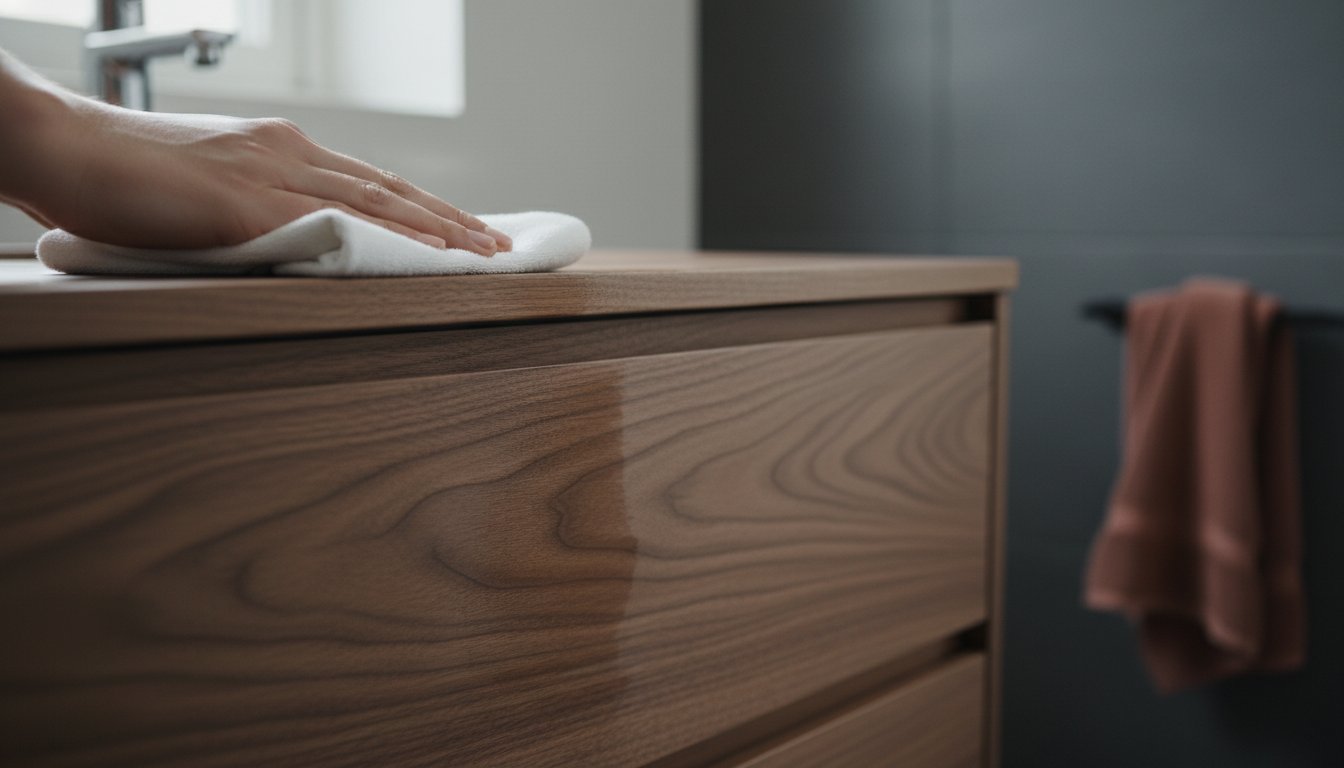
Hard wax oil provides a tactile surface where you can actually feel the wood's texture and warmth. It is also easy to maintain on your own. You can easily test if your furniture needs a new coat of oil by placing a drop of water on the surface. If the drop beads up, the protection is intact. If it is absorbed and leaves a dark spot, it's time to reapply the treatment. Investing in a walnut bathroom vanity with a high-quality basic treatment is the surest way to guarantee furniture that ages gracefully and withstands everyday wear for decades.
Strategic placement and ventilation: Protect your bathroom vanity
Choosing the right material is half the battle, but the other half is determined by how you place your furniture in the room. By carefully planning the bathroom's layout, you can effectively avoid moisture damage to wooden furniture in bathrooms without compromising the aesthetic vision. It's about creating conditions where water and wood are never forced into a direct confrontation. Even the best-treated wood benefits from a climate where moisture can be quickly removed rather than lingering on surfaces.
Zoning in the bathroom
According to the new industry regulations Säkra Våtrum 2026, the entire floor area is now classified as Wet Zone 1. Walls within one meter of the shower or bathtub also belong to Zone 1, meaning the highest requirements for waterproofing and moisture protection. To preserve the luster and shape of a walnut bathroom vanity, it should be placed in Zone 2, i.e., on wall surfaces outside the direct spray area. In smaller bathrooms where distances are short, the choice of shower glass becomes crucial. A fixed glass wall with a proper sealing strip against the floor acts as an effective shield. It keeps water splashes away from the wood while allowing light to flow freely into the room.
Optimize ventilation for the sake of the wood
Air circulation is wood's best friend. Furniture mounted tightly against a wall without an air gap risks trapping moisture, which can eventually lead to mold growth in hidden areas. We always recommend a distance of at least a few millimeters between the back of the furniture and the wall to allow air to circulate freely. Modern ventilation technology has made great strides in protecting our homes. A humidity-controlled PAX fan or a similar system detects when humidity rises and actively works until the room is dry again.
A good rule of thumb for protecting your furniture is the rule of dry surfaces. All surfaces in the bathroom should feel dry to the touch within 30 minutes after showering. If the fog on the mirror lingers longer than that, it's a clear sign that ventilation needs to be reviewed. Check that the air supply gap under the bathroom door is sufficient, otherwise the fan cannot work effectively. By combining smart placement with active airflow, you create an environment where your wooden furniture can age gracefully and retain its tactile beauty for decades.
Practical tips and maintenance routines for wood in wet rooms
Investing in solid wood is the beginning of a lifelong relationship with your bathroom. To truly succeed in avoiding moisture damage to wooden furniture in bathrooms, it is not enough to simply choose the right materials and have technical ventilation; it also requires mindfulness in daily use. It's not about time-consuming projects or difficult processes. Rather, it's about small, meaningful gestures that preserve the wood's soul and luster over time. By integrating simple routines into your daily life, you ensure that moisture never gets the chance to take hold in the noble fibers.
The daily 10-second rule
A soft microfiber cloth is your absolute most important tool for maintaining the condition of your furniture. After each use of the washbasin, you should quickly wipe down the horizontal surfaces where water splashes often land. It is precisely here that water can accumulate, and if left, it can eventually cause permanent marks in the finish. Pay extra attention to the edges around the washbasin where water can easily creep down. Another common but often overlooked risk is leaving wet towels hanging over drawer fronts or cabinet doors. The moisture from the towel slowly penetrates the wood and can lead to expansion, causing doors to stick or the wood to swell.
Cleaning and rehydration
When it comes to cleaning, the keyword is gentleness. You should avoid aggressive chemicals, bleach, or scouring agents that risk breaking down the protective oils in the wood. A mild soap mixed with lukewarm water is usually all that is needed to effectively remove dirt and soap residue without damaging the surface. If you notice that the surface begins to look dull, or if water no longer beads on the surface, it is a clear sign that the wood needs rehydration. Applying a thin layer of maintenance wax or hard wax oil once a year acts as an invisible shield against the bathroom's humid environment.
Soap residues can be particularly insidious as they often contain grease-dissolving substances that also affect the wood's natural protection. If you spill soap, toothpaste, or cosmetics on your vanity, you should wipe it off immediately with a damp cloth. By having a concrete care plan, you transform maintenance from a burden into a moment of artisanal care for your home. If you are looking for furniture that is built to age gracefully and withstand these stresses, you can explore our range of walnut bathroom vanities that are carefully pre-treated for maximum durability.
Invest in Quality: How Indoor Wood prevents moisture problems
Our philosophy rests on a deep respect for wood as a living raw material. To truly succeed in avoiding moisture damage to wooden furniture in bathrooms, a beautiful surface is not enough; the construction must be carefully considered from the very first cut. We build furniture that is designed to withstand the changing Nordic climate, where humidity can vary greatly between seasons. By combining traditional craftsmanship with modern precision, we create furniture that is not only aesthetic masterpieces but also technically equipped for the demanding bathroom environment.
The same uncompromising approach to sustainability that we apply to a wooden kitchen permeates our bathroom solutions. An investment in solid wood from us is an investment in the future. We understand that every home is unique, and therefore we offer custom-made solutions where each component is adapted to optimize both function and lifespan. It's about creating a seamless integration where the furniture gets the right conditions to breathe and dry, which is fundamental to preserving its integrity for decades.
Craftsmanship meets modern technology
Precision is our primary method of wood protection. By working with extremely tight tolerances in joints and seams, we minimize the risk of moisture finding its way into the construction. We carefully select each piece of walnut and oak, prioritizing timber with the right density and grain direction for maximum stability. As your advisory partner, we help you navigate between different material choices and finishes, so you can feel confident that your bathroom vanity or tall cabinet in solid walnut will handle the demands of everyday life with maintained elegance.
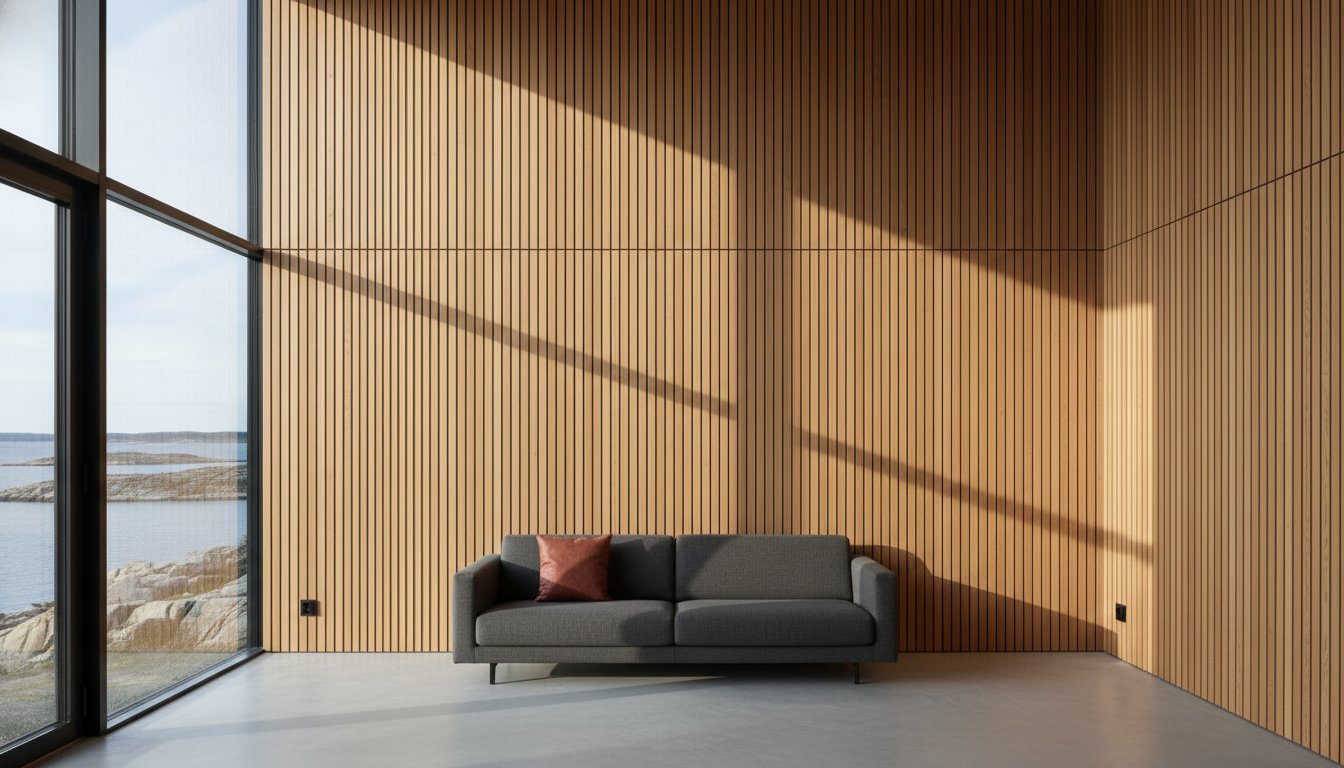
Create a cohesive look with acoustic panels
For those who want to soften the often hard surfaces of tiles and stone in the bathroom, an acoustic panel is an excellent choice. It gives the room a warm, tactile feel and a sound environment that exudes calm and luxury. When installing in wet rooms, however, it is especially important to follow our advice regarding air circulation. The panels should be installed with a distance that allows air to circulate behind the wooden slats, preventing moisture from becoming trapped against the wall. By using the same wood species in both acoustic panels and vanity, you create a cohesive, architectural style that connects the bathroom with the rest of the home in a natural and trustworthy way.
We believe in long-term relationships, both with our customers and with the materials we work with. Every project is handled with the utmost care, from the first sketch to the finished furniture that will now find its place in your home. By choosing quality that is built to last, you create a bathroom that is not only beautiful today, but that will continue to deliver beauty and function for many years to come.
Create a bathroom that ages gracefully
Combining the warm aesthetics of wood with the humid environment of a bathroom is entirely possible when prioritizing solid material choices and active airflow. By following the simple maintenance routines we have covered and ensuring that the room dries thoroughly after each use, you can effectively avoid moisture damage to wooden furniture in bathrooms. It is fundamentally about allowing the craftsmanship to breathe and giving natural materials the conditions they deserve to maintain their luster and form through all stages of life.
As a family-owned company with a deep focus on sustainability, we deliver our furniture directly from the manufacturer without intermediaries. This allows us to guarantee uncompromising quality and personal care in every single project. For those who want to experience the tactile properties of the materials and see our solutions up close, our showrooms in Stockholm and Gothenburg are available for personal service and expertise.
We look forward to being your advisory partner in creating an environment where luxury and function meet in perfect harmony. Explore our exclusive solid walnut bathroom vanities and take the first step towards a timeless bathroom that exudes genuine craftsmanship and long-term security.
Frequently Asked Questions About Wood Furniture in Bathrooms
Can you really have real wood in a bathroom?
Yes, it's perfectly fine to use real wood in the bathroom as long as you choose high-quality materials and ensure good ventilation. Wood has been used in wet environments for centuries, from shipbuilding to wine barrels, thanks to its natural durability. By using modern surface treatments like hardwax oil, you create effective protection that preserves the tactile warmth of the wood while safely resisting daily moisture exposure.
How often do I need to oil my wooden bathroom furniture?
As a rule, you should maintain your furniture once a year, but the need depends on how much it is exposed to water. You can easily check the protection by performing a water droplet test on the surface. If the water beads up, the protection is intact, but if it is absorbed, you should apply a new layer of hardwax oil. Regular maintenance is the most effective way to prevent moisture damage to wooden bathroom furniture over time.
Which type of wood best tolerates moisture in the bathroom?
Oak and walnut are the most suitable wood types due to their high density and natural oil content. Oak has a documented history of withstanding moist environments without rotting, while walnut's dense fiber structure provides a natural barrier against wetness. These hardwoods are technically superior to softer wood types or composite materials when it comes to maintaining shape and function in a bathroom climate.
What do I do if I discover a water stain on my vanity?
Immediately wipe dry with a soft microfiber cloth and inspect whether the stain has penetrated the surface treatment. If the stain is superficial, a gentle cleaning with mild soap is usually sufficient. Should the moisture have reached deeper, you may need to lightly sand the area with fine sandpaper and then apply new hardwax oil. Acting quickly prevents moisture from causing permanent discoloration in the wood's cell structure.
Do I need a special fan if I have wooden furniture?
You need a fan that can effectively manage the room's relative humidity, preferably a humidity-controlled model that reacts automatically when showering. The goal is for the bathroom surfaces to be dry within 30 minutes after use to create a healthy climate for both materials and people. Well-functioning ventilation is a fundamental prerequisite for preventing moisture damage to wooden bathroom furniture and significantly extending the furniture's lifespan.
Is solid wood better than veneer for preventing moisture damage?
Solid wood is significantly more durable than veneer because it is a homogeneous material throughout its construction. If damage occurs in solid wood, the surface can be sanded and re-oiled to look like new again. Veneer, on the other hand, consists of a thin surface layer glued to a core of, for example, MDF. If moisture penetrates behind the glue joint, the core swells, causing the veneer to detach, damage that is often impossible to repair neatly.
How does underfloor heating affect wooden furniture in the bathroom?
Underfloor heating is generally positive because it helps to dry moisture on the floor, but it requires the furniture to be mounted correctly. It is important to have an air gap between the furniture and the warm floor, or to choose wall-mounted models, to prevent the wood from drying out too quickly and cracking. By allowing air to circulate freely around the furniture, you prevent the material from becoming brittle due to unilateral heat exposure.
Can I mount an acoustic panel on the bathroom wall?
Yes, it's fine as long as the panel is placed in Wet Zone 2 and mounted with an air gap behind it to prevent trapped moisture. It is crucial to use a backing that tolerates moisture and that the wooden slats are properly treated with hardwax oil. An acoustic panel in the bathroom not only provides an exclusive feel and better sound environment but also creates a beautiful visual connection to the home's other rooms in a sustainable way.