Cleaning a Walnut Vanity Cabinet: Expert Maintenance Guide 2026
What happens if your bathroom's most elegant piece of furniture is also the most misunderstood? Cleaning walnut vanity units is less about scrubbing away dirt and more about gently preserving the wood's natural moisture balance in one of the home's most demanding rooms. We understand that nagging worry that water splashes will leave permanent marks or that the wrong chemicals will strip the wood of its soul; it's an uncertainty that often leads to the exclusive, dark luster fading unnecessarily.
You are absolutely right to be particular about what you apply to your fine wood to protect your investment. In this expert guide, you will learn how to preserve the deep, vibrant tone of your walnut vanity unit by using the right cleaning methods and protective treatments that respect the craftsmanship of the material. We will go through the differences between caring for solid wood and veneer, which mild agents actually work, and how you can easily create a hygienic environment without risking the integrity of the material.
Key Takeaways
- Learn why balancing humidity and understanding the difference between solid wood and veneer are crucial for the furniture's longevity.
- Discover the gentlest method for cleaning walnut vanity units with simple tools like microfiber cloths and mild soap.
- Understand why everyday products like toothpaste can damage the surface and how to safely remove stubborn lime and soap residues.
- Understand how often you should oil your solid walnut to preserve its deep luster and protect the wood from drying out.
- See how the choice of high-quality materials and durable surface treatments from the start facilitates ongoing maintenance in the bathroom.
Why do walnut vanity units require special care?
Walnut is one of the most distinctive wood types we work with. It possesses an inherent warmth and a deep, dark grain that few other materials can match. But behind its exclusive surface lies a living material that constantly interacts with its surroundings. Understanding this is the first step when cleaning walnut vanity units in a way that preserves their beauty for generations. The wood reacts to natural fluctuations in humidity by expanding and contracting, a process that places high demands on both construction and daily care.
Many people make the mistake of using conventional bathroom cleaning products on their wooden furniture. These products are often designed to dissolve lime on porcelain or tiles, meaning they contain acids or strong chemicals like ammonia and acetone. For fine wood, these substances are devastating. They penetrate and dissolve the natural oils, causing the surface to dry out, lose its luster, and in the worst case, crack. Before you start cleaning walnut vanity units, you must therefore view your furniture as a piece of craftsmanship rather than a lifeless surface.
Walnut's unique properties in the bathroom environment
Walnut has a high density that provides natural resistance, but the wood's pores are still open to moisture absorption. When you shower, the room fills with steam that softens the wood fibers. If the moisture is not allowed to evaporate or if it penetrates too deeply, it can lead to discoloration. A well-maintained walnut bathroom vanity, however, has the ability to age with unique dignity. With proper care, the wood develops a patina that actually makes the furniture appear more beautiful and vibrant after ten years than when it was new.
Identify your surface treatment
In professional wood finishing, the goal is always to balance aesthetics with protection. To properly care for your furniture, you need to know if it is oiled, waxed, or lacquered. An oiled surface feels tactile and natural; you can feel the wood's texture under your fingertips. The oil penetrates deeply and highlights the dark grain but requires regular maintenance to prevent drying out. Lacquered walnut, on the other hand, has a harder protective film that often feels smoother. Lacquer provides strong protection against water splashes and requires less ongoing work, but if a scratch occurs, it is much more difficult to spot-repair than an oiled surface. Knowing which treatment your furniture has is crucial for choosing the right method for cleaning and long-term protection.
Step-by-step: Daily and weekly cleaning
Caring for a living material does not require an arsenal of harsh chemicals. Rather, it's about establishing simple routines that respect the wood's natural structure. To effectively clean walnut vanity units, you only need three basic tools: high-quality microfiber cloths, a mild soap (preferably linseed oil soap), and lukewarm water. It's the simplicity of the process that ensures the furniture's character is preserved without unnecessarily wearing down the surface through aggressive friction or drying agents.
The foundation of all fine wood maintenance is moisture control. Since the bathroom is an environment with a high load of water splashes, daily routine becomes your most important ally for long-term durability. It's rarely the dirt itself that is the biggest challenge, but the minerals and lime residues that remain when water droplets are allowed to evaporate directly on the wood surface. These can over time create dull spots that are difficult to remove without affecting the underlying finish.
Daily wiping
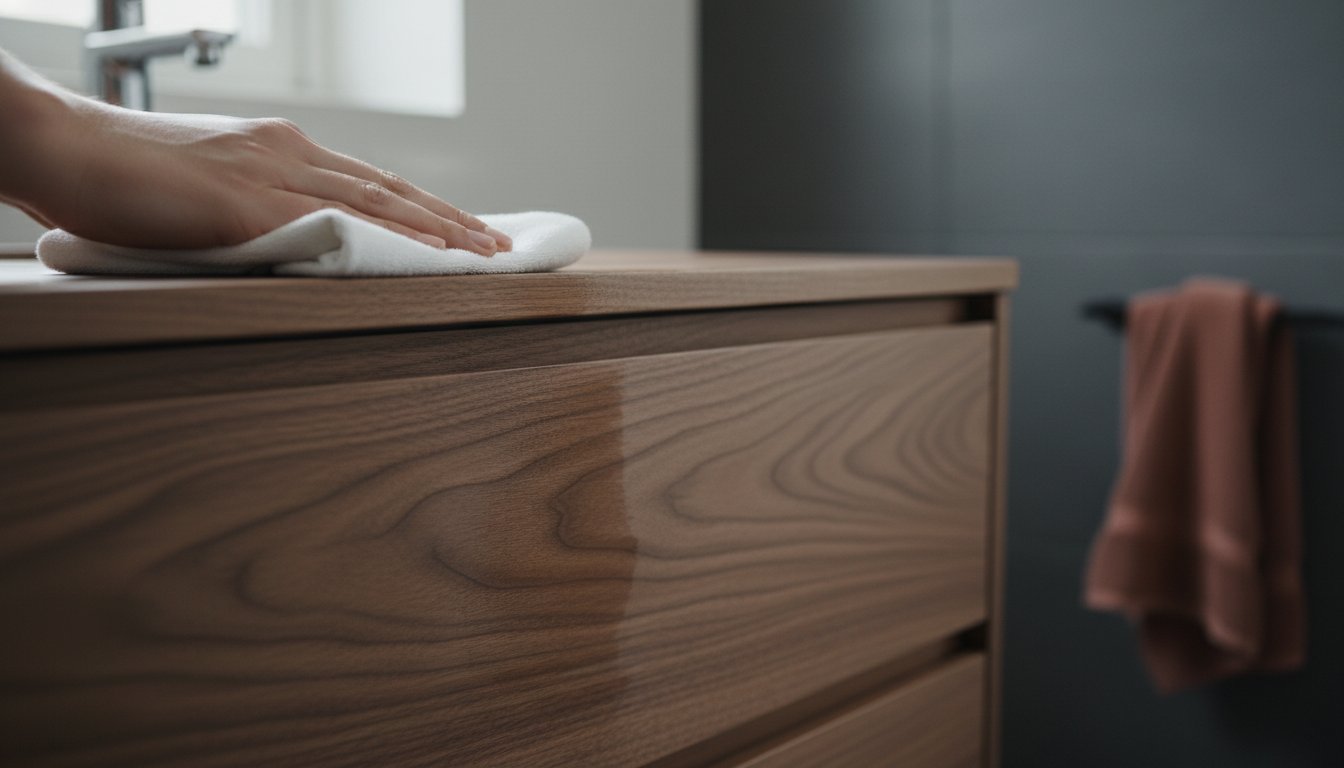
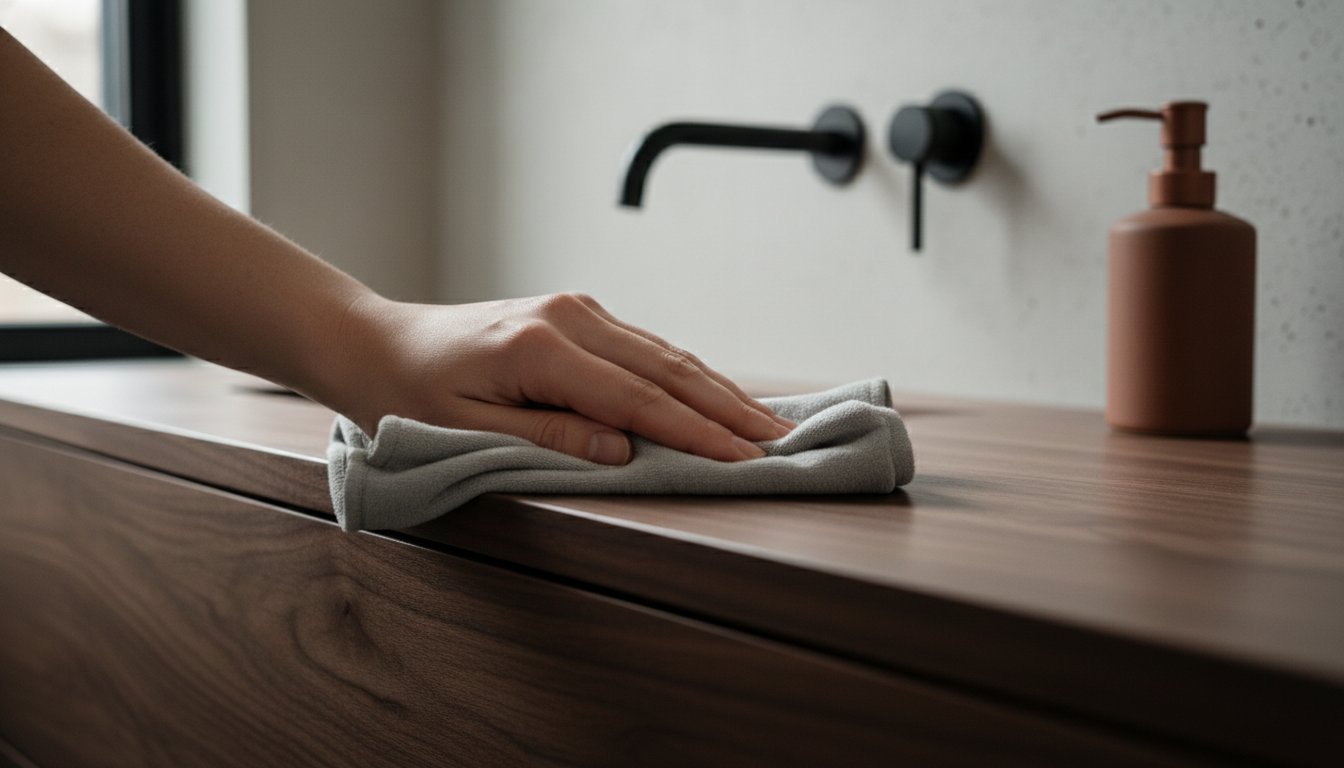
Make it a habit to quickly wipe the surface with a soft, dry microfiber cloth after each use of the sink. Pay particular attention to the horizontal surfaces and edges right next to the basin where water often stands. A crucial detail that is often overlooked is never to let wet towels or damp clothes hang directly against the wood. The constant moisture load can penetrate even the most thorough surface treatment and cause swelling or dark stains deep in the fiber structure.
Weekly cleaning with natural remedies
Once a week, the furniture deserves a slightly more in-depth review to remove dust and light soap residues. Mix a very weak solution of lukewarm water and a few drops of mild soap or a non-abrasive dishwashing liquid. Dampen a cloth and wring it out thoroughly; it should feel barely damp, never wet. Always clean in the direction of the wood grain to lift pollutants without rubbing them into the pores. As the experts at the Canadian Conservation Institute emphasize, deliberate caution is key to keeping historical and modern wood surfaces in top condition.
Always finish by wiping with a clean, dry cloth to ensure no residual moisture remains. For those who value craftsmanship that lasts, a walnut bathroom vanity offers a perfect balance of aesthetics and practical durability when cared for with this simple attention. By combining the right material choices with these steps, your walnut will remain a source of visual delight and tactile luxury for many years to come.

Dealing with stains: Toothpaste, soap, and lime
Accidents are an inevitable part of everyday life, especially in a room as frequently used as the bathroom. Even with good routines, toothpaste splashes, soap residues, or lime stains can appear on the wood surface. When cleaning walnut vanity units, it is crucial to act with both speed and knowledge. It's not just about removing dirt, but about doing so without disturbing the chemical balance of the wood's finish or damaging the natural fibers.
Many underestimate how aggressive everyday products can be against fine wood. Soap residues may seem harmless, but if allowed to dry, they form a greasy film that attracts dirt and dulls the wood. Limescale deposits are even more problematic because most lime-dissolving agents are extremely acidic, which can cause permanent etching damage to both lacquered and oiled surfaces. Preserving walnut's deep tone therefore requires a methodical approach that avoids shortcuts with strong chemicals.
Getting rid of white water rings
White rings or cloudy spots on the surface are often a sign that moisture has penetrated and become trapped just beneath the finish, rather than in the wood itself. This often happens if a damp toothbrush holder or a wet soap dish is left on the countertop for an extended period. To lift the moisture, a very gentle heat can sometimes be used, but this requires great care to avoid drying out the wood too much. The safest way is to follow proven general care advice for wooden furniture and use products specifically designed to restore the wood's finish. If, however, the stain is dark, it means that moisture has reached the wood fibers themselves, which often requires more extensive treatment.
Toothpaste and alkaline stains
Toothpaste is one of walnut's hidden enemies. Many varieties are alkaline and also contain microscopic abrasives to polish teeth, which means they can etch the delicate finish of the wood in just a few hours. Should an accident occur, a very weak solution of vinegar (one part vinegar to ten parts water) can be used on a cotton ball to neutralize the alkaline stain, but this should only be done spot-wise and followed by immediate wiping with clean water.
For solid walnut furniture, there is a great advantage: they can almost always be restored. If a stain has become permanent, you can gently sand the surface with very fine sandpaper in the direction of the grain and then apply new oil or wax. By keeping the surface saturated with oil, you create a natural barrier that prevents dirt from sticking as easily. When cleaning walnut vanity units, the long-term strategy is always to work with the material, not against it.
Preserving the luster: Maintenance of solid walnut
Owning a piece of solid wood furniture is a commitment that is rewarded with outstanding beauty. Once you have learned how to clean walnut vanity units correctly, the next step is to understand the wood's need for nourishment. Solid walnut is a porous material that needs to be saturated to prevent it from absorbing moisture. A rule of thumb is to oil the surface one to two times a year, but the specific bathroom climate dictates the frequency. If the surface begins to look grayish or feels rough to the touch, it is the wood's way of asking for care.
The choice of product is crucial for the final result. A classic furniture oil provides a deep, satin matte finish that allows the grain to speak. Hard wax oil, however, has become increasingly popular in wet rooms as it combines the penetrating properties of oil with the protective surface of wax. This creates a more resistant barrier against water splashes. It is also fascinating to see how solid wood lives with light; walnut has the unique property that it often lightens slightly and develops a more golden tone over time when exposed to sunlight.
Rehydration and oiling
Before applying new protection, the surface must be completely clean and dry. When cleaning walnut vanity units before oiling, you should be extra careful to ensure that no soap residues are encapsulated. Apply the oil in a thin, even layer with a lint-free cloth. Allow the wood to absorb the nourishment for approximately 15 minutes, then wipe off all excess. This is a critical step; left-over oil becomes sticky and attracts dust. Remember that cloths with linseed oil can spontaneously combust. Always place them in an airtight metal can or soak them in water after use.
Long-term protection against the bathroom climate
For your walnut to thrive, a stable environment is required. Good ventilation is your best friend to prevent the wood from swelling during humid periods or cracking when the air is dry in winter. A thin layer of furniture wax on top of the oiled surface acts as a sacrificial layer that takes the first impact from everyday wear and tear. This type of artisanal care is not unique to the bathroom; a well-built wooden kitchen requires exactly the same fingertip feel to maintain its exclusive luster year after year.
If you are looking for furniture where every detail is designed to age with dignity, explore our range of solid walnut vanity units that combine traditional carpentry with modern function.
Investing in quality: Indoor Wood's philosophy
Choosing a piece of furniture from Indoor Wood is to enter into a long-term relationship with a living material. We believe that quality is the most sustainable form of care. When you clean walnut vanity units from our joinery, you quickly notice the difference; the surface feels solid and the surface treatment is integrated into the wood rather than just lying as a thin film on top. By investing in high-quality materials from the start, ongoing maintenance is significantly facilitated, as the wood has a natural resistance that cheaper alternatives often lack.
Our philosophy rests on the idea that furniture should be able to be renovated rather than discarded. Mass-produced bathroom furniture is often constructed from materials that cannot be re-sanded or re-oiled. With us, every solid walnut vanity unit is proof of the opposite. It is a piece of craftsmanship built to withstand everyday wear and tear for decades. Small scratches or marks simply become part of the furniture's history that can be easily remedied with a little oil and care, making your investment both economically and environmentally defensible over time.
Craftsmanship that stands up to use
Every piece of walnut we work with is selected with the utmost care. We meticulously control the wood's moisture content to ensure it is stable enough for the demanding bathroom climate. The precision of our joints is not just a matter of aesthetics; it is a technical necessity to prevent water from penetrating the construction and causing hidden damage. The same uncompromising attitude to materials and execution permeates all our projects, as you can see in our kitchen inspiration where the timeless elegance of walnut meets modern function.
Personalized advice for your home
We see ourselves as your advisory partner throughout the furniture's lifespan. Cleaning walnut vanity units requires different focus depending on whether it is in a guest bathroom or in the middle of a busy family's hectic morning routine. We help you choose the right surface treatment and protection based on your specific conditions and usage patterns. Our commitment never ends with delivery. We are always available to answer questions about care or future maintenance. Feel free to visit our showrooms to feel the different tactile surfaces and see how the light reflects in the dark, deep walnut.
Give your walnut the care it deserves
Caring for fine wood is an investment in both aesthetics and longevity. By establishing simple routines for cleaning walnut vanity units, where you prioritize gentle agents and immediate wiping, you ensure that the material's deep luster is preserved year after year. As we have discussed, consistent daily care and the right type of rehydration are key to preventing stains and drying out. It's about respecting the wood as the living craftsmanship it truly is.
Our passion at Indoor Wood lies in creating handmade furniture from solid fine wood that combines timeless Swedish design with exceptional durability. We believe in sustainable material choices that are meant to last for generations, where every detail is designed to withstand everyday wear and tear without losing its elegance. If you dream of a bathroom where the warmth of natural materials meets uncompromising quality, we are happy to help you find the right solution for your home.
Explore our exclusive walnut vanity units and let your bathroom be transformed into a place of both tranquility and timeless beauty. With the right knowledge and a touch of love for the material, your walnut will age with a dignity that only grows richer with each passing year.
Frequently asked questions about walnut care
Can I use all-purpose cleaner on my walnut vanity unit?
No, you should avoid conventional all-purpose cleaners as they often contain chemicals that are far too aggressive for hardwood. These agents can quickly dissolve the natural oils and protective finish, leaving the wood vulnerable and dull. To safely clean walnut vanity cabinets, it is best to use a very weak solution of linseed soap and lukewarm water that respects the material's natural balance.
How do I remove white water stains from dark wood?
White stains are usually a sign that moisture has been trapped in the finish and can often be lifted with very low, controlled heat or a specialized furniture polish. It is important to work gently and methodically so as not to damage the underlying wood structure. If the stain has turned dark, it means that water has penetrated the fibers themselves, which usually requires light sanding and a new application of oil to restore the surface.
Is walnut a good material for bathrooms despite the moisture?
Walnut is an excellent choice for bathroom environments thanks to its high density and natural stability, provided the furniture is handcrafted. The wood has an inherent resistance that allows it to withstand fluctuating humidity much better than many softer types of wood. By combining the quality of the material with good ventilation and proper care routines, you get a piece of furniture that not only tolerates moisture but also becomes more beautiful with age.
How often should I oil my walnut vanity?
A walnut vanity should generally be oiled once or twice a year to maintain its saturated protection and exclusive luster. You can clearly see when it's time; the wood starts to look dry or grayish and water splashes are absorbed instead of beading on the surface. Regular maintenance with a high-quality oil is the best insurance against the wood drying out and cracking in the demanding bathroom climate.
What do I do if the wood has started to swell at the edges?
If the wood swells, it is a warning sign that moisture has found its way into the construction, often through a damaged edge or a leaky joint. You should immediately ensure that the area dries thoroughly and then carefully sand down the affected part with very fine sandpaper. Once the surface is smooth again, you must seal it with new hardwax oil or furniture oil to restore the barrier and prevent more moisture from penetrating.
Can I use baking soda to clean stubborn stains on wood?
We strongly advise against using baking soda because its alkaline properties and abrasive structure can cause permanent corrosive damage to the wood. Cleaning walnut vanity cabinets with harsh home remedies risks destroying the delicate finish and creating dull spots that are difficult to repair. For stubborn dirt, it is always safer to use products specifically designed for hardwood or to perform a light spot renovation by sanding and re-oiling.