Bathroom interior design inspiration wood: Create a nature-inspired oasis in 2026
Can a bathroom really serve as a personal retreat where the stresses of the day wash away as soon as you step over the threshold? Many dream of creating a harmonious oasis but often settle for sterile white tiles, fearing that natural materials won't withstand moisture. By exploring bathroom decor inspiration wood, however, you can combine Scandinavian design tradition with modern sustainability, without compromising on either aesthetics or technical function.
We understand that choosing organic materials in wet rooms can raise questions, especially with the new industry regulations "Säkra Våtrum 2026" (Safe Wet Rooms 2026) which place high demands on both material selection and construction. You deserve a room that ages with dignity and where every detail feels carefully chosen to create a genuine spa-like feel. In this article, you will learn how exclusive walnut vanities and innovative acoustic panels transform cold surfaces into a warm, tactile experience. We guide you through the art of combining different types of wood with your existing tiles and show you how to choose decor that is not only beautiful to the eye but also built to last for generations.
Key Takeaways
- Learn how biophilic design and natural materials lower stress levels and create a harmonious atmosphere in your home.
- Find the right bathroom decor inspiration in wood by exploring the differences between exclusive walnut, timeless oak, and light ash.
- Discover how innovative acoustic panels and solid vanities serve as the room's centerpiece, improving both acoustics and aesthetics.
- Get practical tips on how to balance the warmth of wood with cold surfaces like stone and tile to achieve a perfect Japandi feel.
- Understand how modern surface treatments protect your wooden details in wet rooms and what simple routines preserve the material's beauty over time.
Why choose wood for the bathroom? Benefits of natural materials
Stepping into a bathroom where nature has been allowed to take its place changes the entire morning routine. Wood is not just a material choice; it's a conscious decision to invite life and warmth into a room often dominated by hard, cold surfaces. When you seek bathroom decor inspiration in wood, it's about finding the perfect balance between function and aesthetics. By using organic materials, you create a visual and tactile contrast against stone, ceramics, and metal, giving the room a distinct character.
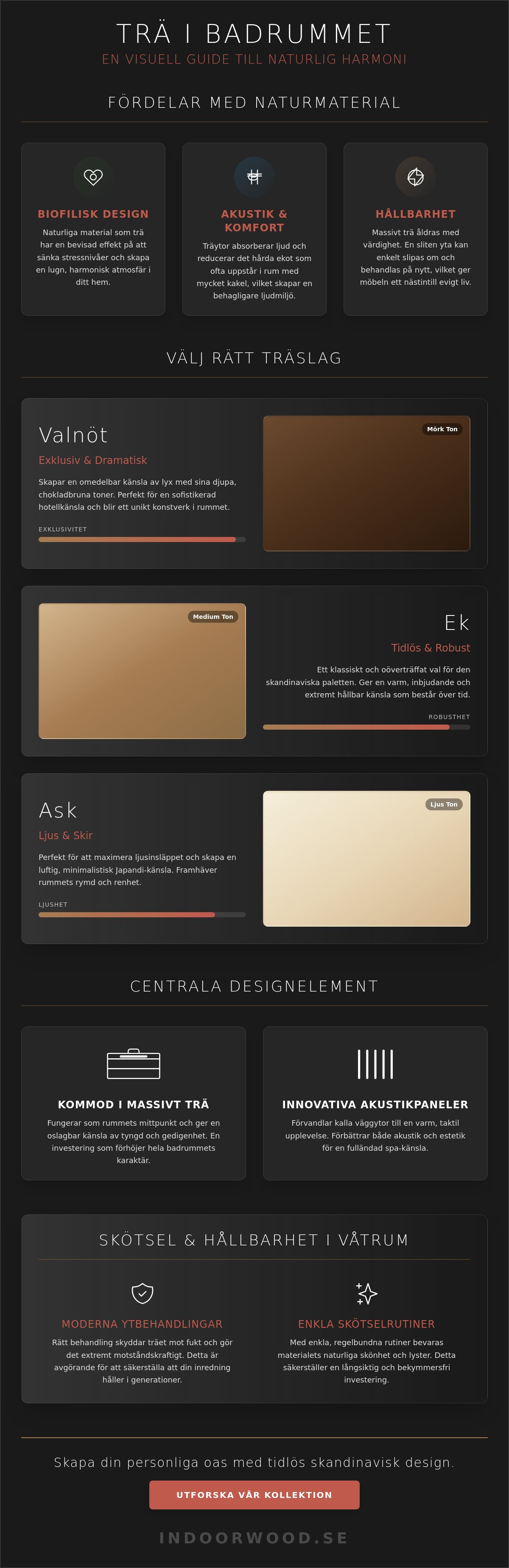
Wood has a unique ability to lower your heart rate. This is often referred to as biophilic design, an architectural philosophy based on humanity's innate need for connection with nature. Studies in interior psychology show that environments with visible wooden surfaces contribute to stress reduction and increased well-being. In the bathroom, where we often seek recovery and a moment of calm, the presence of wood becomes crucial for transforming a functional space into a genuine spa experience. The soft feel under your fingertips when you open a walnut drawer cannot be compared to cold synthetic materials.
Sustainability is another central aspect that weighs heavily in modern homes. Unlike plastic-based alternatives or thin veneer solutions, solid wood is an investment that ages with dignity. If a surface becomes worn after years of use, it can be sanded and re-treated, giving the furniture an almost eternal life. However, it's important to know how to treat wood in wet rooms correctly to ensure it withstands moisture and temperature fluctuations over a long period. With the right surface treatment, the wood becomes not only beautiful but also extremely resistant.
The role of wood in the modern spa bathroom
In modern interior design, we see a strong movement where Japanese minimalism meets Scandinavian functionality. Wood plays a leading role in this style by absorbing light instead of reflecting it harshly, creating softer and more harmonious lighting in the room. We always recommend choosing wood from certified and sustainably managed forests. It adds an extra dimension of quality to know that your decor is produced with respect for the forests that have given the material its unique grain and color tone.
Acoustics and comfort in tiled rooms
A common but often overlooked problem in bathrooms with a lot of wall and floor tiles is the harsh echo. Here, wooden details fulfill an important technical function by acting as natural sound absorbers. Wooden surfaces break sound waves and create a much more pleasant sound environment, which is essential for that relaxing feeling. A solid wood bathroom vanity also conveys a sense of weight and solidity that hollow alternatives can never replicate. It's about the muffled sound when a drawer closes and the subtle, natural scent that spreads a sense of authenticity throughout the home.
Choose the right wood: Walnut, oak, or ash?
Choosing the right material is about more than just aesthetics; it's about understanding the soul of the wood and how it interacts with the room's unique conditions. When you search for bathroom decor inspiration in wood, you often encounter three dominant choices: dramatic walnut, robust oak, and delicate ash. Each type of wood carries its own story and influences how light falls and how the atmosphere in the room is perceived. Wood is a living material that matures beautifully over time. The color tones deepen and the grain becomes more prominent as the years pass, giving your bathroom a character that only grows richer with time.
To succeed with wood in wet rooms, a deeper understanding of wood's properties in humid environments is required. It's about balancing the natural movements of the cell structure with the correct craftsmanship in surface treatment to preserve the furniture's integrity. By choosing the right type of wood from the start, you ensure that your investment withstands the stresses of everyday life while maintaining its elegant finish.
Walnut bathroom vanity – A deep dive
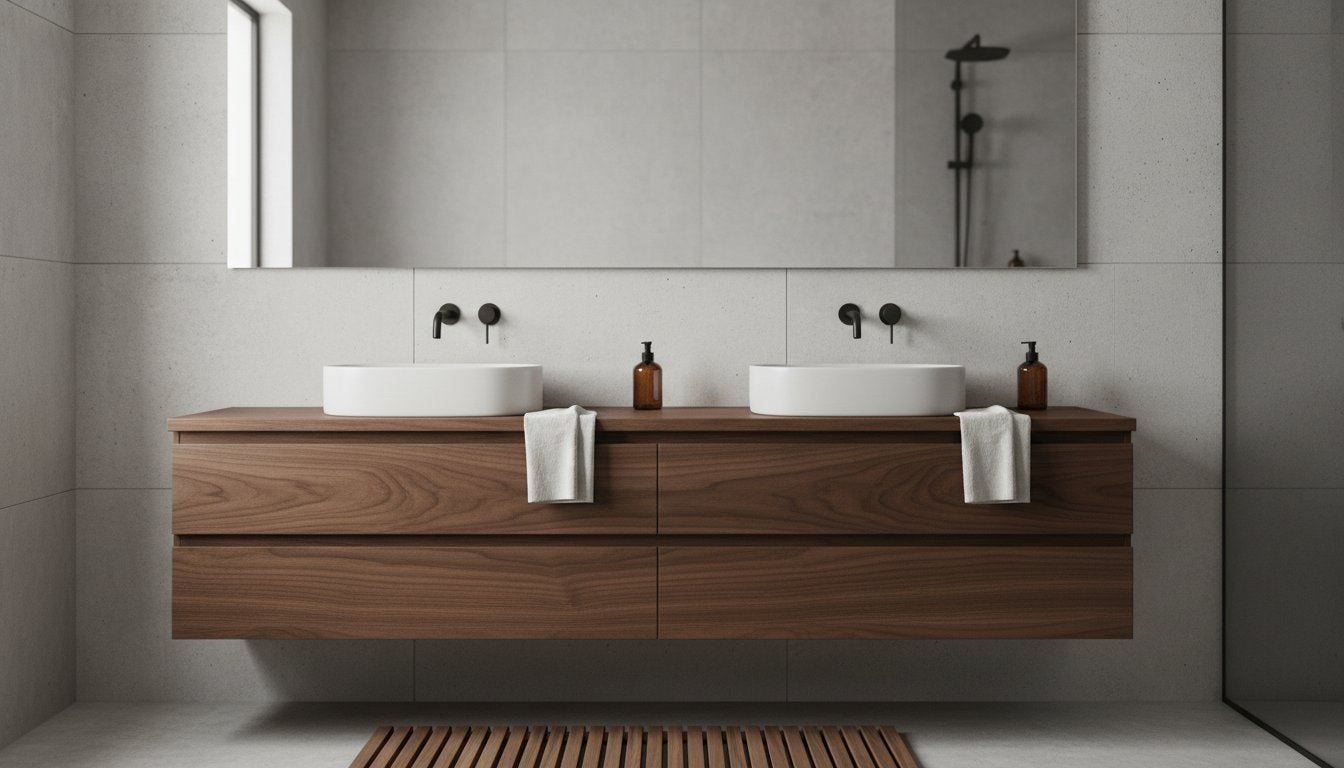
By 2026, walnut has cemented its position as the top choice for those seeking a sophisticated hotel feel at home. Its deep, chocolate-brown tones create an immediate sense of exclusivity and gravitas. By combining a walnut bathroom vanity with light natural stones like Carrara marble or cool limestone, a contrast emerges that feels both modern and timeless. The natural variations in walnut's pattern mean that each piece of furniture becomes a unique work of art that gives the bathroom a personal and earthy touch.
Oak and ash for the light bathroom
For those who prefer a more classic Scandinavian palette, oak and ash are unrivaled alternatives. Oak is known for its immense resistance and dense structure, making it ideal for the demanding bathroom environment. A common challenge is that oak can appear yellowish over time, but with a lightly pigmented surface treatment, the cool, natural feel is preserved.
Ash, in turn, is the salvation for smaller bathrooms with limited light. Its light, almost pearly white tone reflects light and makes the room feel more spacious. Here, the direction of the grain also plays a large role in the visual expression. Vertical grain gives a sense of height and linearity, while horizontal grain creates a calmer and more harmonious flow. If you are planning a larger change, a solid walnut or oak vanity can be the detail that ties together the entire room's design vision.
Bathroom decor inspiration: From vanity to wall panel
When you're looking for bathroom decor inspiration in wood, you quickly realize that it's about creating a cohesive theme throughout the entire room. A single detail isn't enough; the magic happens when various wooden elements interact to create a unified and luxurious atmosphere. The bathroom vanity often serves as the room's natural focal point and style setter. By choosing a vanity made of a living material like walnut or oak, you set the tone for the rest of the decor. This is where you lay the foundation for that harmonious spa-like feeling that many aspire to in 2026.
To enhance the exclusive expression, you should look for storage solutions that go beyond the expected. A tall cabinet in solid walnut not only offers generous storage for towels and beauty products but also becomes a beautiful vertical accent that gives the room gravitas. By matching the vanity with mirror frames and shelving in the same type of wood, you create a visual harmony that feels well-thought-out and architectural. It's the small, repetitive details that make the bathroom feel like a custom-made retreat rather than a standardized wet room.
Create dynamism with slatted panels
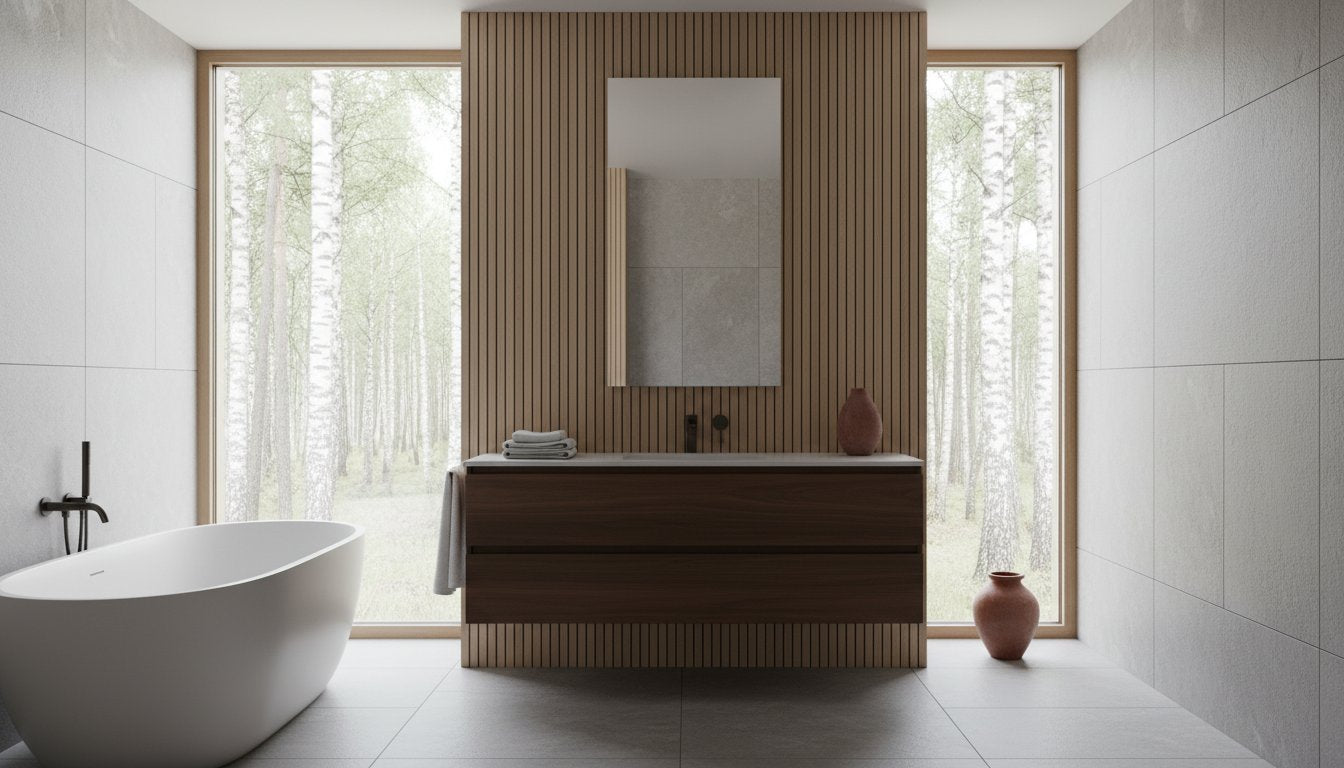
One of the most exciting trends for 2026 is the use of an acoustic panel even in the bathroom environment. Previously, slatted panels were reserved for living rooms and bedrooms, but now they are making their way into our wet rooms to break up large tiled surfaces. The vertical lines in an acoustic panel create an illusion of higher ceilings and give the room an instant hotel feel. However, it is important to consider placement. Never mount the panels directly in the shower area; instead, use them as a feature wall behind the vanity or on a wall not exposed to direct water spray. This provides both visual warmth and a significantly softer sound environment.
Custom solutions for unique bathrooms
Every bathroom has its own unique conditions, and sometimes standard dimensions are not enough to realize the vision. Being able to custom-order furnishings is often key to maximizing the potential of difficult-to-furnish niches or corners. By adapting the dimensions to the room's specific architecture, you can utilize every square centimeter in a way that feels both smart and elegant. At Indoor Wood, you have the opportunity to get your interior exactly as you want it, which means you don't have to compromise between function and your personal style. It's about creating solutions that not only fit the room but also enhance your daily experience of it.
Style guides: How to match wood with wall and floor tiles
When you plan your bathroom decor with wood inspiration, the choice of surface material is crucial for the final result. The organic warmth of wood needs a counterpart to truly shine. It's about creating a dialogue between materials where no element overpowers the other. By combining the right wood with specific types of wall and floor tiles, you can control the entire room's atmosphere, from strictly minimalist to softly embracing.
Japandi is one of the most influential styles in 2026. Here, Japanese minimalism and Scandinavian functionality meet in a perfect balance. The style relies on light wood types such as oak or ash combined with large, matte tiles in sand colors or warm gray. For those seeking modern luxury, the combination of deep walnut and dark stone types like granite or slate is unbeatable. Add brushed brass details to highlight walnut's natural luster and create a sophisticated hotel feel.
For a more rustic elegance, classic white subway tiles work excellently with light wood details. This creates a freshness that feels timeless and airy. If you want an industrial feel instead, you can let raw concrete surfaces meet robust, solid oak. The coolness of concrete is softened by the oak's texture, resulting in a bathroom that feels both modern and inviting.
Color palettes that enhance the wood
The choice of wall color affects how we perceive the nuances of wood. In 2026, we see a clear trend towards earthy palettes with tones of sand, beige, terracotta, and muted green. These colors highlight walnut's warm undertones without stealing attention. If you want to combine different types of wood, you should stick to a clear common thread, for example, by ensuring similar grain characteristics. Lighting also plays a central role. Use dimmable light sources to emphasize the tactile surface of the wood and create mental images of a serene home spa as evening falls.
The details that make the difference
Fittings are the jewelry of the bathroom and should be chosen carefully to complement the wooden interior. Black handles give a graphic sharpness to light oak, while chrome details create a clean and classic look for ash. When it comes to faucets, brass and copper are natural companions to walnut, as they reinforce the material's exclusive feel. Many of these design principles can be applied throughout the home to create a cohesive style. You can read more about how to create a unified expression in our guide on kitchen inspiration.
Find your personal style and explore our range of handcrafted interiors at Indoor Wood.
Durability and care: How to preserve wood in wet rooms
There's a persistent myth that wood and water are an impossible combination. When you look for bathroom decor inspiration involving wood, you often encounter warnings, but the truth is that the right type of wood with correct surface treatment is both durable and practical. Modern techniques have made it possible to enjoy nature's aesthetics without worrying about the material rotting or being destroyed. It's about understanding how wood breathes and how we best protect its fibers from the humid environment of a bathroom. By choosing materials carefully, you create an interior that is not only beautiful today but also withstands the test of time.
The choice between oiled and lacquered surfaces is crucial for both feel and maintenance. An oiled surface is deeply tactile and highlights the natural structure of the wood in an unparalleled way. The main advantage is that it can be spot-repaired if a scratch occurs. Lacquered surfaces, on the other hand, provide a harder protective shell that is extremely resistant to water splashes, although it requires a more extensive effort if the surface layer is damaged. Regardless of your choice, ventilation is your best friend. Effective airflow ensures that moisture does not remain on the surfaces, which is fundamental to preserving the integrity of the wood for decades.
Choosing solid wood over veneer
In the industry, we often see that cheaper alternatives use veneer on a particleboard core. The problem arises when moisture penetrates the joints, causing the core to swell and the surface layer to detach. Solid wood or high-quality furniture plywood has entirely different stability. If an accident occurs, solid wood can be sanded down and re-treated, making it a circular and long-term investment. What seems expensive at the time of purchase often turns out to be the most economical solution in the long run, as you avoid having to replace the interior after just a few years.
Checklist for a sustainable wooden bathroom
To keep your bathroom decor in top condition, we recommend some simple but effective routines. It's about working with the material rather than against it.
- Verify construction: Ensure the furniture is specifically designed for a bathroom environment with the correct surface treatment from the start.
- Wipe up immediately: Never leave puddles of water on wooden surfaces or in joints after use.
- Gentle cleaning: Use products intended for wood. Avoid strong chemicals that dry out fibers or dissolve the protective layer.
- Humidity: Monitor the bathroom's ventilation so that steam is quickly removed after showering and bathing.
By following these steps, you maintain that magical feeling of a nature-inspired oasis. Wood is a living material that responds to the care you give it, and the reward is a bathroom that ages with a unique patina and character.
Realize your vision of a timeless bathroom
Integrating the calm of nature into your home is about choosing materials that speak to both the eye and the soul. We have explored how the right bathroom decor inspiration in wood can transform a sterile wet room into a personal oasis of warmth and harmony. By combining exclusive types of wood like walnut or oak with thoughtful details and modern technology, you create an environment that withstands the test of time. Remember that solid wood is not just an aesthetic choice; it is a sustainable investment that can be sanded and cared for for generations.
At Indoor Wood, we are passionate about genuine craftsmanship and the unique character of natural materials. Our furniture is handmade from solid hardwood and designed with deep respect for Swedish handicraft traditions. Through direct sales without intermediaries, we can offer uncompromising quality at a fair price. Take the step towards your dream bathroom today and explore our exclusive bathroom vanities in solid walnut to find the perfect centerpiece for your home. Create a space where you can unwind and recharge every day.
Common Questions About Wood in the Bathroom
Can you really have wood in the bathroom without it molding?
Yes, it is perfectly fine to use wood in the bathroom as long as the material is properly surface-treated and the room has good ventilation. By choosing solid wood instead of particleboard, you drastically reduce the risk of swelling and moisture damage. It is important that the surface is saturated with either lacquer or oil to prevent water from penetrating the fibers. Good air circulation ensures that moisture does not remain on the furniture's surface.
Which type of wood is most durable for moisture in a bathroom?
Oak has historically been the most durable wood type for humid environments due to its high density and natural tannin content. Walnut is also an excellent choice for bathroom interior design inspiration wood, as it is a hard and stable hardwood that moves minimally with temperature changes. The crucial factor is not just the wood type itself, but how well it has been sealed to withstand the specific moisture exposure in a wet room.
How do I best care for my walnut bathroom vanity?
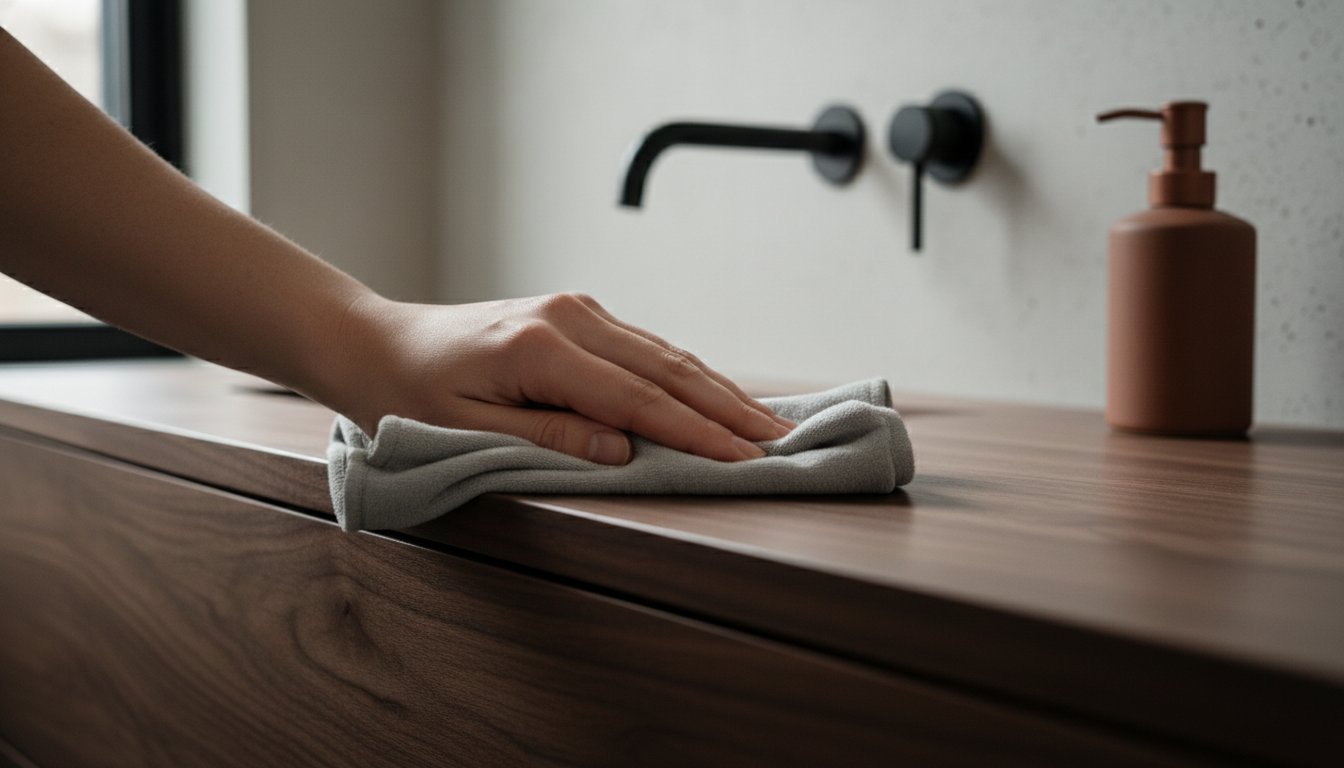
You best care for your vanity by always wiping up water splashes immediately with a soft microfiber cloth. Avoid strong cleaning agents that contain abrasives or ammonia, as these can damage the protective surface of your bathroom interior design inspiration wood. A mild soap solution is usually sufficient for daily cleaning. By keeping the surface dry and clean, you preserve the deep luster of the walnut and prevent limescale stains from adhering to the wood, which significantly extends the furniture's lifespan.
Do I need to oil my wooden bathroom furniture regularly?
That depends entirely on the surface treatment you chose initially. An oiled surface benefits from being treated once or twice a year to maintain its protection and tactile feel. However, if your furniture is lacquered, you do not need to oil it; instead, you should be vigilant for any cracks in the lacquer where moisture could penetrate. Regular maintenance ensures that the wood remains resistant to everyday wear and tear and preserves its natural beauty.
Is it better to choose wood imitation (tiles) than real wood?
Wood imitation in ceramic is maintenance-free, but it lacks the warmth, scent, and unique grain of real wood. Genuine solid wood has the advantage that it can be sanded and restored if it gets damaged, which gives the furniture a significantly longer lifespan. For those seeking a genuine spa feeling and an interior that ages with dignity, natural material is always the superior choice. It is a long-term investment in both aesthetics and function.
What color of tiles best suits an oak vanity?
An oak vanity comes into its own best with earthy tones such as sand, beige, or cool gray shades. For a more dramatic contrast, dark gray slate or anthracite-colored tiles work excellently, as they highlight the oak's light and vibrant patterns. It's about creating a balance where the tiles serve as a calm backdrop that allows the wood's natural beauty and structure to take center stage in the room without competing for attention.
Can acoustic panels be installed on the ceiling in a bathroom?
Yes, acoustic panels can be mounted on the ceiling provided they are not placed directly over the shower or bathtub where the water vapor is densest. Ceiling mounting is an effective way to dampen echo in bathrooms with many hard surfaces, which creates a significantly more relaxing environment. Ensure there is an air gap behind the panel to allow for circulation and prevent moisture from being trapped against the ceiling structure, which protects both the wood and the health of the property.
How does underfloor heating affect solid wood bathroom furniture?
Underfloor heating leads to drier air and temperature changes that cause wood to move, but high-quality solid wood is constructed to handle this. It is important that the furniture is not mounted directly against the floor but has a small distance to allow air circulation. A well-built solid hardwood vanity has built-in margins for these natural movements, which reduces the risk of cracking and ensures that the furniture remains stable for many years.