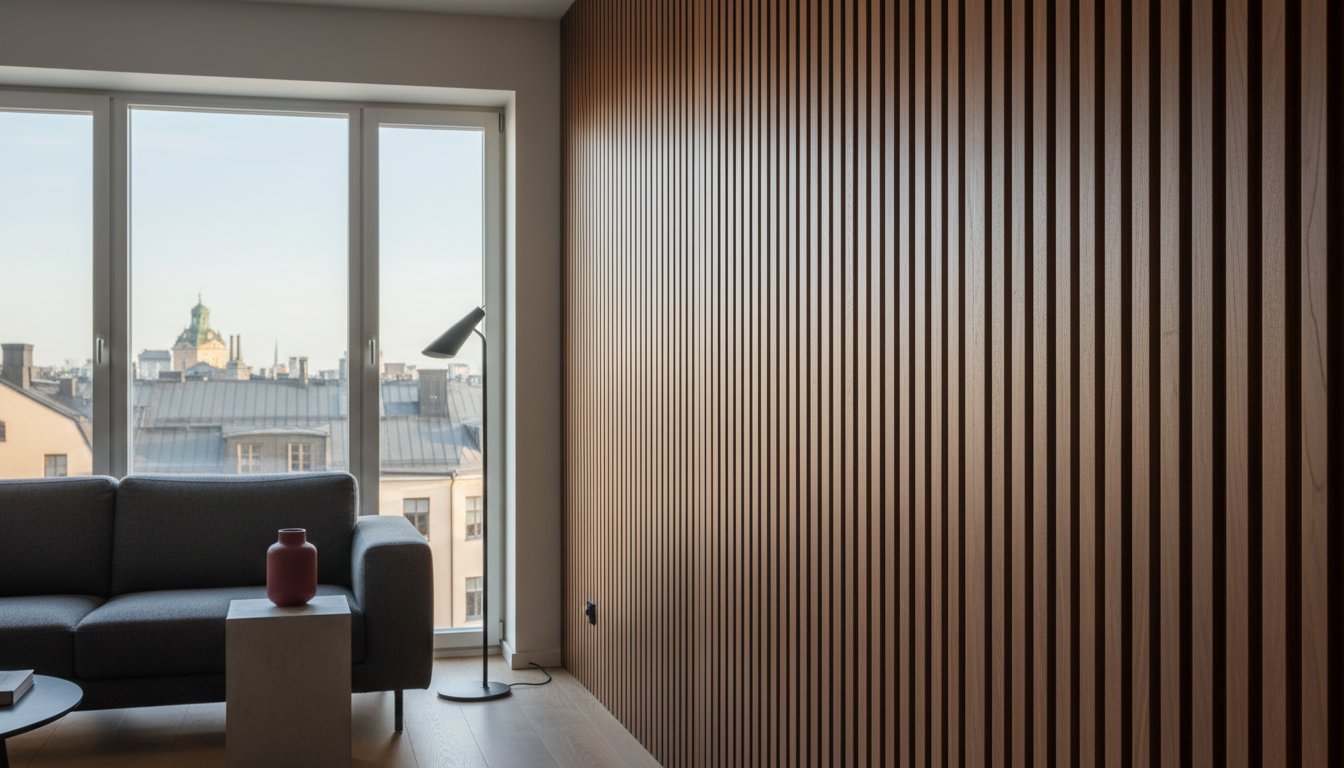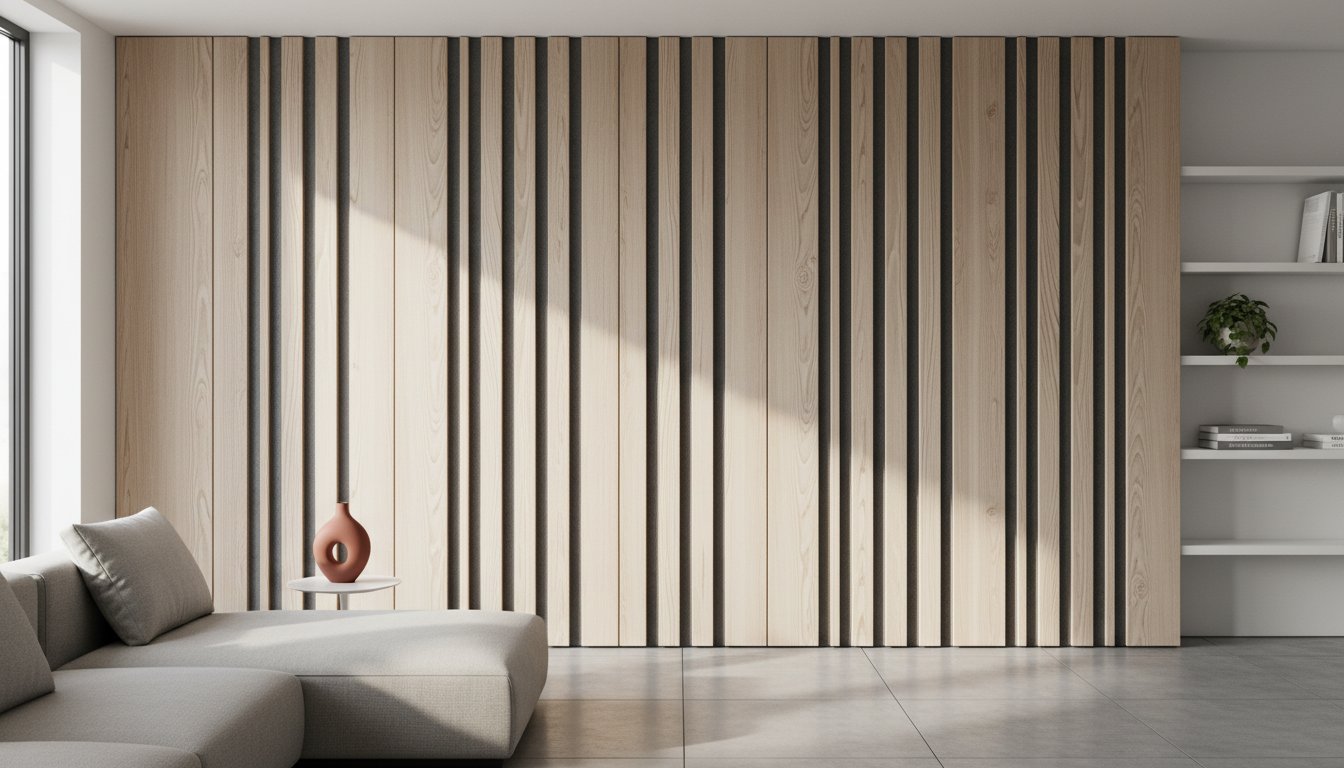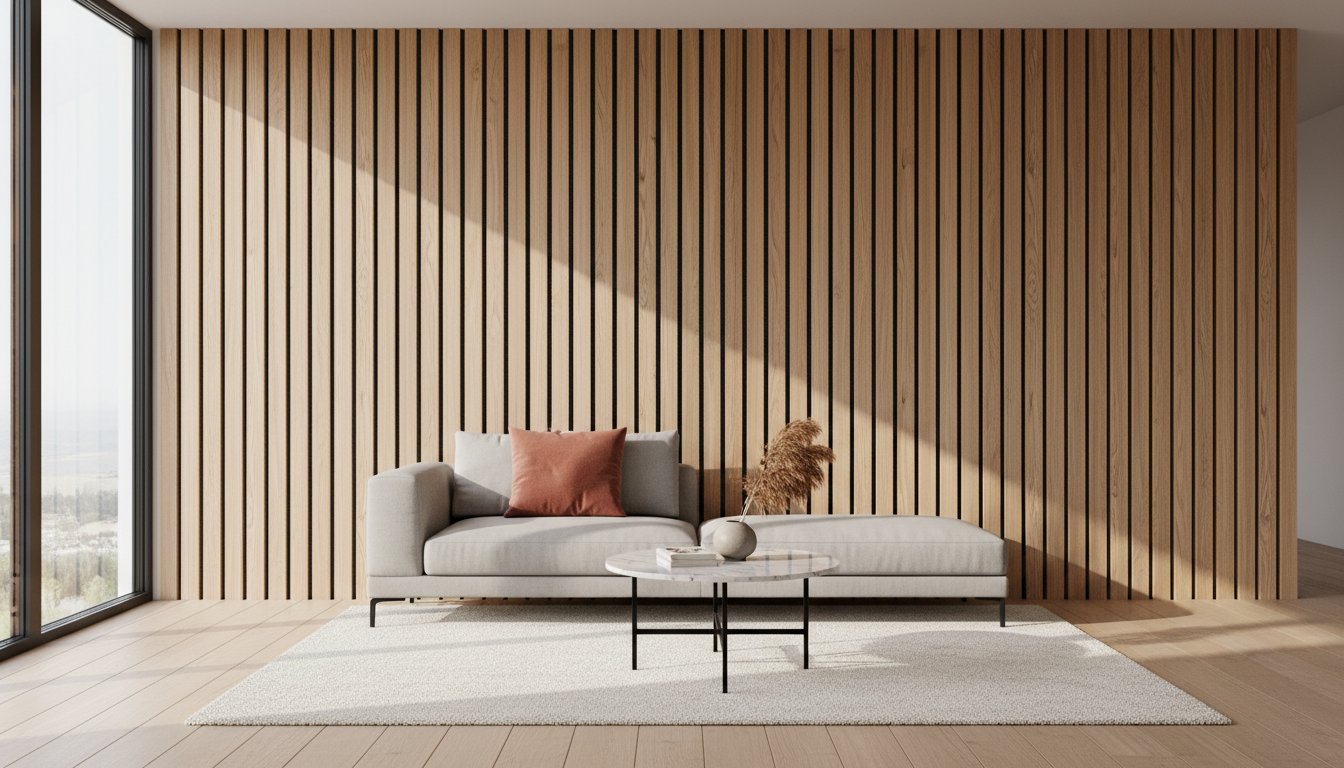
Slat wall panels: A complete guide to selection, comparison, and design 2026
What happens to the soul of a home when hard surfaces take over and every conversation bounces off bare walls? Many homeowners find that modern, open-plan architecture often brings with it an unexpectedly harsh sound environment that disrupts everyday peace. A slatted panel made of real wood is the perfect solution, combining acoustic function with a timeless Scandinavian aesthetic. It's about restoring that soft, embracing feeling that only nature's own materials can convey in a room.
We know you value craftsmanship and want to avoid compromises that result in visible joints or an artificial feel. In this complete guide for 2026, you'll learn how to transform your indoor environment into a harmonious oasis through conscious material choices. We promise to give you all the knowledge you need to choose correctly between oak, walnut, and ash so that your investment is both beautiful and long-lasting. We cover everything from design choices that enhance the atmosphere to the technical details behind a world-class sound environment.
Key Takeaways
- Understand how a slatted panel combines aesthetics with function by drastically improving a room's acoustics using sound-absorbing felt.
- Learn to navigate between wood types like oak, walnut, and ash to find the perfect shade that harmonizes with your home's unique light incidence.
- Discover the differences between ribbed and smooth to determine which surface texture best enhances your interior and creates the desired visual dynamism.
- Get practical advice for precision in measurement and installation, so you avoid unnecessary waste and handle electrical outlets with a professional finish.
- Explore the benefits of genuine craftsmanship and how the right material choices serve as a timeless investment in your home's foundation and atmosphere.
What is a slatted panel and how does it work?
A slatted panel in its purest form is a harmonious construction where linear precision meets the organic warmth of nature. It consists of carefully designed wooden slats mounted at even intervals on a load-bearing, sound-absorbing felt. To understand the historical and technical background of how we clad our walls, one can look closer at What is a slatted panel in a broader architectural context. What was once a practical method for insulation has today been transformed in Scandinavian homes into a sophisticated design element that combines form and function.
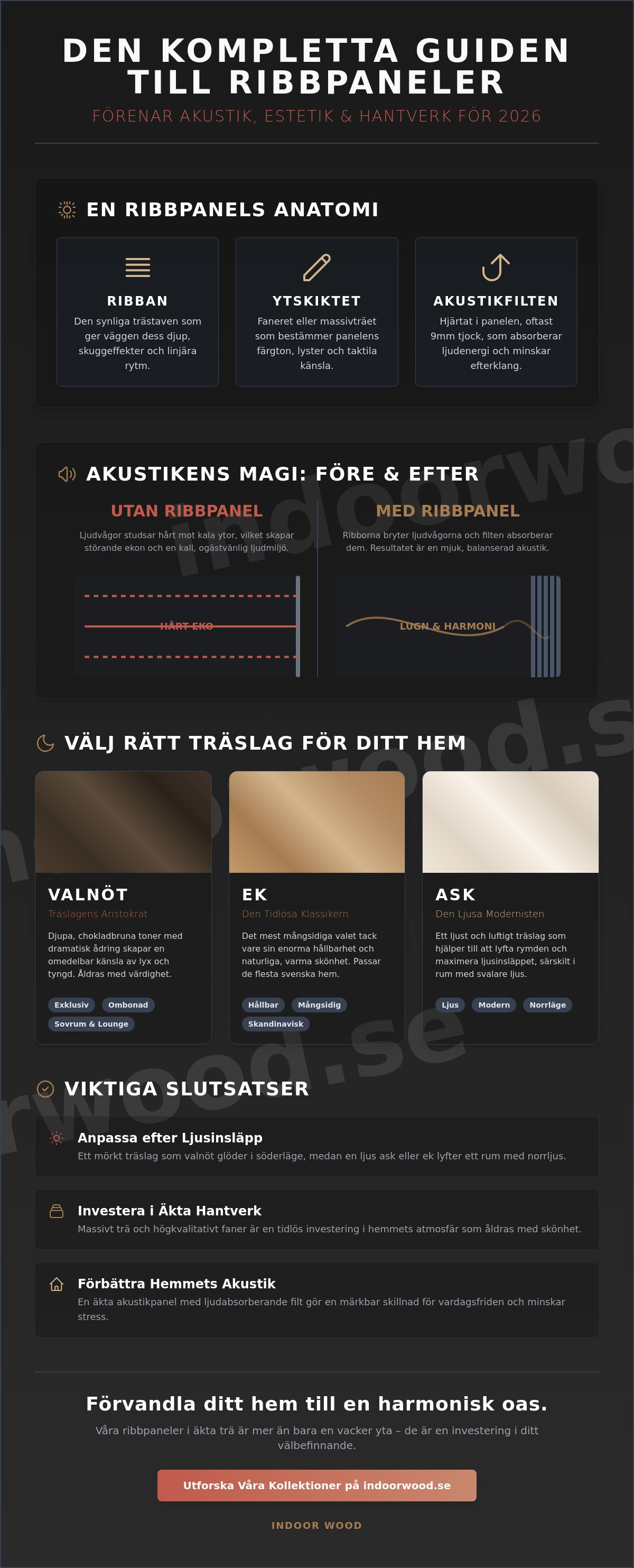
A modern slatted panel is defined by three central components that together create its unique expression and performance:
- The slat: The visible strip that gives the wall its depth, shadow effects, and linear rhythm.
- The surface layer: The outermost layer of veneer or treatment that determines the panel's luster, color tone, and tactile feel.
- The acoustic felt: The underlying base, often made from recycled polyester, which acts as the panel's technical heart by absorbing sound.
There is a significant difference between a purely decorative panel and a functional acoustic panel. The decorative variant focuses exclusively on visuals, while an acoustic panel is developed to radically improve a room's sound environment. In 2026, the slatted panel has become a cornerstone of Nordic interior design because it softens the hard materials, such as stone and glass, that often dominate modern architecture.
The role of acoustics in the modern home
In homes with open floor plans and large window sections, the sound environment often suffers from harsh echoes. The slatted panel here functions as an effective diffuser. When sound waves hit the rectangular slats, they are broken up in different directions instead of bouncing directly back. The underlying acoustic felt, which in quality versions is often 9 mm thick, then absorbs the sound energy. This creates a noticeable difference in living rooms and home offices, where a reduced reverberation time directly contributes to reduced stress and increased ability to concentrate.
Material choice: From real veneer to solid wood
The choice of wood type defines the entire room's character and atmosphere. Oak offers a timeless and robust feel that suits most environments, while walnut's dark, rich tones create an exclusive and cozy environment. For those seeking an uncompromising sense of craftsmanship and longevity, the choice of solid wood is often the best way forward. Solid materials provide natural variation in grain and a weight that reflects true quality. By choosing sustainable wood types like ash or certified oak, one invests in an interior detail that ages with dignity and retains its beauty for generations.
Choosing the right wood type: Walnut, oak, or ash?
Wood is a living material that exudes character and personality. The choice of wood type for your wall is crucial for the room's temperature and overall atmosphere. In 2026, we see a clear trend where we are moving away from sterile and minimalist towards more tactile surfaces that tell a story. A slatted panel is not just an aesthetic detail; it is an investment in the soul of the home that should last for decades.
The light incidence in the room plays a major role in how the wood is perceived. A room with large south-facing windows can make dark walnut glow with an almost magical intensity. In a north-facing room with cooler light, a light ash or white-pigmented oak can help lift the space and prevent the surface from feeling heavy. It's about understanding how the wood's natural grain interacts with daylight.
In addition to the visual aspect, the material choice contributes to the room's function. By studying the wood's acoustic properties, we see how solid wood and veneer can effectively break sound waves. This creates a calmer environment where conversations can take place without disturbing echoes, which is one of the main reasons why slatted panels have become a modern standard in Scandinavian architecture.
Walnut acoustic panel for an exclusive feel
Walnut is the aristocrat of wood types. With its deep, chocolate-brown tones and dramatic grain, it creates an immediate sense of luxury and gravitas. It is an excellent choice for the bedroom where a cozy and peaceful environment is desired, or in an exclusive lounge where elegance is central. Walnut's ability to age with dignity makes it a timeless favorite. You can read more about how to integrate this material in our guide on walnut acoustic panels.
Oak – The timeless Scandinavian classic
Oak remains the most versatile choice for Swedish homes thanks to its enormous durability and natural beauty. Natural oak gives a warm and honest feel that suits most interior styles. For those who want more character, there is smoked oak with its darker, almost black nuances, or white-pigmented oak that maintains the bright Nordic expression without the wood yellowing over time. Choosing an oak acoustic panel is a safe bet for creating a harmonious connection to existing oak parquet floors.
When matching the panel with other furnishings, you should look at the undertone of the floor. Does the floor have a warm, reddish tone or a cooler, grayish hue? Creating a common thread between wall and floor gives the room an architectural integrity that feels planned and thoughtful. Feel free to explore our range to find the perfect shade for your next project.
Slatted panel vs. smooth panel: Which one should you choose?
The choice between a slatted panel and a smooth panel is about more than just aesthetics. It's a decision that defines the room's entire atmosphere and its functional profile. While the smooth panel represents a calm, unbroken surface, a slatted panel adds an architectural rhythm that changes how light falls in the room. It's about choosing between a minimalist background and a living structure that commands attention.
A slatted panel is the obvious choice when you want to create a dynamic feature wall or improve the sound environment in a room with many hard surfaces. The smooth panel, on the other hand, is often a more budget-friendly alternative. Market data from 2024 shows that the material cost for a high-quality smooth wood panel is often 20 to 30 percent lower than for a prefabricated slatted panel mounted on acoustic felt. The choice therefore often depends on whether you prioritize functional acoustic dampening or a clean, easy-to-maintain surface.
Aesthetic differences and spatial impact
The vertical lines of a slatted panel have a unique ability to trick the eye. By drawing the gaze upwards, an illusion of higher ceilings is created, which is particularly effective in Swedish homes with a standard height of 240 centimeters. The smooth panel, instead, functions as a discreet and timeless background. It allows other interior details, such as an exclusive oil painting or a sculptural piece of furniture, to take center stage without competing for space. For those seeking a cozy and warm feel, the slats provide a texture that softens the room's hard angles in a way that a flat surface can never achieve.
Functional aspects: Sound and maintenance
When it comes to function, the slatted panel wins the acoustic battle by a large margin. By breaking up sound waves and absorbing them in the underlying felt, which often has sound class A, a harmonious environment free from disturbing echoes is created. This is a crucial factor in open-plan spaces or home offices. However, maintenance differs between the two options:
- Slatted panel: Requires vacuuming with a soft brush attachment or dusting between the slats to keep the surface fresh over time.
- Smooth panel: Easily cleaned with a lightly damp microfiber cloth, making it ideal for high-traffic environments or households with small children.
In terms of durability, both options age gracefully if made from genuine wood veneer. However, a smooth panel displays the wood's natural grain and patina in a more cohesive way. To get the best of both worlds, you can advantageously combine the styles. Using a slatted panel as a central section behind the headboard and letting smooth surfaces frame the rest of the bedroom creates a sophisticated balance between tactile craftsmanship and modern minimalism.
Planning and measurements: Avoid the most common mistakes
Precision is the craftsman's best friend. Before ordering your slatted panel, a thorough review of the room's unique conditions is required. One of the most common mistakes is to assume that walls and corners are perfectly straight. By measuring at three different points (high, low, and in the middle), you ensure that the material is sufficient without unnecessary waste. We recommend accounting for a margin of approximately 10% to cover cuts and unexpected angles.
Electrical outlets and switches require a delicate touch. Use a hole saw with the correct diameter to create neat openings directly in the felt. At corners, you should decide whether you want a mitered joint for an exclusive feel or a simple overlap. The choice between standard dimensions and custom lengths is often determined by your ceiling height. A panel that ends just a few centimeters from the ceiling destroys the architectural line and lowers the overall aesthetic value of the room.
Advantages of acoustic panel 270 cm
In Swedish homes with a standard ceiling height of between 240 and 260 cm, the choice of length is critical for the final result. By investing in an acoustic panel 270 cm, you avoid unsightly horizontal joints that would otherwise break the vertical flow. This creates a seamless and professional impression from floor to ceiling. It gives the room a sense of spaciousness and an architectural elegance that is difficult to achieve with shorter modules.
Installation tips for the DIY enthusiast
The choice between screws and adhesive depends entirely on your substrate and how permanent the installation needs to be. On plasterboard walls, a high-quality mounting adhesive provides a clean finish without visible screw heads. Screws, however, are preferable if you are mounting on wooden studs or want the option to move the panel in the future.
- Circular saw: Use a fine-toothed blade to get clean cuts in the wood.
- Spirit level: It is absolutely crucial that the first panel is perfectly straight.
- Masking tape: Tape the cutting surface before sawing to prevent the wood veneer from splintering.
- Hole saw: For precise cutouts around electrical installations.
To succeed with your slatted panel, you should always cut from the back. This minimizes the risk of splinters on the visible surface and provides a razor-sharp edge that exudes quality. Remember to allow the panels to acclimatize in the room for at least 48 hours before installation to avoid material movement afterwards.
Indoor Wood's philosophy: Craftsmanship meets modern design
For us at Indoor Wood, wood is not just a building material; it is the very soul of a home. We see every wood surface as a foundation for the room's character and atmosphere. Our passion is rooted in a deep respect for nature's own craftsmanship, where every grain and color variation tells a unique story. By combining this traditional reverence with modern design, we create solutions that endure over time, both aesthetically and functionally.
To ensure that every slatted panel meets the standard our customers expect, we work completely without intermediaries. We have established direct collaborations with carefully selected manufacturers. This approach gives us full control over every detail in the production chain, from the raw material in the forest to the finished product on your wall. We act as your personal advisor throughout the entire project. Our technical expertise is available to help you choose the right surface treatment and dimensions so that the final result perfectly reflects your vision.
An investment in your home and well-being
Choosing real wood is a decision that extends far beyond the purely visual. The tactile properties of wood have a documented ability to reduce stress levels and improve mental health in the home environment. A high-quality slatted panel is a long-term investment; solid craftsmanship in solid wood or exclusive veneer can adorn a home for 50 years or more. Quality pays off in the long run, both for the property's value and for your daily quality of life. For those who want to delve into how material choices affect both design and sound comfort, we recommend our main guide on acoustic panels.
Create a common thread in your interior design
A successful renovation relies on the ability to create visual harmony between different rooms. We help you tie everything together by matching your wall panels with bathroom furniture or kitchen details in the same wood type. This creates a cohesive feeling that exudes Scandinavian elegance. We also offer custom-made solutions that are adapted exactly to your unique needs and measurements, eliminating compromises in your interior design.
In summary, the choice of wall cladding is one of the most important pieces of the puzzle in your renovation. We invite you to explore our range of sustainable and aesthetically pleasing products. The next step to realize your vision is to contact us for personal advice or order samples to feel the quality with your own hands. Let us create a home where craftsmanship is central.
Give your home a character that endures over time
Investing in a high-quality slatted panel is one of the most effective ways to transform a room's atmosphere and acoustics for 2026. By choosing the right wood type, from the deep warmth of walnut to the light elegance of ash, you create a foundation that feels both modern and timeless. The details of the craftsmanship and the precision in measurement are what distinguish a standard solution from an exclusive interior detail that enhances the value of the entire dwelling.
As a family-owned company focusing on sustainable hardwood, we at Indoor Wood offer solutions directly from our own production. This working method guarantees the highest quality at competitive prices, completely without unnecessary intermediaries that drive up costs. We understand that every home is unique and therefore offer tailored solutions for your specific measurements and needs. Every wood type we work with has been selected with the utmost care to ensure a long-term investment in your living environment that withstands daily scrutiny.
Explore Indoor Wood's exclusive range of slatted panels here
Let nature's own design and our passionate craftsmanship become a natural part of your everyday life.
Frequently asked questions about slatted panels
What is the difference between a slatted panel and an acoustic panel?
The difference lies primarily in the construction and purpose of the product. A classic slatted panel consists of wooden slats mounted on a surface, while an acoustic panel has an underlying acoustic felt, often 9 mm thick, which absorbs sound waves. The latter reduces reverberation in a room by up to 50% depending on how you choose to install it.
Can you install slatted panels in a bathroom?
Yes, slatted panels can be installed in a bathroom as long as it is outside the direct wet zones, i.e., zone 0 and 1. The material should be moisture-resistant or treated with a protective oil to withstand temporary humidity reaching 70%. Ensure that the ventilation meets the requirements of the Swedish National Board of Housing, Building and Planning (Boverket) to avoid future moisture damage to the wood.
How much does a slatted panel dampen sound?
A slatted panel with acoustic felt significantly reduces the sound level by breaking and absorbing sound waves. If the panel is mounted directly on the wall, it often achieves sound class C, but with 45 mm of underlying insulation, it can achieve sound class A. This means that the reverberation time decreases from 2.5 seconds to less than 0.5 seconds in a normal-sized living room.
Which wood type is most durable for a slatted wall?
Oak is the most durable and popular wood type for slatted walls due to its high density of approximately 700 kg/m³. Its natural hardness makes it resistant to impacts and wear in corridors or public areas. Ash is another excellent alternative that offers similar strength but with a lighter and more vibrant grain.
Do you need to treat the slatted panel after installation?
Most panels are delivered pre-treated, but untreated wood should be oiled or hard-wax oiled immediately after installation. By applying a pigmented oil, you protect the wood from UV radiation. This prevents a light oak panel from darkening by 10 to 15% during the first two years in a sunny room.
Is it possible to install slatted panels on the ceiling?
It is perfectly possible to install slatted panels on the ceiling to create an exclusive and cozy feel in the home. For ceiling installation, screwing directly through the felt into battens with a 60 cm spacing is recommended to ensure safety. This solution often conceals uneven ceiling surfaces and improves acoustics more effectively than wall installation as sound bounces directly off the ceiling.
How do you best clean a slatted panel from dust?
Cleaning is easiest with a vacuum cleaner equipped with a soft brush attachment to reach between the slats. For stains on the wood itself, use a lightly damp microfiber cloth with a neutral cleaning agent. Avoid strong chemicals that can damage the wood's surface and the recycled polyester felt behind the slats.
What color acoustic felt should you choose for oak panels?
Black acoustic felt is the most timeless choice for oak panels as it creates a deep contrast that highlights the wood's natural pattern. If you want a softer impression in a bedroom, grey felt is a good alternative. Statistics show that 85% of customers choose black felt to achieve the classic Scandinavian design style.