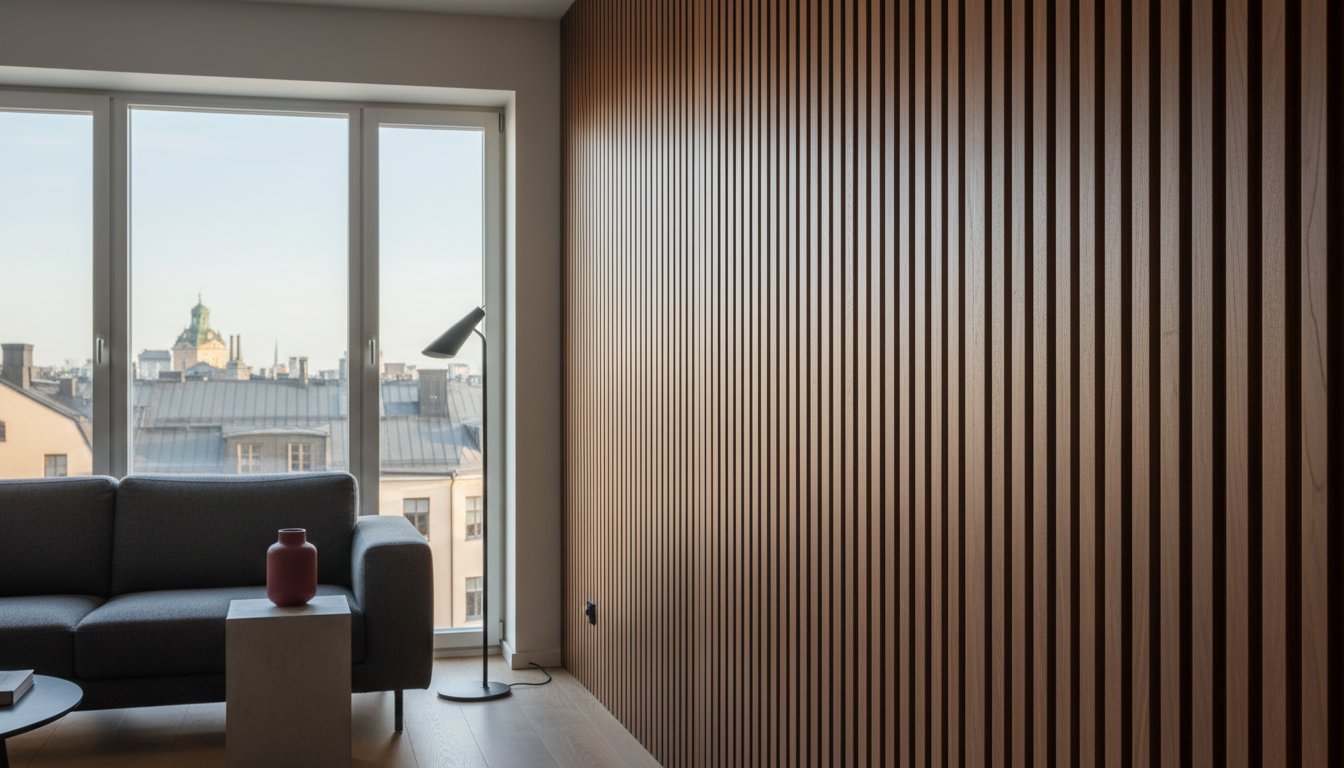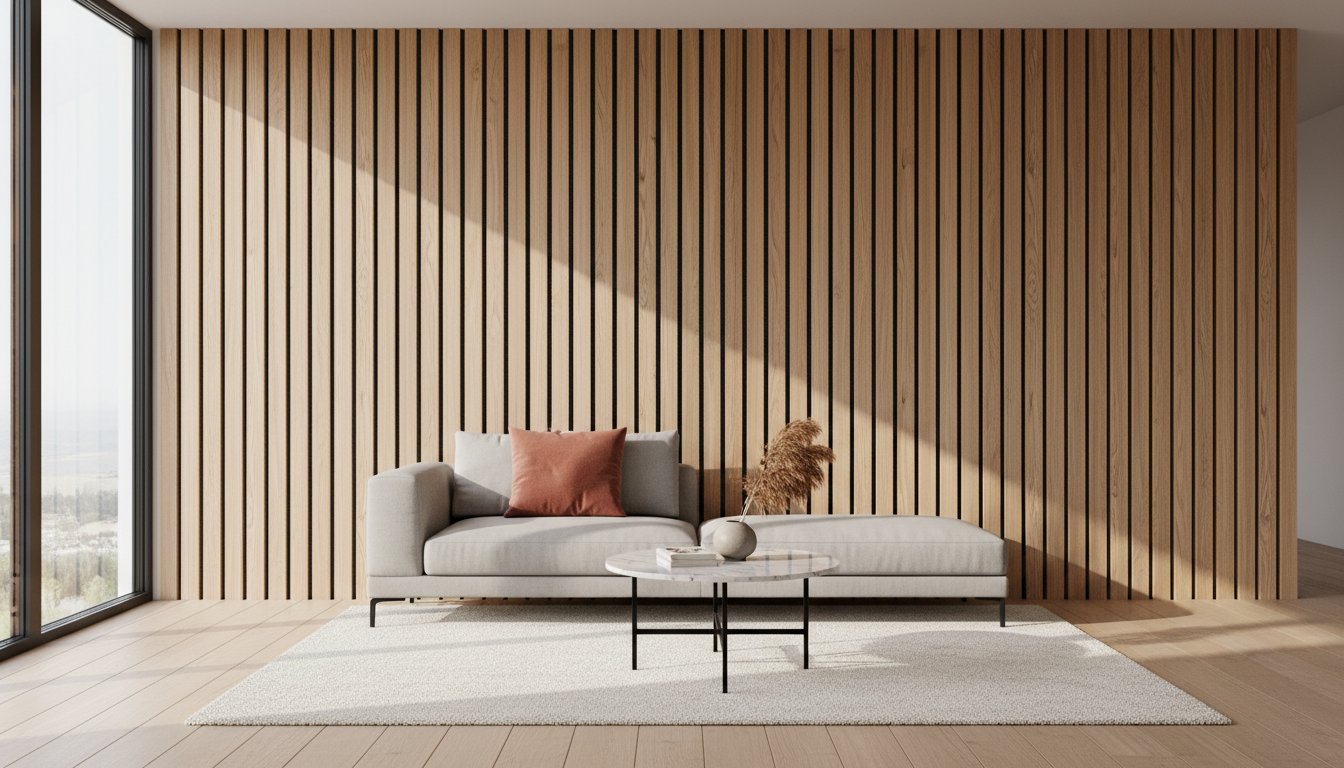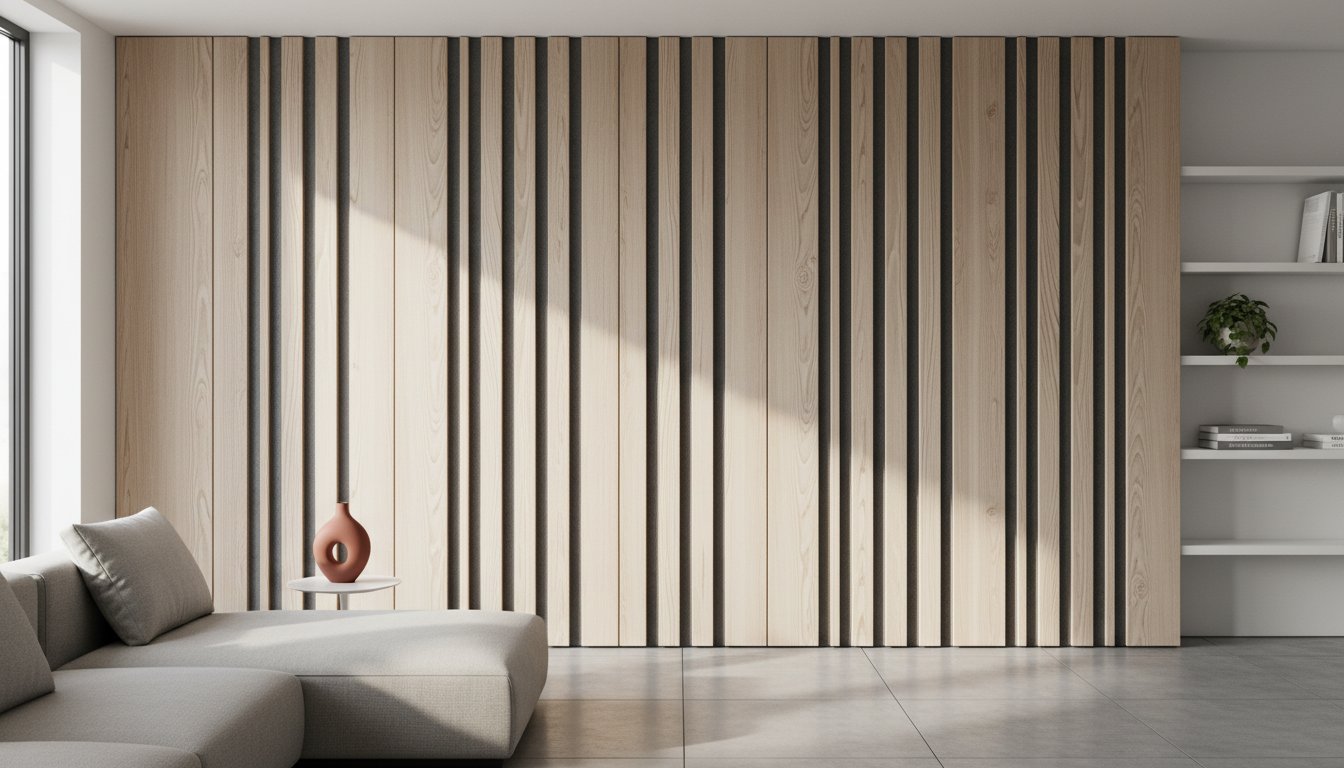
Acoustic panel ash: Create a bright and harmonious sound environment with Scandinavian design
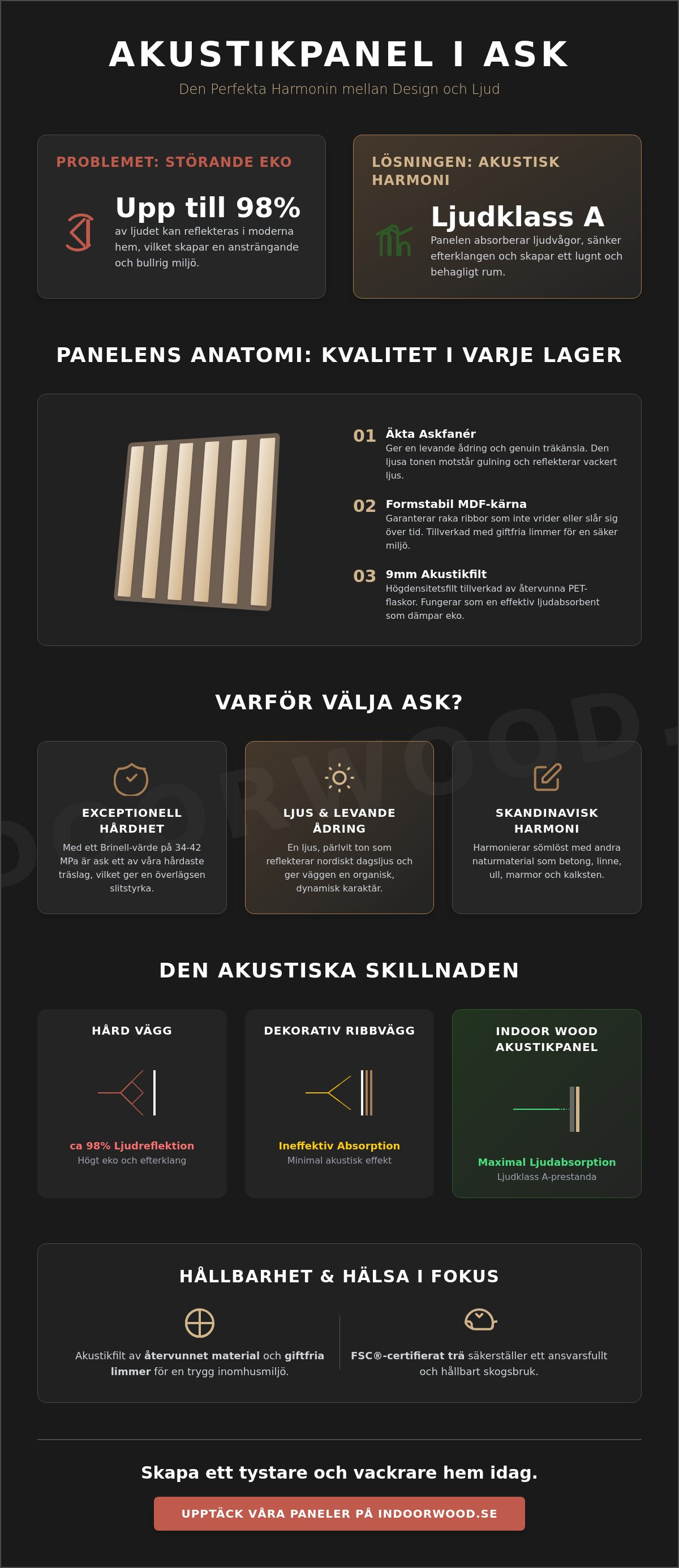
Imagine settling down for dinner in your dream home, surrounded by large glass panels and minimalist decor, only to find that the chatter from guests bounces so hard off the walls that conversation becomes an effort. In modern homes with open-plan layouts, hard materials can reflect as much as 98 percent of all sound, creating an acoustic environment that feels anything but harmonious. An ash acoustic panel is the solution that combines technical function with Scandinavian design heritage. The light wood species ash is deeply appreciated for its toughness and lively grain, making it an ideal choice for those seeking timeless wall decoration that won't yellow anytime soon.
We share your passion for genuine natural materials and understand the challenge of creating a home that feels as peaceful as it looks. Here, you will learn how ash acoustic panels transform your living environment by combining visual elegance with top-class sound absorption. We will guide you all the way from selecting the right grade to practical tips for smooth installation, so you can create a quieter, cozier home with that genuine sense of craftsmanship.
Key Takeaways
- Discover how ash's light tones and exceptional hardness create a harmonious sound environment with a timeless Scandinavian feel.
- Learn to identify quality by understanding the panel's construction, from the sound-absorbing felt to the genuine scent and texture of real wood veneer.
- Gain insights into choosing the right wood by comparing ash's lively grain with the more homogeneous structures of oak and walnut.
- Explore creative ways to use an ash acoustic panel as a headboard or feature wall to maximize both visual elegance and acoustic comfort.
- Understand the benefits of choosing top-quality white-lacquered ash directly from the manufacturer for a durable and exclusive investment in your home.
What is an ash acoustic panel and why is it so popular?
A home's atmosphere is about much more than what we see; it’s about how a room feels and sounds. An ash acoustic panel is a sophisticated solution that combines genuine wood craftsmanship with modern sound technology. Its construction is based on a series of precision-cut wooden slats mounted on a specially developed acoustic felt, often made from recycled polyester. By integrating architectural acoustics principles into the private residence, one can effectively tame disruptive echoes and reverberations that easily arise in modern homes with open spaces and hard materials.
Ash is a material with unique properties that make it a first choice for demanding environments. As one of our hardest native wood species, with a Brinell value often between 34 and 42 MPa, it offers wear resistance that surpasses both oak and pine. Its visual identity is characterized by a light, almost pearl-white tone and a distinct, lively grain that gives the wall an organic character. It is this combination of technical function and aesthetic brilliance that has made the panel a favorite among interior designers.
The difference between an acoustic panel and a regular slatted wall
It's easy to confuse a purely decorative slatted wall with a functional acoustic solution, but the difference in performance is significant. A traditional slatted wall is often mounted directly against a hard surface, which is beautiful but does little to improve the sound environment. In an ash acoustic panel, it is the underlying felt that does the heavy lifting. The felt acts as an absorbent that swallows sound waves instead of reflecting them. The distance between the slats is carefully calibrated, usually to about 13 millimeters, to optimally break up sound waves before they reach the absorbent. This creates a measurable improvement in the room's acoustics and noticeably lowers the sound level.
Why ash is perfect for Scandinavian interior design
Scandinavian design is founded on light and natural honesty. Ash has an inherent ability to reflect the Nordic daylight without yellowing as quickly as many other wood types. In a climate where light is scarce during the winter months, the choice of material for large wall surfaces becomes crucial. Ash creates a visual bridge between traditional craftsmanship and today's minimalist ideals. The material harmonizes seamlessly with other elements in the modern home:
- Light concrete: The warmth of the wood softens the cold and industrial expression of concrete.
- Natural textiles: The combination with linen and wool creates a tactile environment that feels both luxurious and down-to-earth.
- Stone materials: The light tone of ash highlights the elegance of both marble and limestone.
Choosing ash is an investment in timeless aesthetics. It is a choice that signals quality and an awareness of how material choices affect our daily well-being at home.
Construction and durability: What lies behind the slats?
An ash acoustic panel from IndoorWood is the result of meticulous engineering where each layer fulfills a specific function. Behind the light, lively surface of ash veneer lies a construction that balances aesthetics with technical performance. We exclusively use real wood veneer to preserve the genuine scent and natural variation in grain that only nature can create. By choosing FSC-certified wood, we ensure that forestry is conducted with respect for both environment and people, making your home investment as ethical as it is beautiful. A high-quality construction is essential for the slats to maintain their linear perfection without warping when humidity shifts between seasons.
Core material: MDF vs. solid wood
The choice of core material is crucial for the panel's lifespan and final finish. We use high-density MDF instead of solid wood for a simple reason: stability. Solid wood is a living material that moves with the indoor climate, often leading to slats twisting or cracking over time. The MDF core, however, is dimensionally stable and provides a consistent weight that greatly facilitates installation. For us, your health and indoor environment are top priorities. Therefore, only non-toxic glues and materials that meet strict requirements for low emissions are used, creating a safe environment for both children and adults.
The role of acoustic felt in the sound environment
The foundation of every ash acoustic panel is the nine-millimeter thick acoustic felt, made from recycled PET bottles. This felt acts as an effective sound absorber by capturing and breaking down sound waves instead of allowing them to bounce off hard wall surfaces. There is extensive research on the acoustic properties of wood-based panels that shows how the combination of hard wooden slats and soft felt eliminates flutter echo and significantly lowers the sound level in large rooms.
The felt also contributes to the visual depth of the room. By choosing between different color tones, you can radically change the panel's character:
- Black felt: Creates a deep contrast that makes the ash's light grain visually pop.
- Grey felt: Gives a softer, more subdued impression that blends into modern concrete or stone surfaces.
- White felt: Enhances Scandinavian minimalism and creates an almost seamless, light wall.
This composition of recycled felt, stable MDF, and exclusive ash veneer creates a product that withstands the test of time and everyday wear and tear. If you want to explore how these materials interact in reality, you can see our various designs at indoorwood.se to find the right balance for your unique project.
Comparison: Ash acoustic panel versus oak and walnut
The choice of wood species is the single most important decision for setting the tone in a room. An ash acoustic panel stands out for its cool, almost white color scheme, which effectively opens up smaller spaces and reflects daylight in a way that darker woods cannot. Ash's density gives it a Janka hardness of approximately 5800 N, making it slightly harder than oak. This is a material that can withstand everyday stresses in corridors or kitchen environments where the risk of impacts is higher.
When we examine the technical properties, we see that the wood's structure plays a role in more than just aesthetics. A scientific study on the influence of porosity shows how the wood's natural cell structure contributes to both thermal insulation and sound absorption. Ash's distinctive grain creates a visual rhythm that conceals joints between panels better than the more homogeneous oak. Price-wise, ash is often in a similar segment to oak, with prices typically ranging between SEK 1,200 and SEK 1,900 per panel depending on surface treatment and underlying acoustic felt.
Ash vs. Oak: The great duel
Ash is often perceived as a more modern choice in contemporary Scandinavian architecture, while oak carries a heavier tradition. The biggest difference lies in the undertones. Where oak leans towards golden and warm, ash maintains a cooler, crisp profile that pairs perfectly with grey or light blue wall colors. For families with an active lifestyle, ash's lively pattern is a practical advantage. The varied grain is excellent at masking dust and small scratches that would otherwise be clearly visible on more uniform surfaces. It's a grateful material for those who want a home that looks tidy longer.
When should you choose darker walnut instead?
Walnut is the choice for those seeking maximum contrast and a sense of exclusivity. In large living rooms with high ceilings, a light ash acoustic panel can sometimes feel too anonymous. Here, the deep brown tones of walnut create a cozy atmosphere that frames the room. Many choose to incorporate the wood type into other details, such as a walnut bathroom vanity, to create a consistent theme throughout the home.
An effective interior design strategy is to use ash as a base in most rooms and reserve walnut for specific zones, such as a feature wall behind the bed or in the home office. This creates a clear hierarchy and dynamism in the open-plan layout. If you want to delve deeper into the differences between various wood species, you can read more about the properties of solid wood in our comprehensive guide. Understanding how the material moves and ages is key to an investment that lasts for generations.
How to decorate with light ash panels – From living room to bedroom
Integrating an ash acoustic panel into your home is about combining functional sound regulation with a deep aesthetic calm. In the living room, the panel plays an important role when placed behind TV equipment. By breaking up large, hard wall surfaces, you reduce disturbing sound reflections and glare, creating a harmonious focal point that doesn't tire your eyes during movie night. The light wood provides a soft contrast to technical equipment and frames the heart of the room in a sophisticated way.
In the bedroom, we see a growing trend where panels are installed as a built-in headboard. This is a solution that goes beyond the purely visual; it improves sleep quality by creating a quieter zone directly at the bedside. To control the room's dynamics, the mounting direction is crucial. Vertical slats work excellently to create an illusion of higher ceilings, while horizontal mounting widens the room and creates an earthy, secure feeling. In the kitchen, where often 75% of surfaces consist of hard materials like stone and tile, ceiling mounting is an effective method to lower the noise level and make conversations around the dinner table more pleasant.
Color matching and lighting
Ash's natural luster and light grain thrive best with a color palette inspired by nature. Wall colors in warm grey tones, greige, or muted sage green highlight the wood's organic pattern without overpowering it. During the day, the panel's appearance changes as daylight moves across the room, giving the wall life and variation. To create a more dramatic effect in the evening, you can install thin LED strips between the slats. This creates a directed play of shadows that gives the panel a three-dimensional depth and enhances the feeling of exclusive craftsmanship.
Ash in kitchens and bathrooms
When planning for wood panels in environments with higher humidity, material choice is crucial. Ash is a dimensionally stable wood species, but in kitchens and bathrooms, you should be extra careful with the surface treatment. A matte lacquer provides strong protection against grease splatters and moisture, while a hard wax oil preserves the tactile wood feel but requires slightly more maintenance. To create a cohesive architectural line in the home, you can advantageously combine your ash acoustic panel with a wooden kitchen. This consistency between fixed furnishings and wall cladding creates an exclusive atmosphere where every detail feels thoughtfully designed and rooted in Scandinavian design tradition.
Want to experience how the right material choice can elevate your next interior design project? Explore IndoorWood's collection of first-class wood surfaces here.
Find your perfect ash acoustic panel at Indoor Wood
At Indoor Wood, we view wood as more than just a building material; it's a living part of the home that sets the tone for your entire daily life. Our focus is on highlighting ash's natural elegance through a carefully selected white-lacquered finish. This treatment preserves the wood's light character and distinctive grain while protecting the surface from sunlight and wear. By choosing an ash acoustic panel from our range, you get a product where aesthetic finesse meets technical precision.
When you shop with us, it's directly from the manufacturer. We have chosen to eliminate expensive intermediaries to ensure that every crown you invest goes directly to material quality and craftsmanship. This also gives us full control over the entire production chain, from forest to finished panel. For those seeking something extraordinary, we offer custom-made solutions. We understand that every room has unique conditions, and our personal advice helps you find the right dimensions for your walls or ceilings.
No picture can completely replace the feeling of running your hand over a well-sanded wood surface. We therefore welcome you to visit our showrooms to experience the quality up close. Here you can see how the light falls over the ash pattern and get an honest impression of how the material will transform your environment.
Our range of acoustic panels
Our selection ranges from standard dimensions of 2400 mm to premium options reaching up to 3000 mm to cover entire walls without joints. Every acoustic panel is designed to be a sustainable choice for the future. We exclusively work with FSC-certified wood, which means we take responsibility for the biodiversity of forestry. By combining robust ash with a backing of recycled acoustic felt, we create a product that not only improves the sound environment but also protects the planet's resources.
Easy ordering and fast delivery
Renewing your home should be an inspiring journey, not a logistical puzzle. In our webshop, you can easily navigate between different designs and immediately see availability for home delivery across Sweden. As a family-owned company with a deep passion for wood, we take pride in our customer service. We are here to answer technical questions about installation or provide advice on how an ash acoustic panel best matches your existing flooring.
- Fast processing of orders with delivery directly to your door.
- Expert help via phone or email for all types of projects.
- Highest grade of ash veneer for an even and exclusive impression.
Want to see how the material fits your specific lighting? Explore our range and order samples on our website today to start your journey towards a more beautiful and quieter home environment.
Realize your vision of a harmonious home
Choosing the right materials for your walls is about balancing timeless aesthetics with modern functionality. An ash acoustic panel is more than just a beautiful surface. It's an investment in a sound environment that promotes both tranquility and conversation. By combining ash's light, Scandinavian character with technical precision, you create a home that feels both airy and cozy. As a family-owned company focused on sustainable craftsmanship, we value every unique wooden slat. We deliver our products directly from the manufacturer, ensuring high quality at a fair price for your unique project.
We are with you throughout the entire process, from the first inspiration image to the finished result. You are warmly welcome to visit our showrooms in Stockholm and Gothenburg for personal service and advice. There, you can experience the wood's natural texture and feel the solid quality before making your decision. Let us together create a foundation for your lifestyle where every detail counts and every room can breathe. Your dream home is just one well-thought-out material choice away.
See our selection of ash acoustic panels here
Frequently asked questions about ash acoustic panels
What is the difference between ash and oak acoustic panels?
The main difference between the wood types lies in their visual character and color tone. An ash acoustic panel offers a significantly brighter and cooler aesthetic than oak, which often leans towards a golden hue. Ash is characterized by its vibrant grain and a natural luster that reflects light in a way that opens up the room. While oak provides a robust and classic feel, ash creates that light, Scandinavian harmony so sought after in modern homes.
How to best mount an ash acoustic panel on the wall?
The best way to mount your ash acoustic panel is by screwing directly through the black acoustic felt into the wall. We recommend using approximately 15 black screws per panel to ensure it sits stably and evenly. If you want to avoid visible screw holes, a strong mounting adhesive works excellently, provided the wall surface is clean and dry. It’s a craft that requires precision but one that most people can manage on their own in an afternoon.
Can ash acoustic panels be used in the bathroom?
Panels of this type should not be placed in wet areas or directly next to the shower, as wood is a living material affected by moisture. However, you can install them in well-ventilated bathrooms, as long as they are at a safe distance from water sources. According to industry standards, the humidity in the room should be between 30 and 60 percent for the wood to maintain its shape and luster. This creates a fantastic spa-like feel by the sink or in a drier part of the room.
Do ash acoustic panels yellow over time?
All natural wood matures over time, and light wood types can develop a slightly warmer tone when exposed to UV light. This process is a natural part of the wood's life cycle and gives the wall a unique patina that tells the story of the home. To preserve the original color for as long as possible, you can choose panels that are pre-treated with UV protection or white-pigmented oil. This delays color change and maintains the crisp feel in the room for many years.
How many acoustic panels do I need for good sound absorption?
To achieve a noticeable improvement in room acoustics, you should cover approximately 20 to 30 percent of the wall surface with panels. In a 25 square meter living room, this often means that a feature wall of 3 to 5 panels is enough to effectively dampen echo. Place them where sound is reflected the most, for example, opposite a sofa or behind a dining area. This transforms the room from a sterile environment into a harmonious oasis where conversations can take place without disturbing reverberation.
Is it possible to cut the acoustic panels yourself to the desired size?
It is perfectly fine to cut the panels yourself with a fine-toothed saw or a circular saw to get precise measurements. You can easily cut through the underlying felt with a sharp utility knife, while the wooden slats require a high-precision tool to avoid splintering. By measuring twice and cutting once, you ensure a professional end result that fits perfectly around electrical outlets or along moldings. It is a rewarding material to work with for those who value detail in their home improvement projects.