Dark wood in interiors: A guide to walnut, oak, and timeless elegance
What if what you fear will make your home cramped and dark is actually the key to a spacious and sophisticated atmosphere? Many interior design enthusiasts hesitate to introduce dark wood into their homes, worried that the deep tones will steal light or quickly feel outdated. This is a natural reaction when one views wood solely as a color, rather than the living and tactile foundation it truly represents for a room's entire character and the feeling of quality underfoot.
We understand the hesitation to let dark tones take up space, but when craftsmanship and aesthetics work together, the result is often a timeless investment that uplifts rather than weighs down. In this guide, you will learn how to use dark wood species like walnut and stained oak to create an exclusive and harmonious home that will last for decades. We will provide you with a concrete plan to balance dark surfaces with light contrasts and clarify the technical differences between naturally brown wood species and those that have acquired their deep tone through modern surface treatment. We begin by exploring how to choose the right materials to set a personal and sustainable stamp on your interior design.
Key Takeaways
- Learn how dark wood, or dark wood, serves as a foundation for modern Scandinavian luxury and creates a timeless atmosphere in your home.
- Discover the aesthetic and practical differences between the soft tones of natural walnut and the robust structure of dark-stained oak.
- Get concrete tips on how to balance dark surfaces with the right lighting and contrasts to preserve the room's spaciousness and harmony.
- Debunk the myth that dark wood surfaces are difficult to maintain and learn how to choose the right surface treatment to enhance the wood's natural luster.
- Explore how custom-made solutions in exclusive materials can transform your interior vision into a unique and handcrafted final result.
What defines "dark wood" in modern Scandinavian design?
The Scandinavian design scene is undergoing a noticeable change. For decades, light birch and white-pigmented ash dominated, but now we are seeing a return to deeper tones. The term dark wood encompasses everything from deep chocolate-brown American walnut to oak and ash that have undergone a controlled pigmentation process. This is not a fleeting trend. It is a movement towards substance and character. Dark wood surfaces act as an anchor in the room. They create a visual weight that gives a sense of luxury and permanence, contrasting with the more ephemeral interior aesthetics we have seen previously.
Psychologically, dark surfaces affect us deeply. They absorb light in a way that reduces stress levels and creates a cozy atmosphere. It is an environment where one can find peace after an intense workday. The difference between modern dark tones and dark interiors of previous decades lies in the surface finish. Today, we strive for matte, tactile surfaces where the wood's natural structure takes center stage. It is about creating a balance between the elegant and the raw, where every fiber gets to tell its story.
Naturally dark wood species vs. surface-treated alternatives
Walnut is the king of naturally dark wood species. Its unique, living grain and natural color variations make every plank a unique work of art. When we study different properties of wood, it becomes clear why solid materials outperform substitutes. You identify genuine solid wood by examining the pattern repetition and end grain. In a genuine wood floor, the same pattern never repeats exactly, unlike foiled surfaces which often have a repetitive, artificial feel. Choosing dark wood in the form of solid wood is an investment for the future. It is a material that has the ability to be sanded and renewed, giving it a lifespan that extends over several generations.
Sustainability and origin
At IndoorWood, we see wood as a living heritage. We exclusively work with certified wood from responsible forestry where every felling takes place with respect for the ecosystem. Our philosophy regarding sustainable material choices in fine wood is about minimizing environmental impact without compromising aesthetic quality. We place high demands on our suppliers to ensure that every square meter of flooring meets both environmental standards and our own craftsmanship requirements.
- Certified origin ensures that the forest is replanted.
- Solid wood contributes to a better indoor climate by regulating humidity.
- Craftsmanship in production reduces waste and resource consumption.
Solid wood ages gracefully over decades and develops a beautiful patina that tells the story of the home.
Walnut vs. Dark-Stained Oak: Which material should you choose?
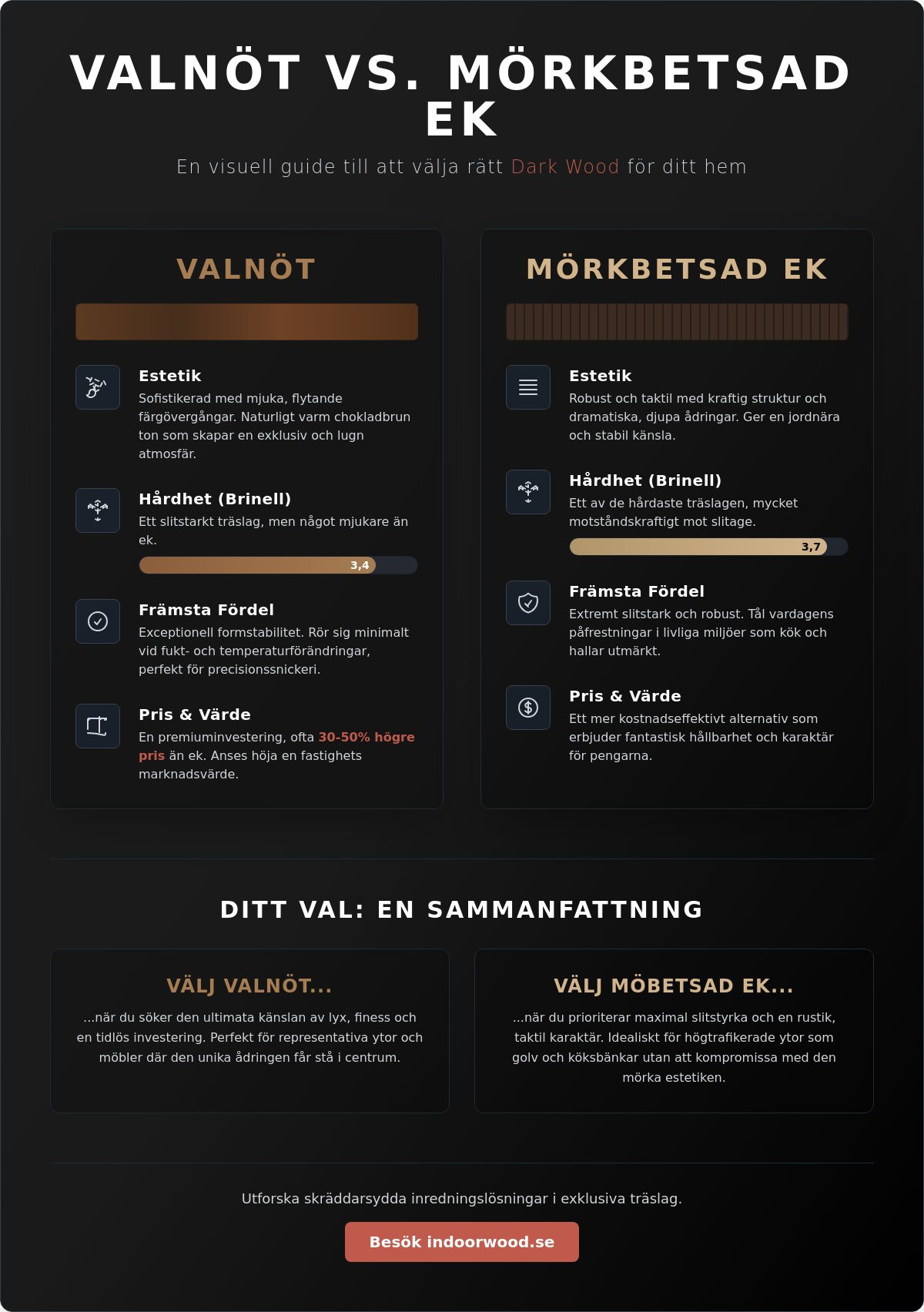
The choice between walnut and dark-stained oak is about more than just color. It is a decision that affects the entire atmosphere of the room and how the surfaces age over time. Walnut offers a naturally warm, chocolate-brown tone that feels sophisticated without being heavy. Oak's strength lies in its strong structure and distinct pores, which give a more rustic and tactile feel even when dressed in dark pigments. This type of dark wood creates a foundation that feels both stable and earthy in a Scandinavian home.
When we examine durability, we see that oak is the harder option. On the Brinell scale, which measures wood's resistance to indentation, oak often scores 3.7, while walnut is slightly lower at around 3.4. In practice, this means that oak can withstand everyday wear and tear in a lively kitchen somewhat better. Walnut's primary technical advantage is its exceptional dimensional stability. It moves minimally with temperature changes and humidity, making it a technical favorite for precision joinery and furniture designed to last for generations.
- Aesthetics: Walnut has soft, flowing color transitions; oak has dramatic and deep grains.
- Price: Walnut often commands a price 30 to 50 percent higher than oak due to slower growth and limited availability.
- Long-term value: Premium materials like walnut are often considered a property investment that increases the total market value of the home.
Walnut – The exclusive choice
Choosing a walnut bathroom vanity is seen by many as the crown jewel of modern interior design. The material combines visual softness with a density that feels solid to the touch. According to scientific facts about black walnut, the wood species is known for its natural resistance, making it suitable for environments where quality is prioritized. Walnut's grain acts as natural art on large surfaces. Each section tells its own unique story through its undulating, dark patterns and luster.
Oak in dark stain – Character and versatility
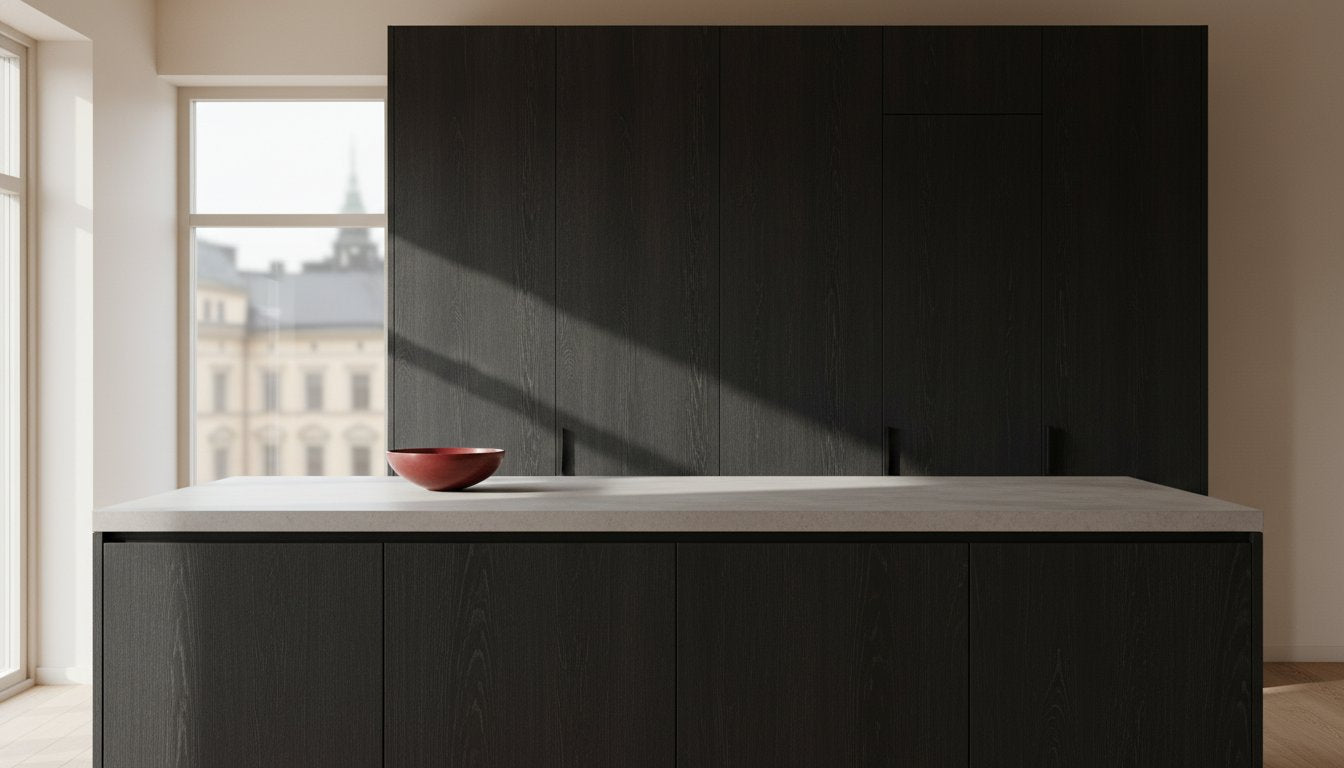
Dark-stained oak is the smartest choice for those who want full control over the exact shade. By applying different pigments to a wooden kitchen, you can control the result from a deep espresso to a cooler, sooty gray tone. It is fascinating how oak retains its distinct character and structure despite the dark pigments. This creates a living surface that never feels flat. If you are planning a major renovation and want to maximize your budget without sacrificing quality, dark-stained oak is a reliable partner. It gives you the coveted feeling of dark wood at a more accessible price point. Before making your final decision, it may be wise to order material samples to see how the light in your home interacts with the wood's surface.
Decorating with dark wood without making the room feel smaller
A common misconception is that dark woods automatically steal space and make a room feel cramped. In reality, it's about mastering the balance between shadow and light. By combining dark surfaces with light contrasts on walls and floors, you create a depth that actually enhances the sense of space. An effective method is to let 70% of the room's surfaces be light, while the remaining parts carry the weight and elegance that dark wood offers.
Using dark elements as strategic focal points, rather than decorating the entire room in subdued tones, maintains airiness. You can find expert tips for styling dark wood furniture that emphasize the importance of allowing furniture to breathe through generous spacing and thoughtful sightlines. Placing a piece of dark wood furniture against a cream-white or light gray wall creates a silhouette that feels both modern and timeless.
Lighting plays a crucial role in the final result. Warm light with a color rendering index (CRI) of at least 90 highlights the wood's natural luster and prevents the surface from looking lifeless. Complement with metal details such as brass or mirrors to reflect light back into the room. This creates a dynamic environment where the dark wood serves as a luxurious base rather than a dominating force.
Dark wood in the bathroom
In the bathroom, a dark vanity creates an immediate feeling of an exclusive spa and a calming serenity. The deep tone of walnut contrasts beautifully with natural stone such as Carrara marble or Swedish limestone. To truly maximize the aesthetic expression and craftsmanship, you can choose a vanity without a sink. This gives you the freedom to install a freestanding basin, which exposes more of the wood's unique grain and creates a personal design that will stand the test of time.
Acoustic panels in dark tones
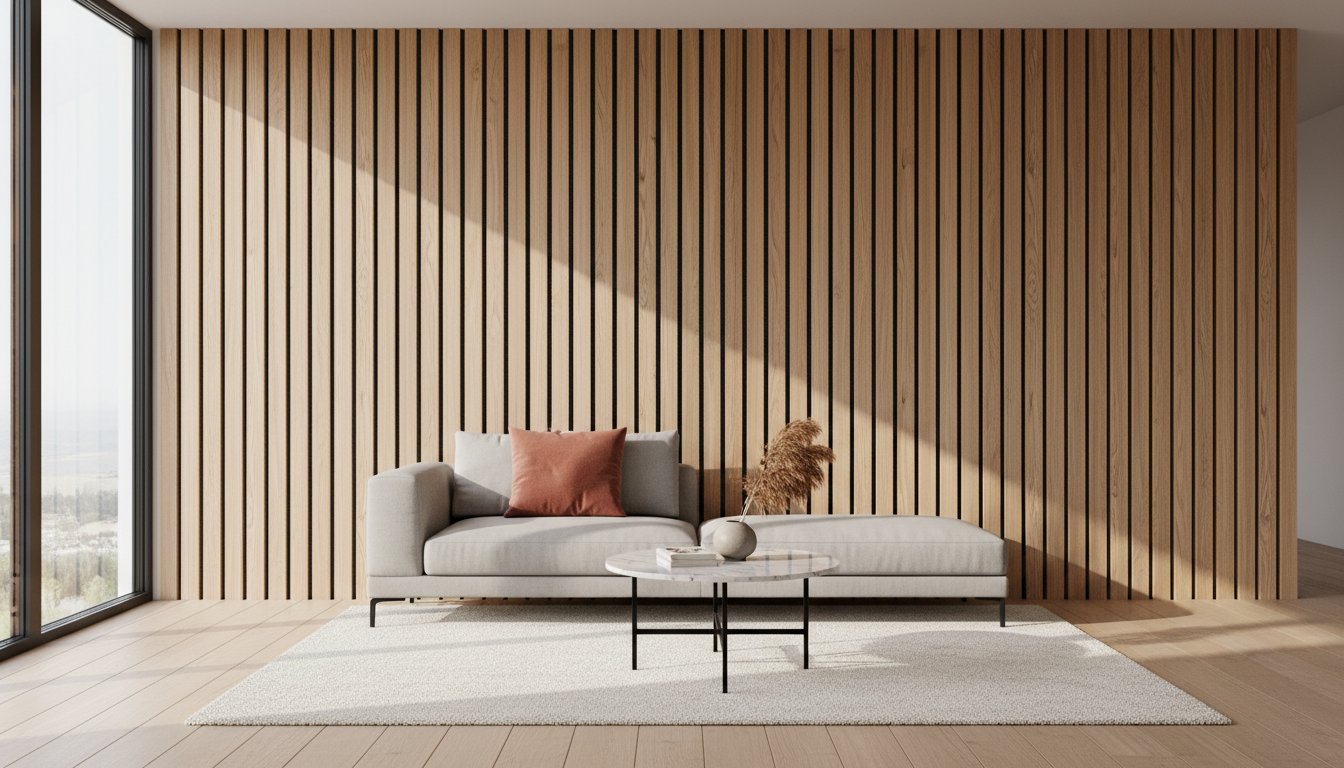
An acoustic panel in dark walnut is one of the most effective ways to change a room's atmosphere and acoustics at the same time. By installing a feature wall with vertical slats, you create an architectural depth that tricks the eye into thinking the ceiling height is higher than the standard 240 centimeters. This dark wood solution gives the room a cozy feel while dampening echoes, making it ideal for both living rooms and home offices where precision and aesthetics meet.
Care and maintenance of dark wood surfaces
There is a persistent belief that dark wood requires an unreasonable amount of daily work. The truth is that dust and fingerprints are more visible on a dark, high-gloss surface than on a light one, but that does not mean the material itself is more demanding. With the right surface treatment, maintenance becomes a natural part of the craftsmanship's life cycle. The choice between oil, wax, and lacquer is crucial for the final result. An oiled surface requires more regular care but rewards the owner with an unparalleled depth and a tactile feel that lacquered surfaces often lack.
One of the main advantages of choosing solid wood is the repair possibilities. Unlike veneer or laminate, solid surfaces can be sanded and re-treated if an accident occurs. Small scratches in dark woods can often be concealed by gently rubbing in some furniture oil or using a retouching wax in a matching shade. For deeper damage, local sanding followed by a new application of the same oil used during installation is often sufficient. This ensures that the investment retains its value for decades.
Daily cleaning and preventive care
Keep chemicals away from your dark wood surfaces. Strong cleaning agents can bleach natural pigments and cause permanent color changes. A lightly dampened cloth is usually sufficient for daily cleaning. In environments like bathrooms, it is critical to wipe away water immediately to prevent moisture from penetrating the fibers and causing dark stains or swelling.
To give a walnut surface maximum luster, you can follow this simple routine:
- Clean the surface thoroughly from dust and dirt with a dry microfiber cloth.
- Apply a high-quality wood oil with a lint-free cloth, always working in the direction of the wood grain.
- Allow the oil to soak in for about 15 to 20 minutes to thoroughly saturate the wood.
- Wipe off all excess with a clean cloth to avoid a sticky surface that attracts dirt.
The natural maturation of wood
Genuine wood is a living material that reacts to its surroundings. Sunlight is the factor that affects the color most over time. Walnut has a unique character where it often lightens slightly and acquires a warmer, golden tone upon exposure to UV light. Oak, on the other hand, tends to darken. This patina is not a defect, but proof that you have chosen a genuine natural material in dark wood that ages with dignity.
To minimize uneven fading, it is wise to consider placement. Avoid placing dark wood furniture in direct, unforgiving sunlight from large south-facing windows without protection. During the first year, you should also be careful to move decorative items and rugs regularly so that the entire surface can mature at the same pace. This creates a harmonious and uniform color tone that only becomes more beautiful with age.
Want to know more about how to create a home with sustainable materials? See our exclusive flooring and interior details at indoorwood.se.
Indoor Wood: Your partner for exclusive dark wood interiors
Indoor Wood is more than just a supplier; we are craftsmen who understand the soul of wood and its ability to transform a room. Our expertise extends deep into the world of dark wood species, where we work primarily with carefully selected walnut, oak, and ash. We know that choosing dark wood is about creating an atmosphere of security and sophisticated luxury. By working with a direct business model, we eliminate unnecessary intermediaries. This means that a larger portion of your investment goes directly to the quality of the material and the precision of the craftsmanship, rather than to logistics and external markups. This gives you premium quality at a price that reflects the true value of each plank.
Our passion for the material is evident in every detail, whether it concerns standard dimensions or entirely custom-made solutions for unique homes. We adapt to your architectural conditions to create a seamless integration between furniture and fixed furnishings. It is this flexibility that enables us to deliver solutions that feel custom-built and personal.
Our range of dark wood species
Our range includes everything from exclusive bathroom furniture and modular kitchen solutions to advanced acoustic solutions that improve both sound environment and aesthetics. For those seeking something out of the ordinary, we offer the opportunity to order wooden kitchens in a completely self-developed stain. This makes it possible to fine-tune the shade of your dark wood interior so that it harmonizes perfectly with the room's light incidence and other material choices.
- Bathroom furniture in solid walnut with moisture-resistant surface treatment for long durability.
- Kitchen modules that combine Scandinavian minimalism with dark, warm wood tones.
- Acoustic panels in ash and oak that provide a quieter and more harmonious everyday life.
We offer personal advice where we go through your drawings together. We discuss everything from the direction of the grain to how different surface treatments affect the wood's natural luster over time. Every project is treated with the same care, regardless of size.
Book a consultation
The journey to your dream home begins with a vision, and we are here to turn it into reality. We guide you through the entire process, from the initial sketches to the final installation in your home. To facilitate planning, we use modern digital tools that allow you to visualize how different wood species and surface treatments interact in your specific environment.
Feel free to visit our showrooms to experience the materials firsthand. It is only when you run your fingers over a finely polished walnut surface or see the natural variations of oak in daylight that you truly understand the difference in quality. Our experts will help you navigate between technical specifications and aesthetic choices to find the optimal balance for your home.
Invest in craftsmanship that lasts for generations
The choice of dark wood is about more than just aesthetics; it's about investing in an atmosphere that ages gracefully. By combining the deep luster of walnut with the right lighting and light contrasts, you create a sophisticated environment without compromising the room's spaciousness. Our experience shows that the right surface treatment and consistent care extend the material's lifespan by several decades, making it both a sustainable and timeless choice for the future. As a Swedish family business focused on fine wood, we are passionate about highlighting the unique qualities of each individual wooden plank.
We deliver custom-made solutions directly from our own manufacturing to guarantee the highest precision in every cut. Whether you're looking for the perfect shade of dark wood for your floor or want to see how materials interact with daylight, our experts are ready to guide you. You are warmly welcome to our showrooms in Stockholm and Gothenburg to experience the craftsmanship up close and feel the natural texture of the surface. Let us together transform your vision into a lasting foundation for your home.
Discover our exclusive walnut bathroom furniture
Frequently asked questions about dark wood in interior design
Which wood species is naturally darkest?
Wenge is the wood with the darkest natural tone, often almost black-brown with deep and dramatic grain. American walnut is the most popular choice for those seeking a warmer, chocolate-brown shade with more vibrancy. Approximately 90 percent of all exclusive interior design projects in Sweden that request dark woods choose walnut for its ability to age gracefully.
Will the room be too dark if I choose a walnut kitchen?
A walnut kitchen does not weigh down a room as long as you balance the material with the right lighting and light contrasts. By combining the wood with light natural stone countertops, light is effectively reflected in the room. We find that kitchens with dark woods are often perceived as more cozy and luxurious rather than cramped, especially in open-plan layouts.
What is the difference between walnut and dark-stained oak?
Walnut has a natural variation in color and grain ranging from light brown to deep espresso throughout the wood. Dark-stained oak is a more uniform product where pigment has been added to conceal the natural yellowness of oak. The difference is most evident with scratches; on walnut, the wood underneath is visible, while the oak's light core immediately appears if the stain is damaged.
How do you care for a solid walnut bathroom vanity?
You care for your vanity best by wiping off water splashes immediately with a soft cloth to avoid limescale stains. The wood should be treated with a high-quality hardwax oil every six to twelve months to maintain its protection against moisture and dampness. A well-maintained solid wood surface can last over 30 years even in a demanding bathroom environment.
Can dark wood be used in a small bathroom?
Dark wood works excellently in small bathrooms as a sophisticated accent against light walls and large mirrors. A dark vanity or shelf creates a visual depth that makes the room feel more architecturally interesting and well-considered. It instantly gives a sense of spa and exclusivity even in areas under 5 square meters.
Is dark wood out of fashion in 2026?
Forecasts for 2026 show that the trend is moving towards more tactile and authentic materials where dark wood is central to modern interior design. Interior designers emphasize that sustainability and timelessness are now more important than fast trends that quickly fade. Walnut and dark oak are considered long-term investments that have been proven to increase a home's market value over time.
Which colors best match dark wood?
Earthy tones such as sand, greige, and muted sage green highlight the natural warmth of the wood harmoniously. For a more dramatic and modern effect, you can use deep midnight blue or anthracite gray details in the decor. Avoid cool, bluish-white shades as they often make the wood appear unnaturally red or orange in daylight.
How much more does it cost to choose walnut instead of oak?
The price for walnut is generally 30 to 50 percent higher than for oak due to limited availability and a significantly slower growth rate. According to market data from 2023, the raw material for walnut costs significantly more per square meter from reputable suppliers. It is a premium product that reflects both rarity and the craftsmanship required for precision processing.