Oak Countertop: A complete guide to selection, installation, and maintenance 2026
An oak worktop is not just a work surface; it's the only material in your kitchen that actually becomes more beautiful with each passing year, provided you understand its natural soul. Many homeowners are attracted to the warm, timeless atmosphere that solid wood exudes but often hesitate due to the fear of unsightly moisture stains or the wood warping after just one season. This is an understandable concern when aiming to create a durable heart in the home that can withstand both the test of time and the intensity of everyday life.
In this guide, you'll learn everything about choosing the right quality and installing your oak worktop with the precision required for a perfect result. We'll provide you with the knowledge to care for the wood yourself so that it ages gracefully and remains a resilient investment. We'll cover everything from selecting surface treatment and lamella structure to practical tips for installation and the crucial maintenance routines that secure your kitchen's aesthetics for 2026 and beyond.
Key Takeaways
- Learn why solid oak is the obvious choice for a durable kitchen and how to distinguish between different qualities and constructions.
- Discover the difference between full-length staves and finger-jointed oak to find the aesthetic expression that best harmonizes with your home.
- Get expert advice on surface treatments and how the right choice of hardwax oil or natural oil protects the wood against everyday wear and tear.
- Master the steps for installing your oak worktop with craftsmanship precision, from important acclimatization to precise cutouts.
- Create a simple but effective care routine that preserves the wood's natural luster and makes your investment a lifelong craft.
Everything You Need to Know About Oak Worktops
An oak worktop is more than just a practical work surface; it's a living foundation that defines the entire character of the kitchen. Oak possesses a natural density and strength that makes it exceptionally resistant to the intense wear and tear of everyday life. All about oak wood highlights how this material throughout history has been synonymous with both durability and uncompromising quality. In the Scandinavian home, wood plays a crucial role in balancing minimalist aesthetics and functional warmth. An oak worktop effectively dampens the clatter of pots, pans, and porcelain, creating a significantly calmer and more harmonious atmosphere compared to hard stone surfaces or stainless steel.
The choice to opt for solid wood over veneer or laminate is fundamentally about longevity and honesty in material selection. A solid slab is an investment that spans generations. It possesses the unique ability to be sanded, re-oiled, and repaired as needed, allowing it to age with a dignity that artificial materials can never replicate. Every mark and every grain tells a story of the meals and conversations that have taken place around it. It is this tactile presence that makes oak a cornerstone of our interior design tradition.
Solid oak vs. other wood types
Oak's dominance in Swedish kitchen environments is due to its optimal balance between aesthetics and physical durability. Compared to walnut, which offers a darker and more dramatic tone, oak is more versatile and easier to combine with various color schemes. Ash is another popular alternative with high hardness, but oak often wins due to its characteristic and reliable grain. For those who want to delve deeper into how different wood types affect the feel of the home, we recommend our comprehensive guide on solid wood, which explores the craftsmanship behind each plank.
Sustainability and environmental impact
Choosing an oak worktop is an active choice for the environment. Wood acts as a natural carbon sink, storing carbon throughout its lifespan in the home. We place great importance on ensuring that the timber comes from certified forestry, where FSC and PEFC guarantee that the forest is managed with respect for biodiversity. An investment in high quality reduces the need for future replacements. Instead of replacing a worn laminate worktop after just over 12 years, a well-maintained solid oak worktop can serve the household for 50 years or more. This is true sustainability in practice.
- Hardness: Oak has a high density that protects against dents and marks.
- Acoustics: The material absorbs sound waves, creating a softer sound environment.
- Repairability: Solid wood can be sanded to new condition multiple times.
- Lifespan: With proper care, the material lasts for several decades.
Choosing the Right Oak Worktop: Quality and Construction
An oak worktop is more than just a work surface; it's a living foundation that sets the tone for the entire kitchen's atmosphere. To make a choice that will last for decades, you need to understand the balance between the wood's natural properties and the technical precision of its manufacturing. Oak is a hard and durable wood, but it requires the right construction to remain beautiful in an environment constantly exposed to moisture and temperature fluctuations. Most high-quality slabs are made with a glued stave construction. This method involves gluing smaller pieces of oak together, which effectively breaks the natural tensions present in solid wood. Without this technique, a wide wooden surface could quickly warp or crack when the humidity in Swedish homes drops during the winter months. A moisture content of approximately 8 percent at the time of production is industry standard to ensure that your oak worktop remains stable over time. The choice between full-length staves and finger-jointed lamellas is primarily about aesthetics and budget. Full-length staves mean that each lamella runs in an unbroken piece along the entire length of the slab, creating a calm and exclusive visual flow. Finger-jointed slabs, on the other hand, consist of shorter pieces joined together, which gives a livelier pattern with greater color variations. Thickness also plays a crucial role in the character of the kitchen:- 20 mm: Creates a neat and minimalist impression, perfect for modern kitchens with clean lines.
- 30 mm: The classic standard that balances elegance with robust durability.
- 40 mm: Creates a sturdy and heavy feel often found in rustic kitchens or period homes.
Construction and stability
The precision of the gluing is crucial for longevity. By orienting the lamellas' annual rings towards each other during manufacturing, the wood's natural tendency to move is counteracted. When choosing between custom-made slabs and standard slabs, you should consider your kitchen's unique angles. A custom-made solution eliminates the need for complicated on-site joints and guarantees an exact fit around the sink and hob, minimizing the risk of moisture damage in the future.
Aesthetic choices for your kitchen
The direction of the grain guides the eye around the room. Longitudinal grain can make a narrow kitchen feel more spacious, while the choice of edge profile adds the final touch. A crisp, right-angled edge enhances the architectural expression, while a softly chamfered edge feels more inviting and reduces wear with frequent use. To create a harmonious whole, you can advantageously combine your worktop with kitchen cabinet doors in matching or contrasting wood types for a timeless feel.
If you want to explore how different gradings and surface treatments can elevate your home, you can delve into our range of custom-made solid wood solutions that combine traditional craftsmanship with modern design.
Surface Treatment: Oil, Hardwax Oil, or Varnish?
An untreated oak worktop is like an uncut diamond; full of potential but extremely vulnerable to its surroundings. In a kitchen, where moisture, acids, and grease are constantly present, the wood's surface treatment is directly crucial for both aesthetics and lifespan. Without proper protection, oak's open pores absorb liquid in just a few seconds. This leads to permanent discoloration and the wood fibers raising, making the surface rough and difficult to clean. The choice of surface treatment is about finding the balance between the tactile feel of real wood and the everyday demands of practical functionality.
- Natural oil: This is the classic choice for those who want to maximize the visual depth of the wood. The oil penetrates the fibers and gives the oak a warm, living luster. The downside is that it requires commitment. During the first year, a newly installed worktop should be oiled every three months to fully saturate the wood, otherwise, the surface will dry out and become susceptible to stains.
- Hardwax oil: We see this as the modern first choice for exclusive homes. By combining the penetrating ability of oil with the protective surface of wax, a barrier is created that withstands spills significantly better than regular oil. It provides a satin-matte finish that feels like wood, not plastic, and is also easy to spot-repair if an accident occurs.
- Varnish: A varnished surface completely seals the wood and provides maintenance-free protection for the first few years. The major disadvantage arises when the surface is scratched or worn down. Moisture can then migrate under the varnish layer and react with the oak's tannic acid, creating black spots that are impossible to fix without sanding the entire worktop down to bare wood.
Choosing the right shade with pigment
Oak's natural color tone is warm and golden, but with pigmented treatments, you can customize the expression to suit the room's character. White-pigmented hardwax oil is a cornerstone of Nordic minimalism. It counteracts oak's tendency to yellow over time and preserves the bright, raw feel of freshly planed wood. For a more continental and exclusive atmosphere, smoked oak or dark stain can be used. It is important to understand that oak's natural tannic acid reacts differently to different pigments, giving each oak worktop a unique identity that only becomes more beautiful with age.
Protection against stains and heat
Everyday life in a kitchen involves challenges in the form of red wine, vinegar, and coffee. These liquids are oak's main enemies as the acid can etch into the material if the protection is insufficient. A critical detail often overlooked during installation is the importance of treating both the top and underside of the slab. If only the visible surface is protected, the wood will absorb moisture unevenly from the air, causing stresses that make the slab warp or crack. By saturating all sides, you create a stable and durable product that can withstand the kitchen's harsh environment for decades.

Step-by-step: How to install your oak worktop
Installing an oak worktop requires both patience and technical precision. You are not just installing a work surface, but a living material that will breathe with your home for decades. Before you even lift the saw, the wood must be allowed to rest. Lay the worktop flat at room temperature for at least 48 to 72 hours. During this time, the moisture content will adapt to your specific indoor environment, minimizing the risk of the worktop warping after installation.
When it's time for cutouts for the sink and hob, the margins are small. Always use the templates that come with the appliances and leave an expansion gap of 3 to 5 millimeters around them. This small gap is crucial for the wood to be able to move naturally as humidity changes between summer and winter.
Preparations and tools
For a professional result, you need the right equipment. A circular saw with a fine-toothed blade ensures clean cuts, while a router gives the edges that exclusive finish. For corner joints, biscuit joining and worktop connectors are the safest way to create an invisible and durable joint. If your oak worktop runs over a radiator, ventilation at the back is critical. Install a discreet grille so that heat can rise, otherwise the local climate risks drying out the wood unevenly, leading to unwanted stresses.
The actual installation follows a golden rule: never screw the wood rigidly. Use angle brackets with elongated holes. This allows the screw to slide slightly when the wood swells or shrinks in depth. A rigid installation is the most common reason why beautiful wooden worktops crack after just one season.
The critical first treatment
The initial oiling lays the foundation for the entire worktop's future. Saturate the wood by applying plenty of oil until the surface stops absorbing liquid. Be extra thorough at the end grain and around the sink cutouts, where moisture exposure is greatest. Between coats, you should perform a light intermediate sanding with fine sandpaper, preferably grit 240, to remove any wood fibers that have risen upon contact with the liquid. This creates that silky-smooth surface characteristic of genuine craftsmanship.
After the final coat, the oil needs to cure properly. Allow the surface to rest for at least 24 hours before using it. Full resistance to stains from red wine or coffee is often only achieved after a week. Rushing the process here is rarely beneficial. By giving the wood time to saturate, you create a surface that only becomes more beautiful with age.
Do you need help choosing the right treatment for your kitchen? Explore our guides and find your next worktop at indoorwood.se.
Care and Maintenance for a Lifelong Investment
An oak worktop is a living material that demands respect for its natural origin. For your investment to retain its beauty for decades, a balance between daily attentiveness and periodic affection is required. It's about understanding the wood's needs and acting before the surface becomes saturated or dried out.
Daily cleaning should be done with care. Use a well-wrung microfiber cloth and lukewarm water, possibly with a drop of mild dish soap with a neutral pH value. Avoid strong chemicals, ammonia, or abrasive cleaners at all costs, as these dissolve the wood's natural oils and leave the surface vulnerable to moisture. If you spill liquids like wine, coffee, or lemon juice, these should be wiped up immediately to prevent the acid or pigments from penetrating deep into the fibers.
Periodic maintenance is key to durability. A simple way to test if it's time to oil your oak worktop is the "water droplet test." Drop some water on the surface; if the water beads up, the protection is intact, but if the wood absorbs the moisture and darkens, it's time for a new treatment. During the first year, a newly installed worktop should be oiled every three months. Once the wood has become saturated, a thorough treatment once or twice a year is usually sufficient.
Wood has the unique property that it can be repaired locally. If the surface has a dent or a stubborn stain, you can gently sand the area with fine sandpaper, preferably grit 180 or 240. Always sand in the direction of the wood grain. After sanding, immediately apply a high-quality hardwax oil to restore the protection and color.
Owning oak also means appreciating how the material ages gracefully. During the first 12 months, you will notice how the color matures. Light and oxygen give the oak a deeper, warmer, and more golden tone. This natural patina is a testament to authenticity and gives the kitchen a character that materials like laminate or stone can never replicate.
Troubleshooting and common problems
If your worktop has warped or become cupped, it is almost exclusively due to an imbalance in moisture content. Check that the ventilation under the worktop is sufficient and that it is not rigidly mounted against walls. Dark, almost black spots are often caused by a chemical reaction between iron and the oak's tannic acid. These spots can often be removed with oxalic acid. A dry and greyish worktop is best revived by light sanding followed by several thin layers of oil until the wood stops absorbing the liquid.
Part of a complete wooden kitchen
An oak worktop reaches its full aesthetic potential when it interacts with a solid wooden kitchen from Indoor Wood. By allowing the robust structure of oak to meet finely tuned details, a visual harmony is created that feels both earthy and exclusive. To create a modern dynamic, you can combine oak with contrasting elements in walnut or details in black steel. Choosing craftsmanship over mass production is a decision that increases the value of the home and creates an environment where quality is felt in every touch. It is an investment in a home that only becomes more beautiful with age.
Let Your Oak Worktop Become the Kitchen's Timeless Foundation
The choice of an oak worktop is a decision that extends far beyond today's fleeting trends. It is an investment in a living material that brings both warmth and genuine character to the entire home. By prioritizing the right construction and a careful surface treatment with hardwax oil, you create a work surface that can withstand the intensity of everyday life for 2026 and beyond. Remember that regular care not only protects the wood but also deepens the natural luster that only real hardwood can offer over time.
We at IndoorWood are a Swedish family business with a deep passion for craftsmanship and sustainable materials. By working completely without unnecessary intermediaries, we ensure the highest quality in every fiber of the wood we deliver. Feel free to visit our showrooms in Stockholm or Gothenburg to experience the texture and feel of our different finishes up close. We will guide you with technical expertise and an aesthetic sensibility through the entire process, from the initial measurements to the final finish. Your kitchen deserves a quality that can be felt in every touch.
Explore our custom-made wooden kitchens and worktops
Frequently Asked Questions About Oak Worktops
How often do I need to oil my oak worktop?
A newly installed oak countertop should be oiled three to five times during the first few months to fully saturate the wood's pores. Once the surface is saturated, maintenance two to four times a year is usually sufficient, depending on how much the surface is used. A simple way to check the need is to drop a little water on the wood; if the water is absorbed instead of beading up, it's time for a new treatment.
Can I place hot pots directly on an oak countertop?
You should never place hot pots or pans directly on the wooden surface, as the heat dries out the fibers and can cause permanent burn marks. Wood is a living material that reacts to extreme temperature changes by cracking or discoloring. Always use trivets to keep your oak countertop in perfect condition and protect its natural finish from damage.
How do I remove black stains from oak?
Black stains occur when the oak's natural tannic acid reacts with iron and moisture, but these can often be removed with oxalic acid. Apply the acid carefully to the stain, let it work for a few minutes, then rinse thoroughly with water before lightly sanding the surface. This is an effective way to restore the wood's original luster without having to replace the entire slab.
Which oil is best for oak countertops?
A high-quality hardwax oil or cold-pressed linseed oil are the best options for protecting and enhancing the character of oak. Hardwax oil creates a durable surface that resists moisture better, while linseed oil penetrates deep into the fibers and provides a classic satin-matte finish. Make sure to choose a product that is approved for food contact to ensure a safe environment for food preparation.
Is oak a good choice for a countertop around the sink?
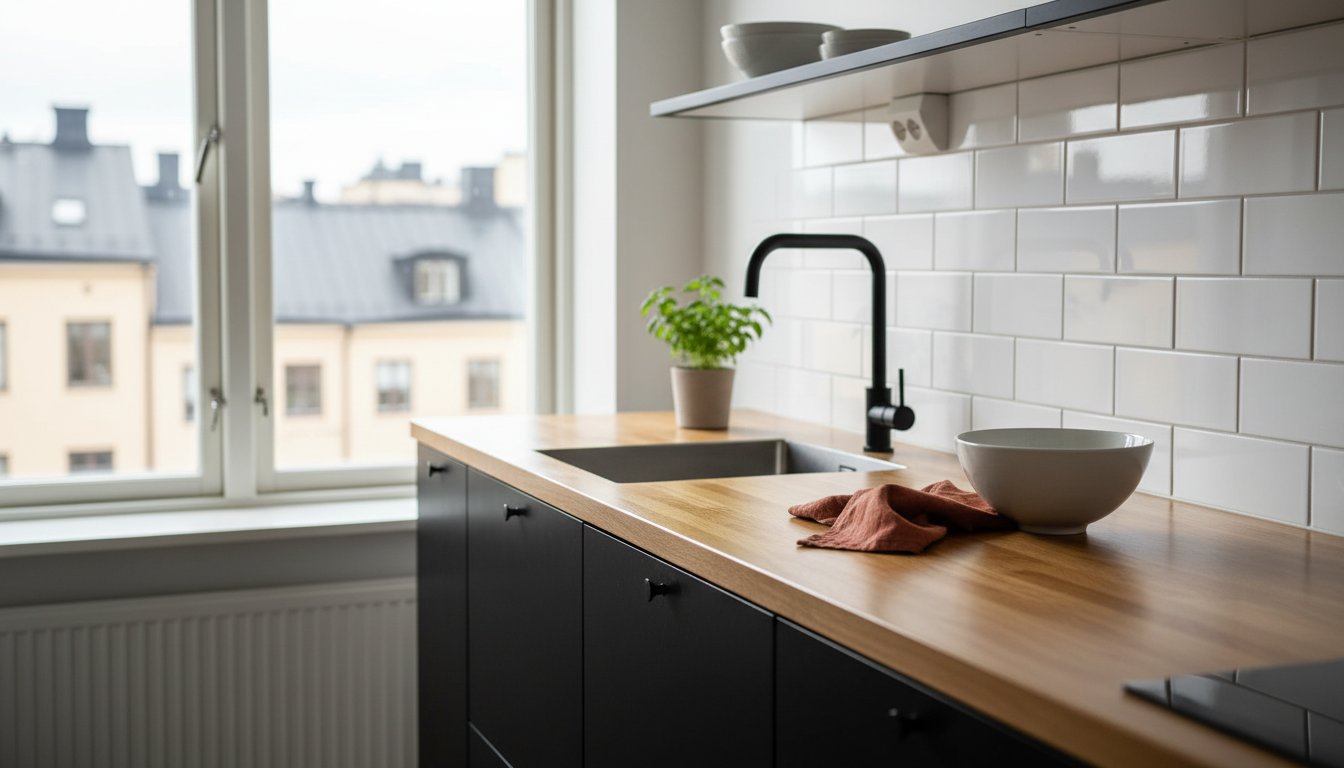
Oak works excellently around the sink due to its high density and natural resistance to rot, provided that the end grain is properly sealed. It is crucial to wipe away any water accumulation immediately to prevent moisture from penetrating joints or around the faucet. With the right surface treatment and careful installation, your oak countertop will be a durable and beautiful detail even in the wettest areas of the kitchen.
What is the best way to sand an oak countertop?
Always sand in the direction of the wood grain with fine-grit sandpaper to avoid scratches and create a silky-smooth surface. Start with grit 120 to remove unevenness and finish with 180 or 240 before applying the oil. By lightly moistening the surface before the final sanding, the fibers will rise, making the final result significantly smoother and more professional.
What is the difference between solid oak and oak veneer?
Solid oak consists of continuous wood staves that can be sanded an unlimited number of times, while oak veneer is a thin layer of wood glued to a particle board. A solid oak countertop offers a superior lifespan of 50 years or more and a weight that veneer cannot match. The choice often comes down to the balance between the genuine feel of solid craftsmanship and a more budget-friendly solution.
How much does an oak countertop move with different humidity levels?
Wood is a hygroscopic material that can expand or contract by up to 5 millimeters per meter depending on the humidity in the room. During the winter months when the indoor air is dry, the oak contracts, while it swells during the more humid summer months. It is therefore important to leave a movement gap of approximately 10 millimeters against walls during installation to avoid cracking.