Acoustic panels standard: A buying guide for improved sound environment and timeless design
Can a room truly exude tranquility if sound constantly bounces off cold, hard surfaces? Many find that the open-plan layouts of modern architecture create a sound environment that feels more stressful than inviting. When searching for standard acoustic panels, it's easy to be drawn to simple solutions, but the choice of material is fundamental to creating an environment that both the eye and ear will love. It's about distinguishing between craftsmanship and mass production to achieve that timeless elegance in your home.
We understand the frustration of echoes that never seem to disappear and the uncertainty of how to choose the right surface to avoid cheap imitations. In this guide, you will learn to select the correct acoustic panel by understanding the tactile differences between various hardwoods such as oak, ash, and walnut, as well as how the panels' construction affects a room's actual acoustics. We cover everything from precise measurements to important fire safety requirements so you can create a harmonious home environment with an exclusive hotel feel and a result that exudes professional precision.
Key Takeaways
- Learn why standard acoustic panels are the most effective investment for quickly improving both the sound environment and aesthetics in modern homes.
- Understand how the choice of wood type, from deep walnut to light ash, sets the tone for a room's atmosphere and how genuine veneer differs from simpler imitations.
- Discover the importance of acoustic felt density and how to navigate between different absorption classes to achieve an optimal soundscape.
- Get practical advice on how to choose between standard dimensions of 240 cm and 270 cm to minimize waste and create a seamless wall mounting.
- Create a long-lasting and sustainable interior by combining technical function with the exclusive feel that only solid natural materials can provide.
What are standard acoustic panels?
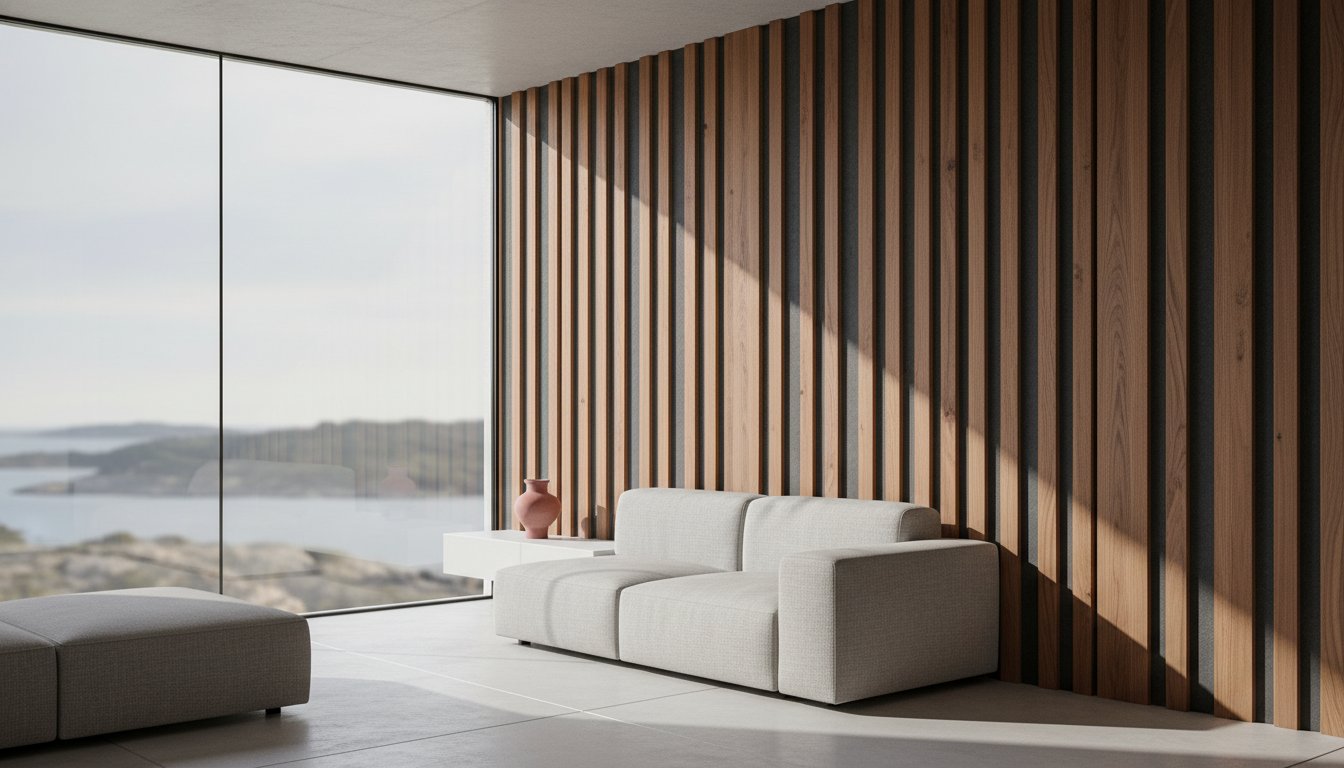
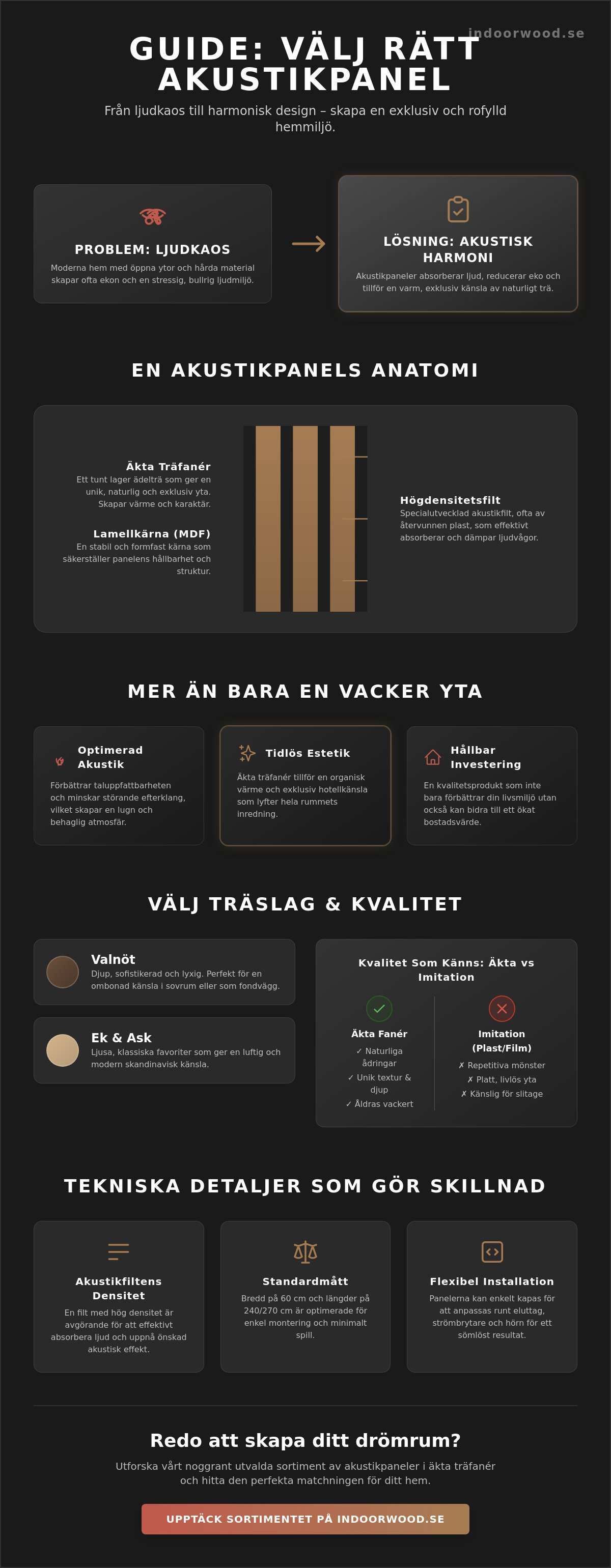
A modern acoustic panel is far more than just a decorative wall covering. It's a technically well-thought-out construction that combines aesthetics with acoustic science. In its purest form, these panels consist of slats, often made of MDF, covered with a thin layer of genuine wood veneer. These slats are then mounted on a backing of specially developed acoustic felt, often made from recycled plastic. By understanding what acoustic panels are and how they are constructed, it becomes clear why they have become a cornerstone of modern Scandinavian interior design.
When we talk about standard acoustic panels, we refer to the dimensions and material combinations that have become industry leaders due to their balance between price and performance. Choosing a standard design is often the most cost-effective option for private homes. This is because production is optimized to minimize waste, meaning you get high-quality materials like oak or walnut at a more accessible price than with fully custom solutions. However, it's important to distinguish between a purely decorative panel and a functional acoustic panel. A functional panel has felt with sufficient density and carefully calculated spacing between the ribs to actually break and absorb sound waves, rather than just reflecting them.
Why choose acoustic panels for the home?
In modern homes with large windows, open-plan layouts, and hard floors, the sound environment often suffers. Echoes and high noise levels make conversations difficult or relaxation impossible. By installing acoustic panels, speech intelligibility is significantly improved as the soft materials absorb harsh sounds. In addition to the technical function, the wooden slats provide an immediate aesthetic boost. They add an organic warmth that contrasts with the often smooth, white walls. Investing in timeless materials such as solid wood and genuine veneer is also a strategic choice for the value of the home, as quality and durability are always in demand on the market.
Standard dimensions and flexibility
The market's standard dimensions are usually designed to be manageable for one person. Panels are typically 60 cm wide, making them easy to transport and install without special tools. This width is also ideal for creating symmetry on a wall or for cladding a kitchen island. The flexibility of standard acoustic panels lies in their adaptability; they can be easily cut lengthwise or widthwise to accommodate electrical outlets, switches, or to fit perfectly into corners. Choosing panels that follow these standard dimensions facilitates project planning and ensures that installation proceeds smoothly with a professional end result.
Choose the right wood type: Walnut, oak, ash, or teak
The character of wood is the foundation of a room's soul. It's not just about choosing a color that matches the walls, but about how the surface interacts with light and feels to the fingertips. When selecting standard acoustic panels, the choice of material is the single most important factor for the final atmosphere. A well-chosen wooden surface can transform a sterile environment into a warm and inviting oasis, where every grain tells a story of craftsmanship and natural beauty. Understanding the technical aspects is also central; when evaluating Quality Criteria for Acoustic Panels, one quickly sees that the nature and authenticity of the surface material play a crucial role in both the panel's lifespan and its ability to age gracefully.
Many suppliers focus solely on the lowest price, which often results in panels with paper film or cheap plastic that imitates wood. By prioritizing genuine wood veneer instead, you get a surface with natural variations that can never be replicated artificially. It is these small imperfections in the wood that create the exclusive feeling and make the panel feel like an integrated part of the architecture rather than a pasted-on element.
Walnut Acoustic Panel – Modern elegance
Walnut is the choice for those seeking a sophisticated and luxurious atmosphere. The deep, chocolate-brown tones have a unique ability to dampen light reflections, making the material ideal as a feature wall behind a TV or in a bedroom where a cozy feel is desired. Walnut's rich color palette creates a clear contrast against light floors and furniture, giving the room architectural weight. For those who want to delve deeper into how this noble wood can elevate a home, we recommend reading more about walnut acoustic panels to understand their full potential in interior design.
Oak and ash – Light favorites
Oak is the undisputed Scandinavian classic. Its light and warm tone is known for its durability and ability to blend into most environments. You can choose between natural oak for a soft feel or smoked oak if you want a more dramatic contrast without losing the oak's characteristic grain. Ash, on the other hand, is the perfect choice for a minimalist style. With its almost white tone and clear, graphic grain, ash helps maximize light input, making even smaller rooms feel spacious and airy. If you are unsure which wood type best suits your environment, it can be rewarding to explore our range of exclusive acoustic panels to see how the different materials interact with modern design.
Quality Criteria: What distinguishes a good acoustic panel from a bad one?
Many believe that all slatted panels are alike, but the difference between a premium product and a budget variant is often vast when you look beneath the surface. A high-quality standard acoustic panel is defined by material choices that not only look good upon installation but also maintain their shape and function for decades. It's about a careful balance between the surface of the slats and the technical properties of the underlying felt. Choosing the right material is crucial to achieving a high absorption class, where Class A represents the highest level of sound reduction for a quieter home.
One of the clearest quality indicators is the use of genuine wood veneer. Cheaper alternatives often use paper film or laminate that repeats the same pattern, giving a lifeless and artificial impression. Real wood has natural color variations that give the wall depth. Behind the wood, the MDF core plays a critical role; it must have high density to be stable and resist moisture or temperature fluctuations that could otherwise cause the slats to warp. The precision in the spacing of the slats is also fundamental. Only with exact millimeter precision can you mount several panels next to each other and achieve a completely seamless result where the joints become invisible to the eye.
Surface treatment and finish
The choice of surface treatment affects both aesthetics and maintenance. An oiled surface provides a fantastic luster and highlights the wood grain, but requires maintenance over time to retain its protection. Lacquered surfaces offer more robust protection against sunlight and effectively prevent the wood from yellowing, which is a great advantage in rooms with a lot of daylight. The best way to determine quality is to trust your senses. A premium surface should feel smooth and well-finished without raised fibers or sharp edges, which testifies to a careful sanding process and a love for craftsmanship.
Sustainability and material choices
In today's interior design, sustainability is no longer an option but a prerequisite. By using acoustic felt made from recycled PET plastic, waste is transformed into a functional resource that is also allergy-friendly. For us at Indoor Wood, the traceability of the wood is central. By working directly with the manufacturer, we can ensure that every component in your standard acoustic panels meets our high standards for responsible forestry. It is a philosophy based on honesty and long-term vision, where we, as a consulting partner, guarantee that your investment is as good for the environment as it is for your home. For those who wish to complement their indoor environment with sustainable solutions for the exterior as well, Green Plank offers high-performance composite materials for facades and patios.
Plan your installation: Measurements and mounting
A successful room transformation begins long before the first screw is tightened. It is in the planning phase that your vision of a harmonious and quiet home takes concrete form. When working with standard acoustic panels, the precision of your measurements is crucial for the final result to feel like an integrated part of the room's architecture rather than a temporary addition. By understanding how the panel dimensions interact with the room's proportions, you can create an environment that exudes both control and aesthetics.
The choice of length is the first major decision. The standard length of 240 cm is excellent for many older homes and apartments, but modern new builds with higher ceilings often require something more. Choosing a 270 cm panel eliminates the need for horizontal joints, creating an unbroken line from floor to ceiling and enhancing the sense of space. If your ceiling height exceeds these measurements, joining becomes an art form in itself. For a professional result, you should plan the joints so they fall in a logical line, for example, flush with a door frame or slightly above the baseboard, to create a deliberate design statement.
To calculate the number of panels, start with the standard width of 60 cm. Measure the total width of the wall and divide by 0.6 to get the number of units. Remember to account for waste, especially if you need to cut panels to accommodate windows or electrical outlets. The tools you'll need are simple but important: a fine-toothed saw for clean cuts, a spirit level to ensure the first panel is perfectly vertical, and a high-quality tape measure.
Glue or screw acoustic panels?
The choice between gluing or screwing depends on both the substrate and the desired aesthetic. Mounting adhesive is the best option for those seeking a completely clean and invisible installation where no screw heads break the surface. It provides a seamless finish that highlights the natural beauty of the wood. Screws, on the other hand, are preferable for ceiling mounting or if the wall is very uneven. By using black, color-matched screws screwed directly through the acoustic felt between the slats, the fastening becomes almost invisible to the untrained eye.
Placement for optimal acoustics
Placement is key to maximizing the panels' function. Room corners are often the most critical points where sound waves bounce and create what is known as flutter echo. By placing panels here, you effectively break the sound path. Another popular and functional placement is the wall behind the TV. This not only dampens disruptive reflections but also improves the sound reproduction from your speakers. For projects with generous ceiling heights, it's a good idea to explore our 270 cm acoustic panels to ensure an installation without unnecessary interruptions in the design.
Find your perfect acoustic panel at Indoor Wood
Choosing the right interior for your home is fundamentally about trust. As a family-owned business, we at Indoor Wood approach every project with the same great care as if it were our own home. Our deep passion for craftsmanship and noble woods permeates our entire operation, from the initial selection of raw materials to the finished product that reaches you. When you invest in standard acoustic panels from us, you don't just get a technical solution for a better sound environment, but a piece of nature that adds an earthy luxury to your everyday life. We value long-term relationships and honesty, which means we never compromise on the quality of the materials we deliver.
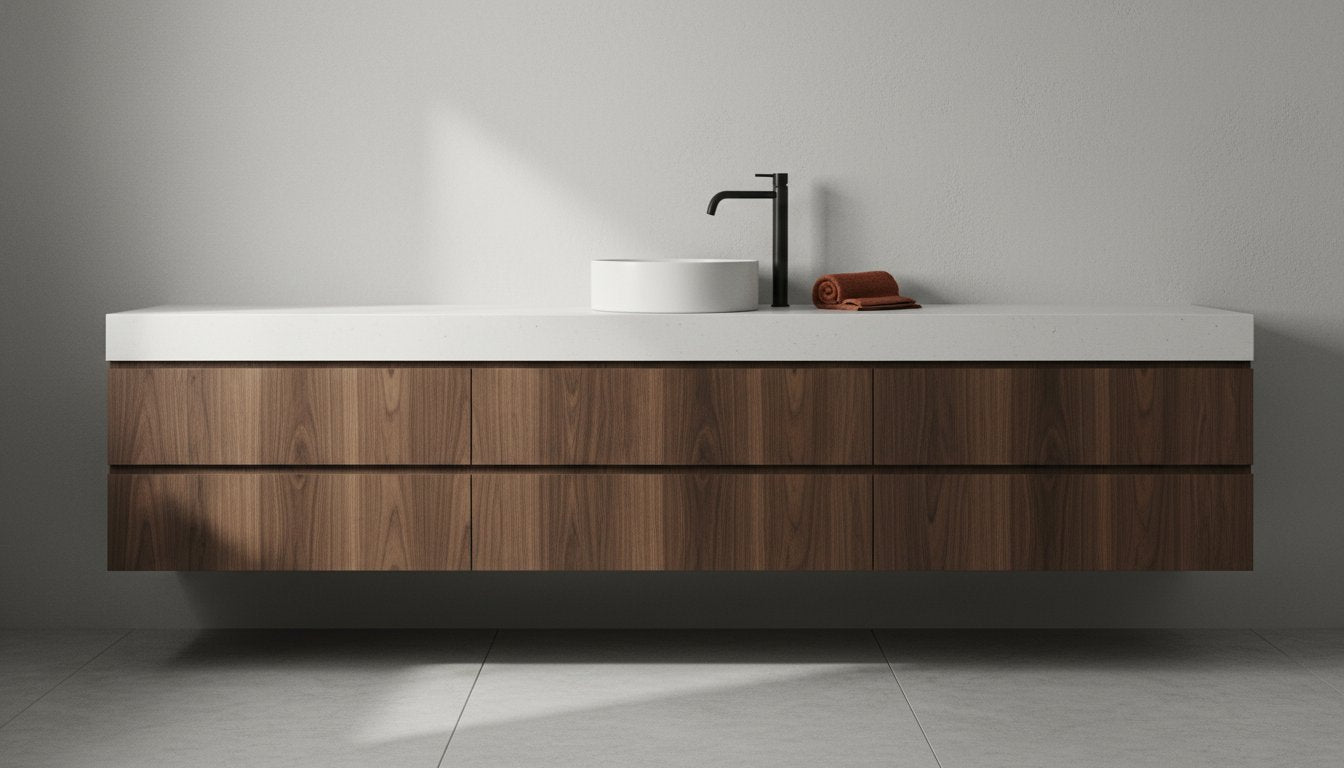
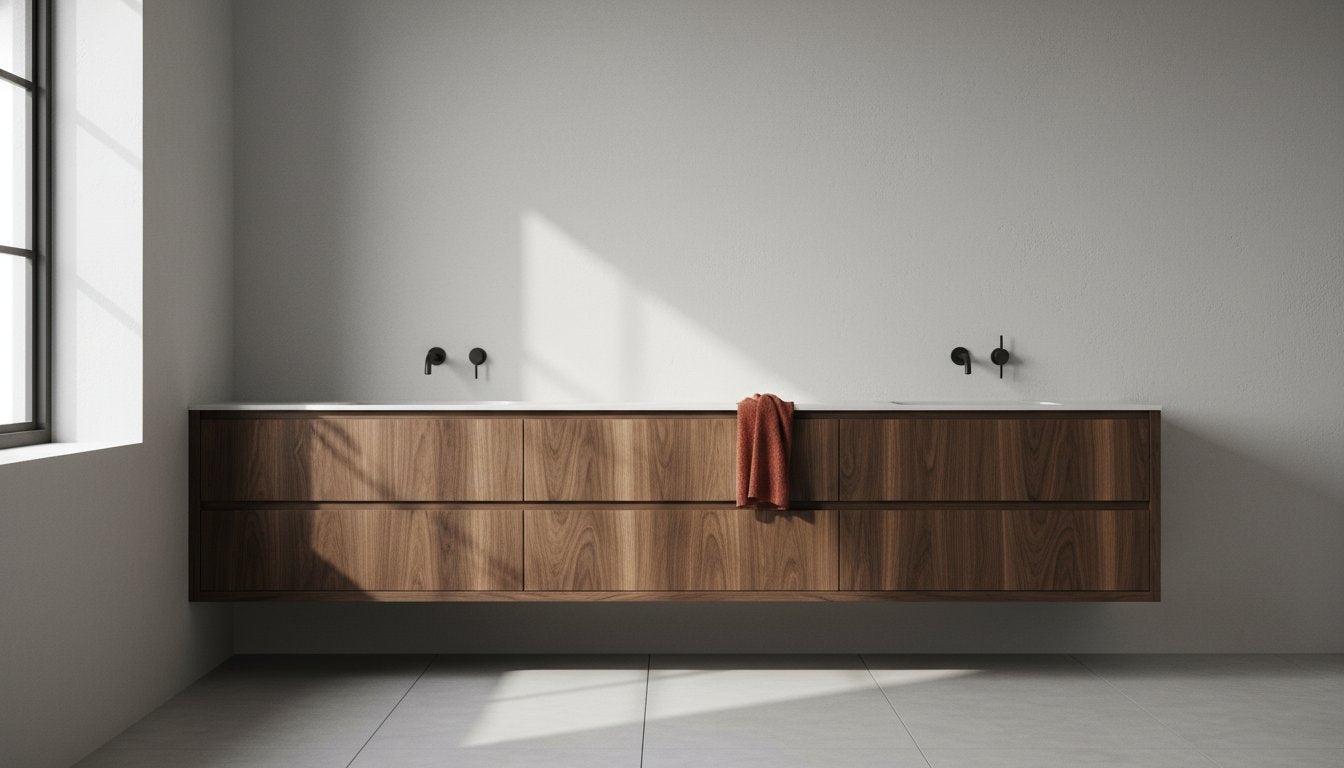
One of the most appreciated benefits of working with us is the ability to create a visual common thread throughout your home. It's a unique feeling to be able to match your acoustic panels with an exclusive wooden kitchen or a bathroom vanity in the same warm walnut or light oak. This harmonious connection between the rooms creates an atmosphere of thoughtful elegance and architectural rigor. As we maintain our own stock, we can guarantee fast delivery nationwide, allowing your vision to quickly become a reality without unnecessary waiting times.
Our bestsellers in the standard collection
Our range of standard acoustic panels is carefully curated to meet both aesthetic and functional requirements in modern Scandinavian environments. Here are the choices our customers most often return to:
- Walnut Acoustic Panel: Our absolute bestseller for those seeking a sophisticated, dark, and luxurious feel in the bedroom or living room.
- Oak Acoustic Panel: The timeless classic whose natural warmth fits perfectly in everything from minimalist new builds to turn-of-the-century apartments.
- 270 cm Acoustic Panel: The optimal solution for those with higher ceiling heights who want to avoid joints and create an unbroken, magnificent wall surface.
Order samples and visit our showrooms
Wood is a living and sensory material that deserves to be experienced with all senses. We understand the importance of seeing how the grain reflects light in your specific room before making a final decision. Therefore, we encourage you to order samples to feel the tactile surface and compare the shades against your existing floors and furniture. For an even deeper insight, you are warmly welcome to visit our showrooms where you can see large mounted surfaces and receive personal advice from our experts. We are happy to help you navigate the choices to find the solution that best enhances your home environment. Click here to see the entire collection of standard acoustic panels and take the first step towards a quieter and more beautiful home.
Give your home the space and tranquility it deserves
Balancing modern design with acoustic function is an art form that requires a delicate touch. By prioritizing genuine wood veneer and understanding how the right lengths minimize seams, you create an environment that not only looks exclusive but also promotes well-being through a pleasant soundscape. The choice of standard acoustic panels never has to compromise on quality if you choose materials that age with dignity and respect for nature's resources. Your investment in your home thus becomes both aesthetic and long-term sustainable.
As a family-owned company with roots in genuine craftsmanship, we at Indoor Wood are proud to offer solutions where sustainable acoustic felt meets the finest wood species such as oak, walnut, and ash. With fast delivery throughout Sweden, we ensure that your path to a more harmonious home is both short and inspiring. Let your walls become the foundation for a new lifestyle where silence and beauty go hand in hand.
Explore the full range of standard acoustic panels here
We look forward to being your advisory partner in creating a home that exudes timeless elegance and genuine quality of life.
Frequently asked questions about acoustic panels
How many standard acoustic panels do I need for an accent wall?
You calculate the number by dividing the total width of the wall by the standard panel width of 0.6 meters. If your wall is 3 meters wide, you will need 5 standard acoustic panels to cover the surface completely. It's wise to order an extra panel to have a margin for corners or if you need to cut material for electrical outlets and switches during installation.
Can acoustic panels be installed in the bathroom?
It is perfectly fine to install the panels in the bathroom as long as they are not placed in the direct wet zone near the shower or bathtub. Wood is a living material that reacts to moisture, so good ventilation is a prerequisite for the material to last over time. Many choose to combine our panels with a walnut bathroom vanity to create a cohesive and luxurious spa feel in the room.
Which wood species is most resistant to sunlight?
Oak and ash are the wood species that generally change the least from the sun's rays thanks to their naturally light pigments. A lacquered surface treatment provides an extra protective layer that effectively prevents the wood from yellowing quickly. Walnut tends to lighten slightly in strong, direct sunlight, which gives the material a beautiful patina that many appreciate as part of its natural and unique aging.
Do acoustic panels reduce noise from neighbors?
The panels are primarily designed to improve the room's internal acoustics by absorbing echo and reverberation, not to soundproof against the outside world. To block external noise, heavy constructions that completely break sound waves are required. However, the room often feels significantly quieter and more harmonious because the panels eliminate internal reflections that would otherwise amplify the sound experience in modern homes with open spaces.
How do you best clean a wooden slatted panel?
The best way to clean your panel is to use a feather duster or a vacuum cleaner with a soft brush attachment. By gently running the brush along the slats and in the gaps of the acoustic felt, you keep the surface free from dust particles. Avoid strong chemicals; a lightly damp cloth is sufficient if a stain has appeared on the wood surface itself that needs careful attention.
Can I cut the acoustic panels myself?
You can easily cut the panels yourself with the right tools to adapt them to your wall's specific dimensions. Use a fine-toothed circular saw or hand saw to make clean cuts in the wood slats and a sharp utility knife to cut through the backing acoustic felt. It's a straightforward process that allows even complex projects with outlets and angles to be completed with a professional finish.
Do I need to use battens behind the panel?
It is not a requirement to use battens as the panels can be mounted directly on a flat wall with either mounting adhesive or screws. However, if you mount the panels on battens with insulation behind, sound absorption is further improved, especially concerning the lower frequencies in the room. With direct mounting on plasterboard or concrete, you still get a significant improvement in speech intelligibility and a beautiful visual surface.