Choosing wood for bathroom vanities: An expert guide to materials and countertops
Can a living natural material like solid wood truly thrive in the home's most humid room, or is it only a matter of time before moisture wins? Choosing wood for a bathroom vanity is about more than just aesthetics; it's a delicate balance between craftsmanship and technical precision. We understand that the fear of moisture stains on a silky walnut surface or the difficulty of harmonizing oak grain with the right stone often hinders the vision of the dream bathroom. This is a challenge that requires both aesthetic sensibility and deep knowledge of the material's natural properties.
You are right to demand high standards for long-term durability, especially in an environment where the Swedish National Board of Housing, Building and Planning's building regulations and moisture protection are fundamental for a safe and insured home. In this guide, you will learn how to choose the perfect wood and match it with a complementary countertop to create a bathroom vanity that exudes genuine luxury and the joy of craftsmanship. We explore the differences between various hardwoods, how to best protect surfaces from daily wear and tear, and provide you with a concrete decision-making model to create an atmosphere that ages with dignity through the years.
Key Takeaways
- Learn how the right combination of noble wood and countertop creates a piece of furniture that both enhances the bathroom's aesthetics and the total market value of the home.
- Gain in-depth knowledge on how to choose wood for a bathroom vanity by comparing the unique, tactile properties of walnut, oak, and ash.
- Discover how to combine solid wood with materials such as natural stone or composite to create a durable surface that effectively protects against moisture.
- Understand how the choice between a vessel sink or an undermount sink dictates the technical requirements for the countertop's cutouts and construction.
- Master the simple yet crucial maintenance routines that preserve the luster of natural materials and ensure your investment lasts for generations.
Why the choice of wood and countertop is the bathroom's most important investment
The bathroom has undergone a fundamental transformation. From being a strictly functional space, it has become a place for recovery and personal luxury. At the center of this change is the vanity. It is the room's visual anchor and the piece of furniture used most intensely throughout the day. When you choose wood for a bathroom vanity, you are not just investing in a storage solution, but in the entire room's atmosphere and soul. It is the choice of material that determines whether the bathroom feels like a sterile wet room or an extension of the home's warm, inviting interior.
In 2026, we see a clear trend where Swedish homeowners prioritize honest natural materials over plastic-based imitations. A solid walnut or oak vanity conveys a sense of craftsmanship that is impossible to copy. It's about the tactile experience; how fingers meet the natural grain of the wood and how light reflects off a well-oiled surface. Furthermore, this is a financially wise strategy. A bathroom with high-quality material choices raises the home's total market value during a future sale, as buyers today value long-term quality and durability higher than quick aesthetic solutions.
The difference between function and aesthetics in the bathroom
Integrating wood into a wet zone requires careful consideration. The bathroom environment differs significantly from, for example, the kitchen. Here, furniture is exposed to rapid temperature changes and high humidity, which places unique demands on how the material behaves. A well-built noble wood vanity handles these stresses by aging gracefully. Instead of wearing out, solid woods develop a beautiful patina over time. However, it is crucial to understand how different surfaces react to everyday challenges, such as limescale deposits from splashes or residue from soap and perfume. The right surface treatment is key to preserving aesthetics without compromising daily function.
Investment in sustainable natural materials
The choice between solid wood and cheaper particle board solutions is fundamentally a choice about lifespan. A particle board vanity can swell with the slightest moisture intrusion, while solid wood can be sanded and maintained for decades. By studying the basic properties of wood, one understands how the cellular structure of hardwoods like oak and walnut naturally resist moisture better than softer varieties. The environmental aspect is also central. Choosing certified woods means a lower climate impact compared to the production of complex composites and plastics. For those who want to delve deeper into the benefits of genuine materials, we recommend our comprehensive guide on solid wood, where we explain why quality always wins in the long run.
Choosing wood for a bathroom vanity: Properties of walnut, oak, and ash
Choosing wood for a bathroom vanity is one of the most personal decisions you make during a renovation. It's a choice that defines the entire character of the room, from the first glance in the morning to the last moment before bedtime. We often see the choice standing between three dominant noble woods: walnut, oak, and ash. Each material carries a unique story and possesses technical properties that affect both the furniture's lifespan and how it is perceived in the room. By understanding the inherent logic of wood, you can create an environment that feels both harmonious and exclusive.
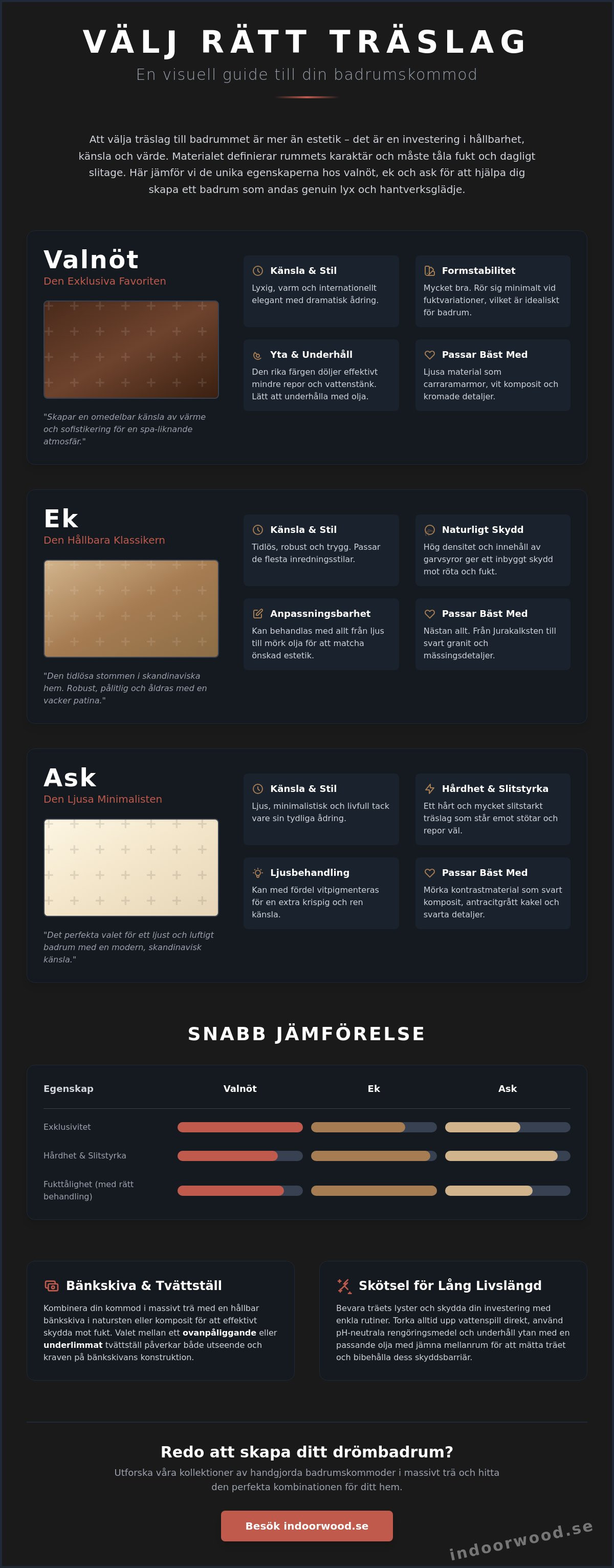
Walnut - The exclusive favorite
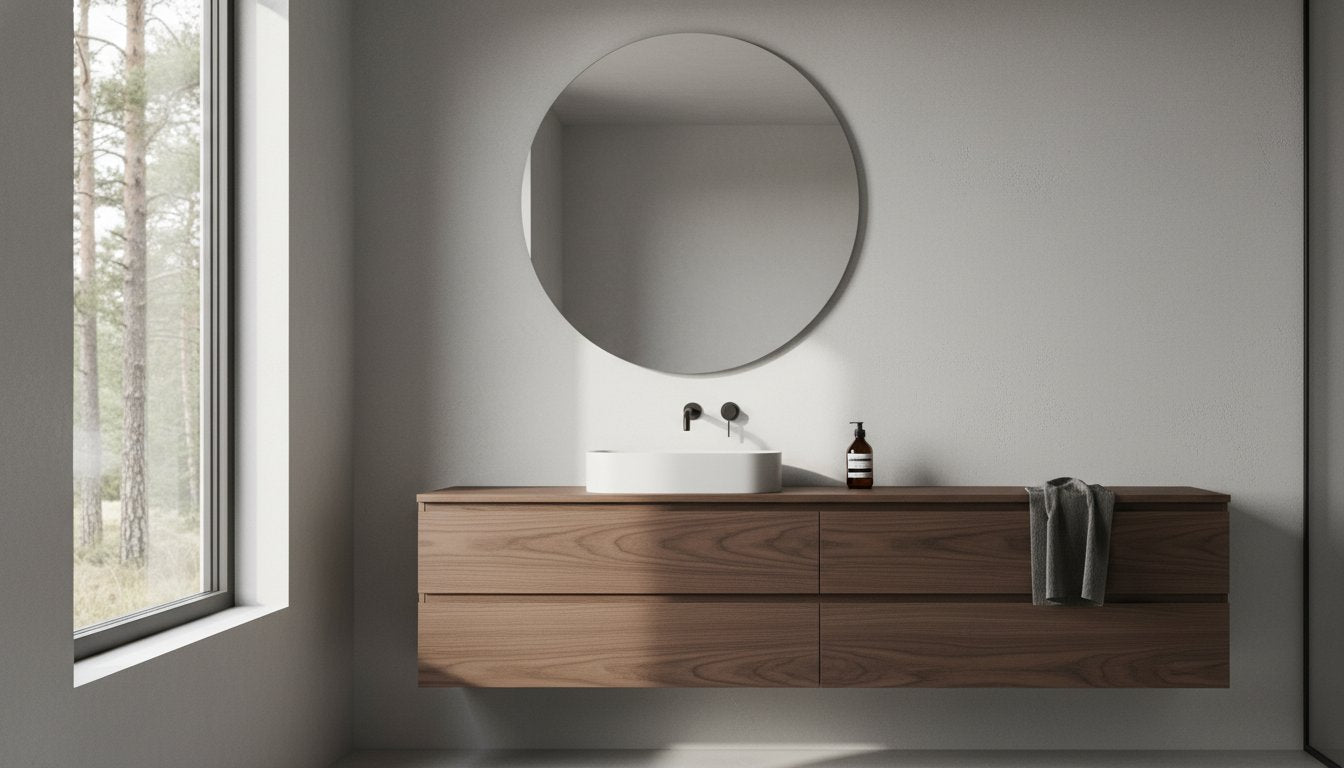
Walnut's role as the ultimate luxury material is indisputable. With its deep brown tones and dramatic grain, a walnut bathroom vanity creates an immediate feeling of warmth and sophistication. It is a wood that contrasts beautifully with the bathroom's often cold materials like tiles and porcelain. Walnut is naturally dimensionally stable, which is a great advantage in environments where humidity varies. Its rich color variations also effectively conceal everyday traces, while the oiled surface provides a tactile experience that few other materials can match. It is the obvious choice for those seeking a spa-like atmosphere with a sense of international elegance.
Oak and Ash - Durability meets light
Oak is the timeless classic in Scandinavian homes, and rightly so. Its high density and natural tannin content provide built-in protection against rot and moisture, making it extremely durable in wet zones. Oak ages with a golden dignity that only becomes more beautiful over the years. Ash, on the other hand, is the choice for the modern minimalist. It is lighter than oak but possesses an equally distinct and characterful grain. Ash's ability to reflect light helps to open up smaller bathrooms and create an airy feel.
When choosing between these woods, you should also consider how they interact with your intended countertop. A comprehensive Material Guide for countertops can provide valuable guidance on how to match the wood's texture with stone or composite. If we compare hardness and stability, all three woods score high on the scale, but ash and oak are often perceived as somewhat more robust on the surface, while walnut is prized for its aesthetic brilliance.
Are you unsure which expression best suits your home? Feel free to explore our range of walnut bathroom vanities and oak vanities to see how different materials change the room's dynamic.
Material guide for countertops: Matching noble wood with the right surface
Once you've decided to invest in a handcrafted piece of furniture, the countertop serves as the vanity's protective crown. This is where aesthetics meet the bathroom's most demanding functions. To choose wood for a bathroom vanity requires a deep understanding of how the wood's living grain interacts with the countertop's texture. A skillfully chosen combination not only extends the furniture's lifespan; it creates a visual balance that feels thoughtfully designed down to the smallest detail. It's about finding harmony where materials elevate each other rather than competing for attention.
Natural stone and ceramics - Timeless elegance
Marble is for many the epitome of luxury, but its porous nature requires a conscious owner. A light Carrara marble against a dark walnut vanity creates a classic contrast, but remember that acids from skincare products can leave marks on the stone. Granite and ceramic, on the other hand, offer surfaces that are almost indestructible and can withstand both strong chemicals and intensive use. For a more subdued, Scandinavian aesthetic, grey limestone, such as Jura limestone or Gotland stone, is a fantastic partner to walnut's warm undertones. By understanding the natural durability of wood, one can safely combine these materials; as long as the joint between stone and wood is tight, the construction remains stable for decades.
Composite materials - Functionality for the modern family
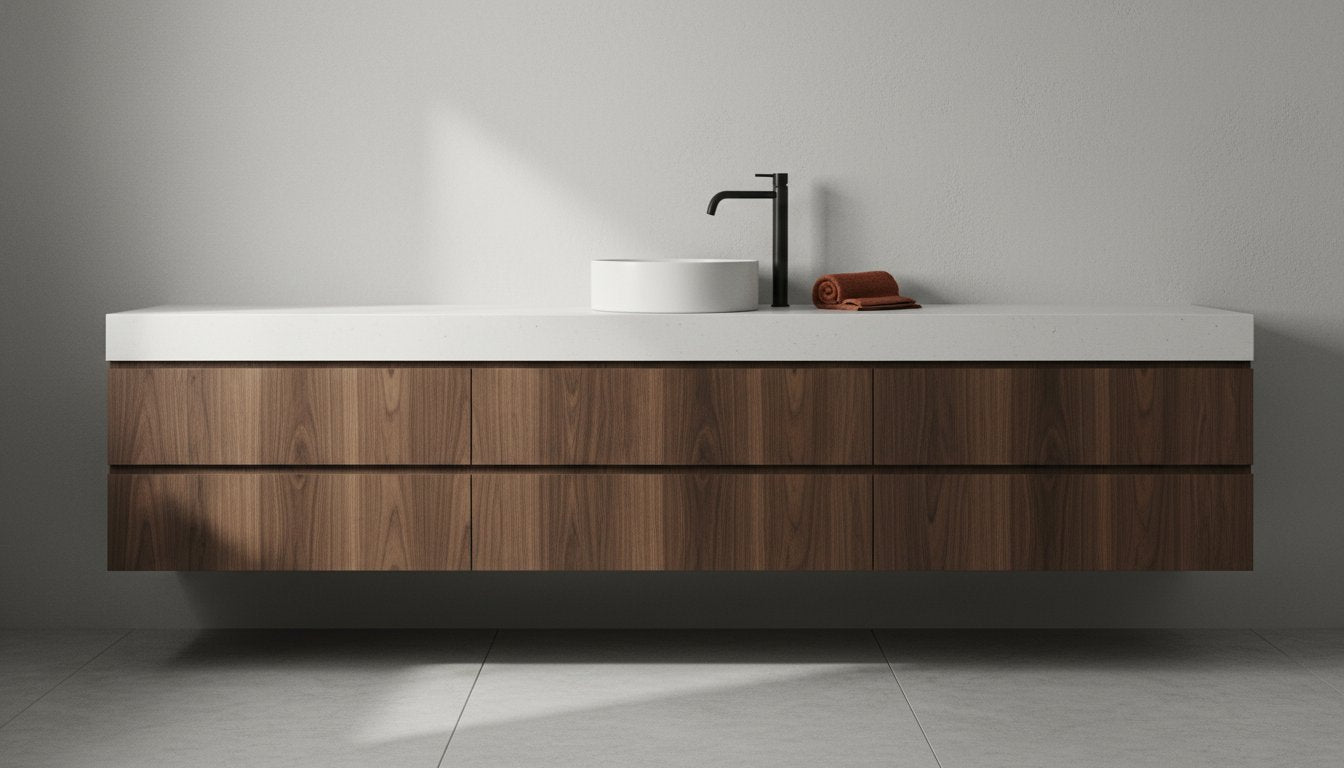
Composite is the obvious choice for the active family seeking maximum convenience. Here, you get a completely non-porous surface that is immune to stains from perfume, soap, and makeup. A major advantage is the possibility of custom-made solutions without visible seams, which gives a clean and architectural expression. By choosing a crisp white composite against an oak or ash vanity, a sharp, graphic profile is created that feels modern and fresh. If you are looking for a softer transition, a composite in sand tones can dampen the ash's cool pigments and create a more inviting feel.
There is also a timeless beauty in choosing a monochromatic look where the countertop is made of exactly the same wood as the vanity itself. This blurs the line between bathroom and living room and gives the furniture a furniture-like weight. However, it places higher demands on you as a user to keep the surface dry after use, but the reward is a cohesive aesthetic that never goes out of style. Whether you choose stone or wood, the goal is to create a surface that feels as pleasant to touch as it is beautiful to look at.
Choose a countertop according to your sink: Vessel or undermount?
The choice of sink is far more than an aesthetic preference; it is the decision that largely dictates the technical requirements for your bathroom furniture. When you choose wood for a bathroom vanity and countertop, you must consider how water flow and installation affect the material's integrity. An often-overlooked aspect in planning is the option to order a vanity without a sink. This gives you complete freedom to choose a unique, sculptural sink solution that transforms the furniture into a work of art in the room, but it also places higher demands on precision in cutting and sealing.
Working with solid wood differs significantly from stone. When pipes and drains are routed through a wooden slab, the end grain of the wood, which is its most sensitive part to moisture, is exposed. Every cut surface must be carefully sealed to protect the frame. Stone and composite are more forgiving during the actual cutting, but require professional equipment to avoid cracking. Regardless of the material choice, a correctly executed seal between the sink, countertop, and vanity is fundamental to avoid hidden water damage that can destroy the furniture from within.
Vessel sinks - A design statement
A vessel sink highlights the countertop material magnificently. Here, the grain of the wood or stone takes center stage over a larger unbroken surface. Many choose this solution to achieve the same exclusive feel as in a custom-built wooden kitchen, where the character of natural material is allowed to shine. Aesthetically, it adds sculptural height to the decor, but it requires a countertop with an exceptionally durable surface. To maintain its beauty, you should be careful to wipe away water that collects at the base of the sink, as standing water over time can dull even the most resistant surface treatments.
Undermount solutions for minimalist function
For those who prioritize simplicity and maximum counter space, an undermount sink is the obvious choice. By gluing it beneath the countertop, a seamless transition is created, making it easy to wipe water and dirt directly into the basin. This creates a discreet and luxurious hotel feel that exudes order and tidiness. With undermounting, however, the choice of material is limited; here, stone or composite is an absolute requirement. Since the edge of the countertop is constantly exposed to water, solid wood does not work in this configuration. The result is a functional and minimalist surface that can withstand intensive daily use without losing its elegance.
Looking for the perfect base for your sink? Explore our handcrafted solid walnut vanity cabinets that combine technical precision with timeless aesthetics.
Durability and care - How to preserve the luster of your vanity and countertop
Investing in natural materials is the beginning of a long and rewarding relationship. Once you have successfully chosen wood for a bathroom vanity that harmonizes with your other decor, the work of preserving that newly installed feeling over time begins. It's not complicated, but it requires an awareness of the material's unique character. Daily routines are your absolute best insurance; quickly wiping away splashes and avoiding leaving damp textiles against the wood surface does wonders for the furniture's lifespan. Limescale stains and watermarks are best prevented by keeping surfaces dry, rather than relying on strong cleaning agents that risk dulling the surface.
The choice of cleaning products is crucial for the final result. You should absolutely avoid anything containing acids, ammonia, or abrasives, as these break down the surface treatment and make the wood vulnerable to moisture intrusion. Instead, use a mild soap or products specifically designed for oiled wood surfaces. Don't forget the hidden surfaces during maintenance. The underside of the vanity and the sensitive cut surfaces where pipes are routed are places where moisture often collects without being visible at first glance. Ensuring these areas are dry and well-sealed is fundamental to preserving the furniture's dimensional stability for generations.
Special care for wooden vanities in the bathroom
We consistently recommend hardwax oil over traditional oil for the bathroom environment. Hardwax oil not only penetrates deep into the wood fibers, but it also creates a microporous protective film that allows the wood to breathe while effectively repelling water and dirt. Good ventilation is wood's best friend in the wet zone; it allows the material to recover and stabilize after a hot shower. A practical way to know when it's time for maintenance is the classic water test. If water no longer forms round beads on the surface but starts to soak in, it's a clear sign that it's time for a new layer of protection. Through very light sanding and a new application of hardwax oil, you can actually restore the furniture to new condition.
Indoor Wood's philosophy: Craftsmanship that lasts for generations
Our approach to interior design rests on the conviction that true luxury is about honesty in materials and precision in execution. We understand that every bathroom project has its unique conditions, and therefore we offer the option to order our vanities without a sink. This gives you the architectural freedom to choose a countertop and a sink that perfectly complete your vision. In our showrooms, you can experience the tactile differences between our materials in reality, which provides security when you choose wood for a bathroom vanity. We act as your advising partner throughout the process to ensure that every detail is handled with the utmost care. We invite you to explore our curated selection of exclusive bathroom furniture online to find the foundation for your future oasis.
Realize your vision with sustainable craftsmanship
Creating a bathroom that combines luxury with practical durability begins with the material choices you make today. By balancing the natural warmth of hardwood with the right countertop and careful maintenance, you invest in a piece of furniture that only becomes more beautiful with age. We have seen how the right combination of walnut or oak can transform an everyday room into a private oasis of calm and aesthetics. When you are about to choose wood for your bathroom vanity, your personal style and the unique conditions of the room should lead the way to a successful result.
As a family-owned company with a deep passion for sustainable hardwood, we offer products directly from the manufacturer; this guarantees the highest quality without unnecessary intermediaries. Feel free to visit our showrooms for personal service and to feel the tactile differences between the materials before making your decision. We act as your advising partner to ensure that every detail of your project is handled with the utmost care and professional skill.
Explore our exclusive walnut bathroom vanities and let us help you find the foundation for a bathroom that lasts for generations. Your journey to a more beautiful and harmonious home begins with a conscious choice of genuine natural materials.
Common Questions About Material Choices in Bathrooms
Which type of wood is best suited for a bathroom vanity?
Oak and walnut are the most suitable wood types due to their high density and natural resistance to moisture. These hardwoods move significantly less with temperature changes than softer wood types such as spruce or pine. When you are about to choose wood for your bathroom vanity, oak's natural tannic acids provide extra protection against rot, while walnut's exceptional dimensional stability ensures that drawers and doors function perfectly over time despite the bathroom's challenging climate.
Can you have a solid wood countertop in the bathroom?
Yes, it is perfectly fine to use a solid wood countertop as long as it is properly treated and maintained regularly. An oak or walnut slab treated with hardwax oil creates a warm and inviting feel that contrasts with the bathroom's hard surfaces. However, it is important to make it a habit to wipe away standing water immediately to prevent moisture from penetrating the wood fibers and causing stains or swelling.
How do I protect my wooden vanity from moisture damage?
You best protect your wooden vanity by using a high-quality hardwax oil and ensuring that the bathroom has effective ventilation. Hardwax oil creates a water-repellent surface that allows the wood to breathe without moisture penetrating the material. Make sure the bathroom fan is working optimally so that humidity is quickly reduced after each shower, allowing the natural material to stabilize and dry thoroughly between uses.
Which countertop goes best with a walnut vanity?
A gray limestone or light Carrara marble countertop creates a sophisticated contrast that highlights the dark and dramatic grain of walnut. For those seeking a more minimalist and cohesive aesthetic, a countertop in the exact same wood type is a timeless choice that gives the furniture a solid character. The choice is about balancing the warm undertones of walnut with a surface that either creates dynamism through contrast or calm through a monochrome color scheme.
Is marble too sensitive to be used as a bathroom countertop?
Marble is a porous natural material that is sensitive to acids, but it works excellent in bathrooms if the stone is impregnated and cared for correctly. You should be aware that products such as strong perfume, nail polish remover, and certain soaps can etch the stone and leave dull spots on the surface. By treating the marble with good stone protection and wiping it regularly, it retains its elegant luster and only becomes more beautiful with age.
How do you mount a countertop on a vanity without a washbasin?
When mounting a countertop on a vanity without a washbasin, the top is screwed from underneath through the frame's cross-members with stainless steel screws. It is crucial to pre-drill holes in the frame slightly larger than the screw's diameter to allow the wood to move naturally with changes in humidity. All cut-outs for drains and faucets must be carefully sealed with bathroom silicone or varnish to prevent water from penetrating the slab's core at the penetrations.
What is the difference between hardwax oil and varnish for bathroom furniture?
Hardwax oil penetrates deep into the wood and creates a protective surface that can be spot-repaired, while varnish forms a hard and dense film on top of the material. When you are about to choose wood for your bathroom vanity, we often recommend hardwax oil because it preserves the wood's natural, tactile feel and does not risk cracking under extreme moisture loads. A varnished surface provides strong initial protection but can be more difficult to restore if moisture penetrates beneath the varnish layer.
How often do I need to oil my wooden bathroom countertop?
A wooden countertop in the bathroom typically needs to be maintained with new hardwax oil one to two times a year depending on how intensively it is used. You can easily tell it's time for maintenance when water no longer beads on the surface but instead begins to be absorbed and darkens the wood. By regularly applying a thin layer of oil, you saturate the wood fibers and ensure that your bathroom furniture retains both its protection and its deep luster over time.