Wooden Boxes: A Guide to Sustainable Storage and Timeless Craftsmanship
Why settle for generic plastic items that crack and lose their shape when your home deserves materials with soul? It's a paradox that we invest heavily in exclusive kitchens and bathrooms, only to then hide our belongings in storage that feels both cheap and perishable. We understand the frustration of searching for wooden boxes that truly meet expectations, both in terms of aesthetic finish and the ability to withstand wear and tear in the home's most used spaces.
By choosing the right craftsmanship, you can transform your organization into an experience that reflects your personal style and ages with dignity. In this guide, you will learn how to combine practical order with timeless Scandinavian design to create a harmonious flow in every room. We will go through how to choose between noble woods such as oak, walnut, and ash to find the perfect balance between natural texture and long-term durability.
Key Takeaways
- Understand why natural materials are a sustainable and aesthetically superior alternative to plastic for creating a harmonious atmosphere in the home.
- Learn to navigate between different types of wood, from deep walnut to light ash, to find the perfect shade that complements your floors and furniture.
- Gain insight into the differences between solid wood and composite materials so you can make an informed choice based on both quality and budget.
- Discover creative interior design tips on how to use wooden boxes to combine exclusive Scandinavian design with practical order on open shelves.
- Learn to identify genuine craftsmanship through technical details such as dovetail joinery and finishes, ensuring storage that ages with dignity.
What are wooden boxes? An introduction to natural storage
Wooden boxes represent a bridge between pure function and timeless aesthetics. These are objects that not only conceal clutter but also add soul and substance to a room. In the modern Scandinavian home, where bright surfaces and minimalism often dominate, wood serves as a necessary contrast. It provides a tactile sensation that plastic or metal can never replicate. The interest in natural materials has grown exponentially in recent years. Studies show that we feel better in environments with visible wood surfaces, which explains why more and more people are choosing synthetic alternatives. What is a wooden box? In its simplest form, it is a construction of joined pieces of wood, but in the hands of a skilled craftsman, it becomes a fundamental part of the interior design. There is a significant difference between small, decorative boxes for jewelry and the robust storage boxes used for heavier items. The smaller boxes often require extreme precision in the joints, while the larger boxes focus on load-bearing capacity and durability. Both types, however, contribute to creating a warm and inviting atmosphere through the natural grain and texture of the wood.Sustainability and eco-friendly choices
Wood is one of our most renewable materials. By choosing wooden boxes over mass-produced plastic bins, you significantly reduce your carbon footprint. According to industry data from 2023, wood products sequester carbon throughout their lifespan, making them an active part of the circular economy. It is crucial to consider the origin. Choosing products from responsibly managed forests ensures that biodiversity is preserved. A well-built box is not a consumable item. It wears beautifully and can often be passed down through generations, which is the ultimate form of sustainable consumption.Solid wood vs. veneer and composite
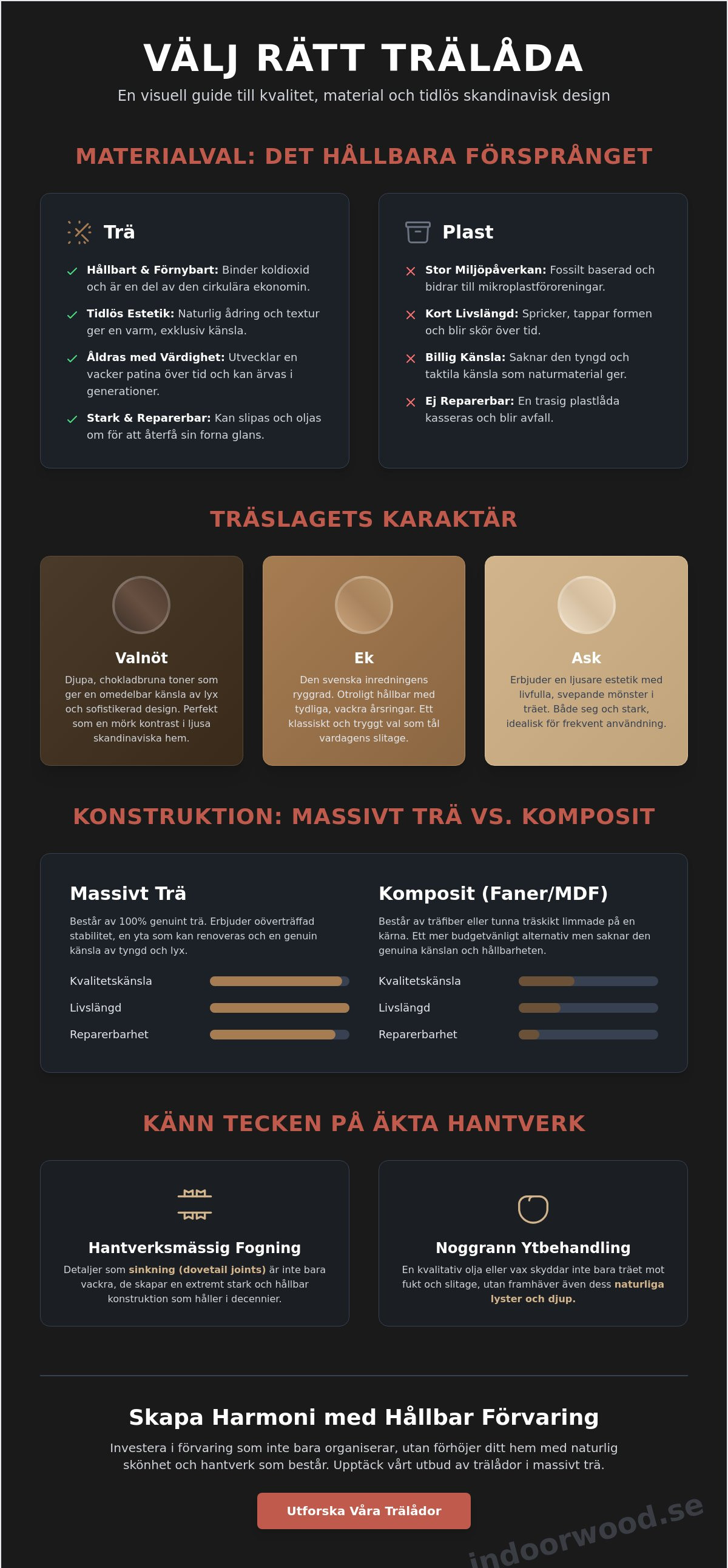
The choice of material determines the box's lifespan and sensory experience. Solid wood offers unparalleled stability and a surface that can be sanded and re-oiled as the years take their toll. There is a weight and a scent in solid material that creates a genuine feeling of luxury. If you want to deepen your knowledge of the material's properties, you can read our guide on solid woodThe significance of wood species: From timeless walnut to light ash
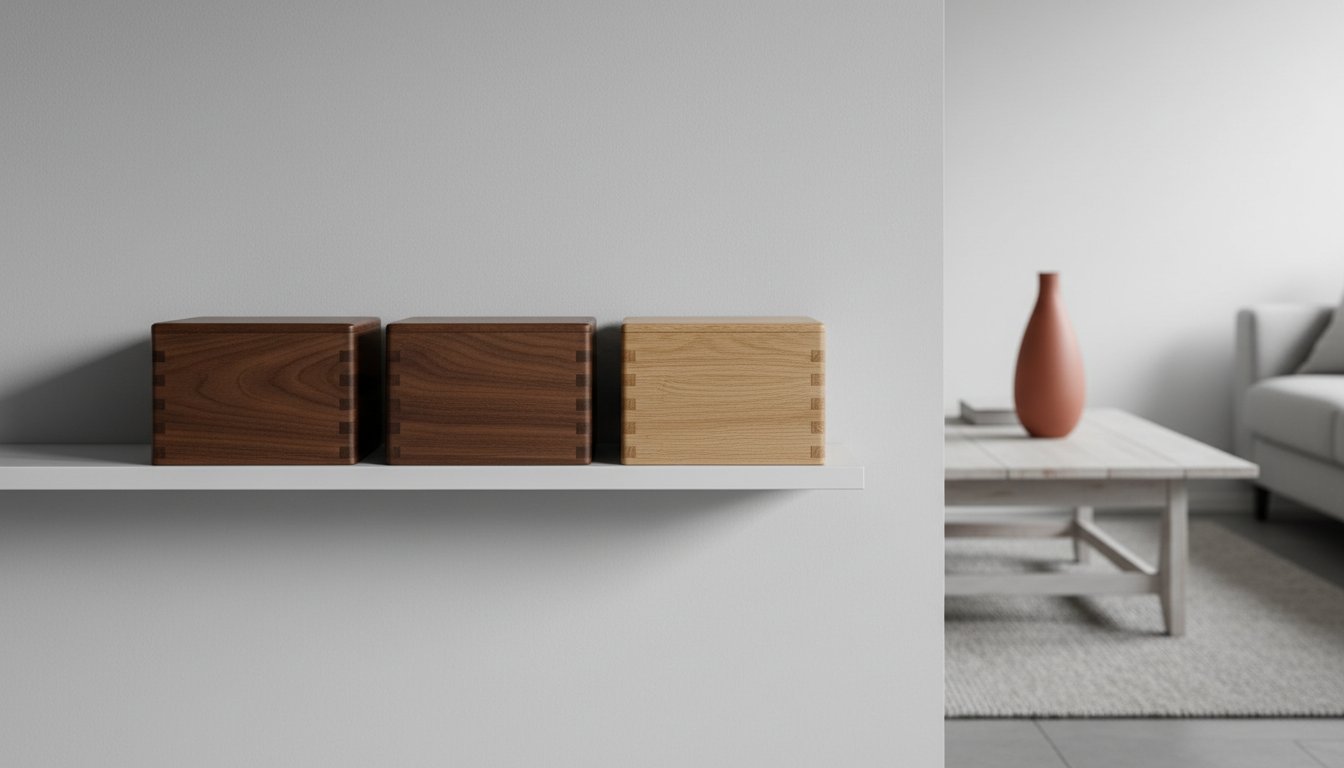
The choice of material is the foundation of every interior design decision. When you choose wooden boxes for your home, you are investing in more than just storage; you are inviting nature's own fingerprint into your daily life. Each wood species tells a unique story through its grain and color variations. A dark walnut box creates an entirely different weight and character than a delicate ash one. It's about understanding how light falls across the surface and how the wood's texture interacts with the room's other elements to create harmony.
To truly understand the material's potential, one can study the Properties of different wood species, which provides a deeper insight into how different varieties react to mechanical stress and humidity. This technical knowledge is crucial when matching your boxes with existing floors or wall panels. A rule of thumb is to either aim for an exact match in wood species or to create a conscious, beautiful contrast by mixing light and dark.
Wood is a living material that matures with dignity over time. A newly produced oak box has a specific shade, but after 5 to 10 years in daylight, it will have developed a warmer, golden tone. This natural color change is a sign of quality and authenticity. It means that your interior never feels static but instead grows with the home and its inhabitants.
Walnut – For a luxurious and dark aesthetic
Walnut's deep, chocolate-brown tones have long been synonymous with exclusivity and sophisticated design. Its rich color palette immediately imparts a sense of warmth and substance to a room. In a bright, Scandinavian home, walnut acts as a perfect focal point, creating visual interest and depth. If you want to take this concept further into other areas of the home, you can explore how a walnut bathroom vanity can transform a functional space into a private spa oasis with timeless elegance.
Oak and Ash – Scandinavian clarity and strength
Oak is the backbone of Swedish interior design, known for its incredible durability and clear, beautiful annual rings. It is a hard wood species that can withstand everyday wear and tear for decades without losing its charm. Ash offers a lighter aesthetic with even more vibrant patterns in the wood. Ash is both tough and strong, making it ideal for wooden boxes that are frequently used in the kitchen or hallway. These wood species reflect the Nordic light in a way that makes the room feel spacious and airy, while conveying a sense of genuine craftsmanship.
Choosing the right wood species is an art form that requires both intuition and knowledge. If you want to deepen your understanding of how material selection affects the overall impression, you can read more about our custom interior solutions that highlight the best in every unique piece of wood.
The difference between solid wood, plywood, and MDF boxes
The choice of material determines whether your wooden boxes become a future heirloom or a temporary storage solution. It's not just about aesthetics; it's about how the material responds to touch, weight, and the test of time. A solid oak box often weighs 35% more than a similar MDF construction, which provides immediate weight and stability when you pull it out. At Indoor Wood, we prioritize genuine raw materials because they possess an inherent honesty that industrial substitutes can never recreate.
Performance in different environments varies greatly depending on the fiber structure. Solid wood lives and breathes, requiring skilled craftsmanship to manage natural movements. MDF and plywood are more static, but they lack the tactile warmth that defines an exclusive home. Investing in quality pays off over decades; a solid construction can be repaired and renewed, while a damaged MDF box usually has to be discarded entirely.
Solid wood: The uncompromising choice
Solid wood is the ultimate choice for those seeking a lifelong investment in quality and genuine craftsmanship. The biggest advantage is the possibility of maintenance; you can sand down and re-oil the surface five or six times during the box's lifespan. This makes the material extremely resistant to the wear and tear that occurs in kitchens or bedrooms. Where foiled MDF peels upon impact, solid wooden boxes instead develop a beautiful patina that tells a story of the home.
Plywood and MDF: Functional alternatives
Plywood has a technical advantage due to its cross-laminated construction, which provides dimensional stability that minimizes the risk of the material warping with fluctuating humidity. It is an honest material that shows its layers, unlike MDF which is a homogeneous mass of compressed fibers. MDF almost always requires a covering lacquer to look appealing, as its natural surface is porous and lifeless.
When choosing composite materials, it's important to carefully examine the content:
- Formaldehyde levels: Cheap glues in simpler MDF can release gases for a long time. Check that the material at least meets the E1 standard.
- Surface finish: Lacquered MDF provides a smooth surface but lacks the natural grain and depth of wood.
- Weight capacity: Plywood holds screws and fittings significantly better than MDF, which is crucial for heavily loaded drawers.
At Indoor Wood, we see wood as the foundation of the room. By carefully selecting materials, we not only create order but also an atmosphere of calm and sustainable luxury. It's about understanding that every wooden plank is unique, and that the right feel under your fingertips is what transforms a simple piece of furniture into a part of your lifestyle.
Interior design tips: How to use wooden boxes in every room of the home
A well-organized home is about more than just hiding items from view. It's about creating a home where everything has its place and where the storage itself contributes to the room's aesthetic integrity. By using wooden boxes, you create a natural bridge between practical order and sophisticated design. The boxes act as visual anchors, especially on open shelves where they help create "rooms within rooms." This approach structures large surfaces and provides a clear framework for your belongings, immediately reducing visual clutter in the room.
To succeed with your interior design, proportions are absolutely crucial. A box that is too small for its shelf compartment often looks out of place, while one that is too large feels cumbersome. A tried and tested rule of thumb in interior design is that the box should occupy approximately 75 to 85 percent of the shelf's total height and width. This provides enough space for the material to breathe while creating a built-in feel. If you want to add a personal touch to your storage, you can easily replace or add knobs. It's a small detail that can change the entire expression of the box, from rustic and genuine to modern and elegant.
Kitchen and Bathroom: Order with style
In the kitchen, wood is an indispensable component for creating warmth. Investing in custom-fitted drawer inserts in solid wood for cutlery and utensils elevates the experience of an exclusive wooden kitchen to a new level. It's about the tactile sensation every time a drawer is opened. In the bathroom, smaller wooden boxes serve a similar function. Here, wood acts as a softening contrast to the often hard and cold surfaces of tiles, porcelain, and natural stone. By organizing small items such as skincare products or scented candles in beautiful boxes, you create the feeling of a private spa rather than a sterile wet room.
Living Room and Bedroom: Decorative storage
In the home's social areas, wooden boxes can take on a more prominent role as furniture. Stackable boxes in robust designs are an excellent alternative to traditional side tables next to the sofa or bed. This offers flexibility that fixed furniture lacks. Storing magazines, wool blankets, or tech gadgets in solid oak boxes keeps things tidy without compromising on style. In the bedroom, tranquility is key. By using beautiful lidded boxes to hide small items that might otherwise clutter the bedside table, you create a harmonious environment free from distractions. It is in these details that craftsmanship truly comes into its own.
Do you want to refine your home with sustainable materials that last for generations? Explore our range of timeless craftsmanship and exclusive solutions at IndoorWood.
Quality in the details – How to recognize a handcrafted wooden box
When you pull out a solid wood drawer, the experience should be seamless. The first thing you should examine are the corners. A handcrafted construction often uses dovetail joinery. This technique creates a mechanical lock that keeps the drawer together even if the glue were to fail after 50 years. Simpler variations rely solely on glue or brad nails, which rarely withstand the test of time or daily use in the same way.
The surface also tells a story. Run your hand over the material. A premium product will be completely free of sanding marks and glue residue at the joints. The choice between oil, wax, and lacquer affects both appearance and maintenance. Oil and wax provide a natural scent and a tactile feel where you can actually feel the wood fibers, while lacquer provides a harder surface that better withstands spills in demanding environments.
Precision in the fit is crucial for the overall impression. A box that wobbles or sticks in its runners lacks the accuracy required to be called genuine craftsmanship. Also, look at the wood's sorting. In exclusive wooden boxes, the grain on the side pieces is matched so that the pattern flows naturally around the corners. This requires the craftsman to select specific planks from the same tree, a process that takes significantly longer than mass production but results in visual tranquility.
Craftsmanship techniques that make a difference
Dovetailed corners are the primary marker of a premium product. It shows that the manufacturer prioritizes durability over quick solutions. A perfect surface without visible glue residue requires each part to be sanded by hand in several stages, often up to grit 240 or higher, to achieve a silky-smooth finish. Precision in craftsmanship reflects IndoorWood's philosophy where every detail in the home is seen as part of a larger, harmonious whole.
Care instructions for a long lifespan
For your wooden boxes to retain their beauty, minimal but conscious maintenance is required. Follow these simple steps to protect your investment:
- Cleaning: Use a soft cloth lightly dampened with water. Avoid strong cleaning agents that can dissolve the finish or dry out the wood.
- Re-oiling: If the box is oiled, you should apply a new coat of hard wax oil or furniture oil approximately every two years, or when the surface starts to feel rough and lifeless.
- Placement: Avoid placing wooden boxes in direct sunlight for extended periods. UV radiation can bleach the wood unevenly, and extreme humidity variations can cause the wood to swell or shrink by several millimeters.
By understanding these details, it becomes easier to choose products that not only serve a purpose today but become more beautiful with each passing year. Investing in quality is choosing a sustainable path where the material's natural properties are central.
Invest in craftsmanship that ages with dignity
The choice of storage lays the foundation for a harmonious home where every detail serves a clear purpose. By prioritizing solid wood over composite materials, you ensure a lifespan that extends over decades. Your wooden boxes thus become not just practical containers, but an integral part of an interior design philosophy where nature and precision meet in every corner. We place great importance on the small nuances in the wood's grain, as these details create a genuine sense of luxury and homeliness.
As dedicated specialists in walnut, ash, and oak, we offer craftsmanship created with great passion. We deliver our products directly from the manufacturer, meaning we cut out all intermediaries to give you the best possible value and control over the entire chain. If you want to experience the quality with your own eyes, you are warmly welcome to our showrooms in Stockholm and Gothenburg. There you can see how the materials interact with light and feel the unique texture of our carefully selected wood species.
Explore Indoor Wood's range of exclusive solid wood interiors and let nature's timeless materials transform your home into a place for both rest and inspiration.
Frequently asked questions about wooden boxes and sustainable storage
Which type of wood is best for wooden boxes in the bathroom?
Oak and teak are the most suitable wood types for bathroom environments due to their natural oil content and high density. Oak has a density of approximately 700 kg/m3, making the material resistant to the humidity variations that naturally occur in a wet room. To ensure maximum durability, the surface should be treated with a high-quality hardwax oil that protects against splashes and stains.
How do I best clean my solid wood boxes?
You best clean your boxes by using a soft, lightly dampened cloth and a mild, pH-neutral cleaning agent. Avoid soaking the wood in water or using harsh chemicals that can damage the natural finish. If the surface starts to look dull after a couple of years of use, you can easily restore its luster by applying a thin layer of furniture wax or linseed oil.
Are wooden boxes more environmentally friendly than plastic boxes?
Wooden boxes are a significantly more environmentally friendly option as they are made from a renewable raw material that sequesters carbon dioxide throughout its lifetime. A plastic box is often based on fossil oil, and it takes up to 450 years for nature to break down the material. By choosing wooden boxes, you invest in a circular product that can be repaired, refinished, and finally recycled without negative environmental impact.
What is the difference between a dovetailed box and a glued box?
The difference lies in the strength of the construction, where a dovetailed box is joined by mechanical cuts, known as dovetails, which interlock the pieces of wood. A glued box relies solely on the adhesive properties of the glue, making it more vulnerable to stress and temperature fluctuations over time. Dovetailing is a sign of genuine craftsmanship that ensures the box maintains its shape and stability for 50 years or longer.
Can I use wooden boxes for food storage in the kitchen?
You can perfectly store dry foods and root vegetables in wooden boxes, provided the wood is treated with a food-safe oil. The wood's natural ability to breathe helps regulate moisture levels, which can extend the shelf life of, for example, onions and potatoes compared to airtight plastic containers. This creates both a practical and aesthetically pleasing order in the pantry that exudes tradition and quality.
How do I prevent the wood in the boxes from cracking over time?
To prevent cracking, you should strive to maintain a consistent humidity level in your home, preferably between 30 and 60 percent. Wood is a living material that reacts to its environment, and most cracks occur during winter when indoor air becomes driest. By regularly maintaining your wooden boxes with oil, you keep the fibers elastic and reduce the risk of the material drying out and cracking.
Why should I choose solid wood instead of plywood?
Solid wood provides genuine weight and a unique grain that can never be fully replicated by a laminated material like plywood. Plywood consists of thin layers glued together, which often makes the edges look less elegant and the surface cannot be sanded in the same way for deep scratches. A solid wood box is an investment that ages with dignity and develops a beautiful patina over the years.
Is it possible to custom-order wooden boxes for specific cabinet dimensions?
Custom ordering is the best way to maximize your storage and create an exclusive feel in built-in wardrobes or kitchen cabinets. By adapting the dimensions to the millimeter, you avoid unnecessary gaps and can utilize every square centimeter of your available space. The precision of a custom-fitted solution reflects a high level of craftsmanship and ensures that the boxes slide smoothly regardless of the cabinet's design.