Acoustic Panels: A Complete Guide to Design and Sound Environment 2026
Imagine a Saturday evening in November 2024, where laughter around the dinner table bounces off the hard plaster walls, creating a soundscape that makes it difficult to hear what the person opposite is actually saying. According to measurements in modern Scandinavian homes, the sound level often exceeds 65 decibels during normal conversations, a level at which the brain begins to register stress and fatigue. You've probably noticed how the minimalist aesthetic we love often brings with it an uncomfortable echo that disrupts the fundamental tranquility of the home. It's a challenge to find solutions that dampen sound without compromising the exclusive feel of genuine natural materials.
We understand your desire to combine technical function with a tactile experience of craftsmanship. In this guide, you will learn everything about how an acoustic panel in timeless wood species transforms both the soundscape and the aesthetics of your home for 2026. We promise to give you the tools and knowledge needed to make a sustainable choice that feels both grounded and luxurious at the same time. We explore everything from choosing the right wood species to how to perform a precise installation for a result that lasts for generations.
Key Takeaways
- Understand the technology behind how slats and acoustic felt work together to effectively eliminate disruptive echo and create a calmer home.
- Guide to choosing the right wood species, such as walnut, oak, or ash, to harmonize with your personal interior design style and the room's natural light.
- Practical advice for measurement and installation, and why an acoustic panel with a length of 270 cm is the optimal choice for seamless integration at standard ceiling height.
- Discover how the right acoustic solution acts as an investment in both the home's aesthetics and your well-being through reduced stress levels.
- Learn to recognize genuine craftsmanship and the benefits of choosing sustainable materials directly from the manufacturer for a timeless result.
What is an acoustic panel and how does it work?
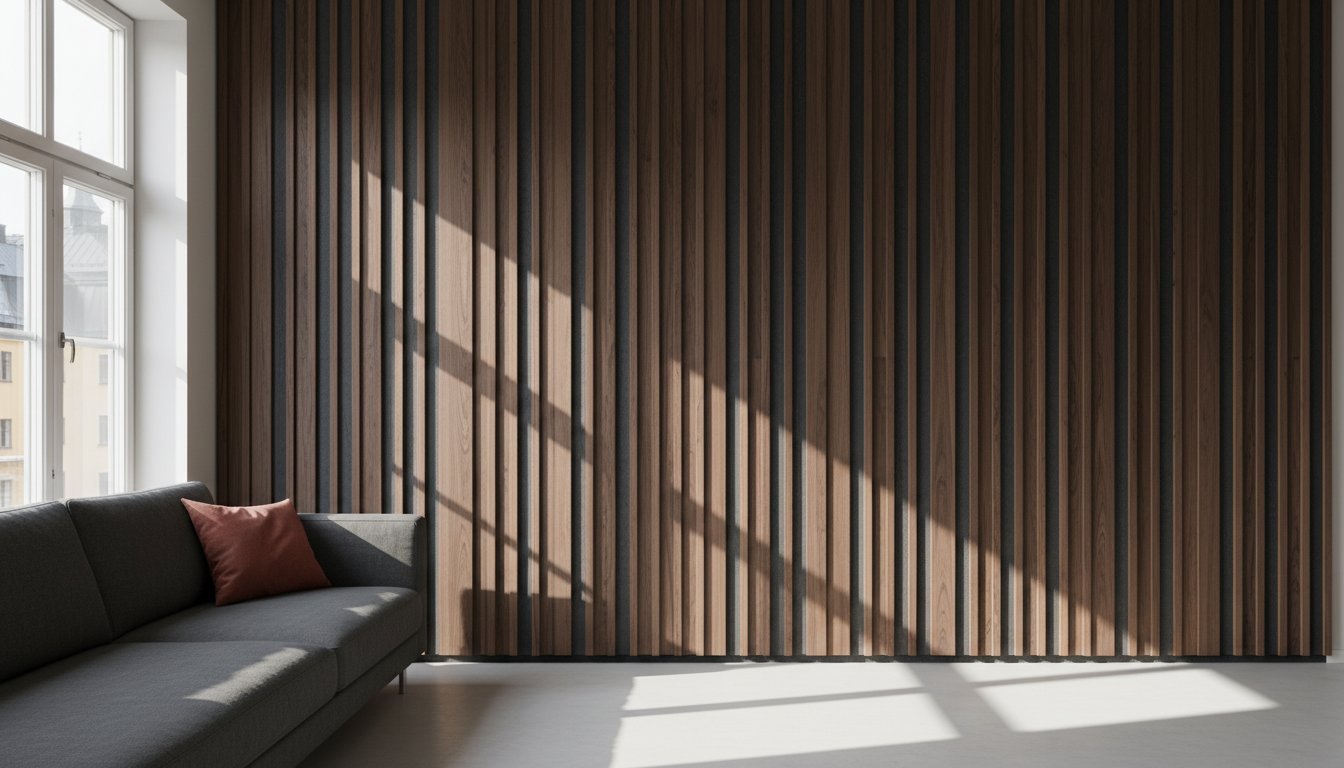
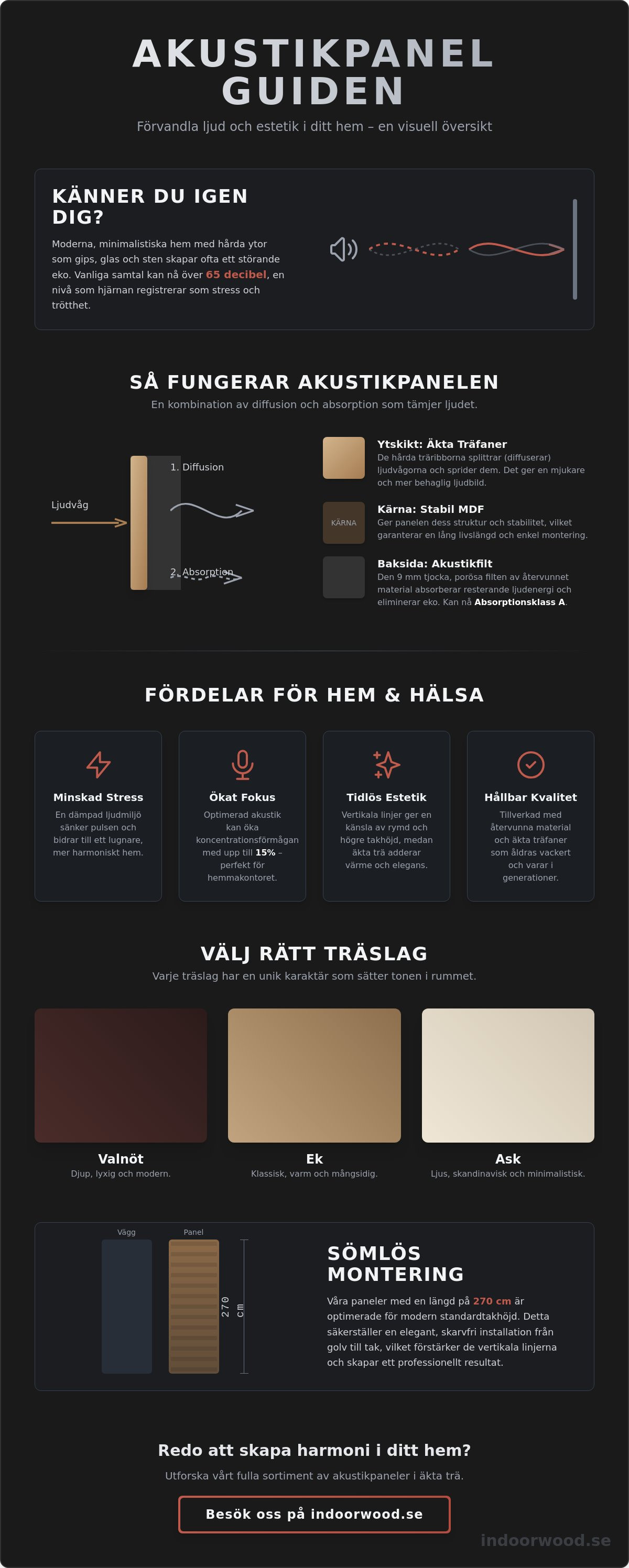
An acoustic panel is a sophisticated combination of engineering and solid craftsmanship, created to tame sound without compromising the room's aesthetics. The basic structure consists of three interwoven layers: a backing of recycled acoustic felt, a core of stable MDF, and a surface layer of exclusive wood veneer. This construction is not merely a visual asset; each part has a specific function to optimize the room's atmosphere.
The basic physics behind an acoustic panel involves breaking and absorbing sound waves. When sound hits the hard wood slats, the waves are split and spread in different directions, a process called diffusion. The remaining sound energy passes between the slats and is captured by the porous felt behind. Instead of the sound bouncing back against a bare wall and creating an echo, the energy is converted into minimal heat in the felt fibers. This eliminates the irritating flutter echo that often occurs in modern environments.
It is crucial to understand the difference between sound insulation and sound absorption. Sound insulation aims to block out noise from neighbors or traffic, while an acoustic panel focuses on absorption. It improves the sound environment inside the room by shortening the reverberation time. In Scandinavian homes, where we often see a preference for open spaces and hard materials such as stone and glass, the slatted panel has become a modern classic that creates a balance between cool architecture and the need for acoustic softness.
The role of sound absorbers in the modern home
Open-plan solutions place high demands on the interior. Without soft materials, conversations become strained and everyday sounds are amplified to stress levels. The felt behind the slats, often 9 mm thick, plays the main role in dampening these frequencies. Scientifically, this is measured by sound classifications according to the EN ISO 11654 standard. A high-quality panel often achieves Absorption Class A with correct installation, meaning it absorbs over 90% of incoming sound waves within specific frequency ranges.
Aesthetics meets function
Design is about more than just acoustics; it's about giving the room a soul. The vertical lines of a slatted panel create visual space and give an impression of higher ceilings. By using natural materials such as oak, walnut, or ash, you add an organic warmth that contrasts beautifully with industrial elements.
- Feature walls: Create depth and a natural focal point in the room.
- Natural texture: Each veneer has unique grain patterns that tell a story about the material's origin.
- Timelessness: Wood is a material that ages with dignity and maintains its relevance through trends.
Choosing the right panel is an investment in both well-being and property value. It's about creating a home that not only looks luxurious, but also feels calm and harmonious for all senses.
Advantages of choosing acoustic panels in wood
Wood is the foundation of a beautiful home and a material that never goes out of style. Choosing an acoustic panel in genuine wood veneer is about more than just aesthetics; it's an investment in everyday harmony. A wall clad in living slats creates a visual depth that smoothly painted surfaces completely lack. At the same time, it solves one of our biggest modern interior design problems: the hard, bouncing sound that arises in rooms with large glass sections and open spaces.
The durability of genuine wood veneer, often with a thickness of 0.5 to 0.6 millimeters, provides a quality that is palpable with every touch. Unlike imitations, natural materials age with dignity and develop a unique character over time. It's a simple upgrade that changes a room's entire identity without you having to undergo a dusty and time-consuming total renovation. Installation is often completed in an afternoon, but the result lasts for decades.
- Reduced stress: A dampened sound environment lowers the heart rate and makes it easier to relax after a long day at work.
- Timeless design: The vertical lines of the slats create space and a sense of architectural precision.
- Versatility: The material works equally well as a sound-absorbing ceiling or a decorative detail on the kitchen island.
Indoor climate and well-being
Wood's natural ability to spread calm in a room is well documented. Environments with visible natural materials contribute to lower stress levels and increased focus. When the echo in a room is reduced, the voice volume at the dinner table automatically decreases because we no longer need to drown out the reflections from the walls. For those who work from home, this is crucial. An optimized sound environment can increase concentration by up to 15 percent during a workday. By choosing panels with non-toxic materials and recycled acoustic felt, you also create a home that is safe for both children and the environment.
Interior design potential in different rooms
Every room has its unique needs and an acoustic panel can be adapted accordingly. In the bedroom, the panels work perfectly as an integrated headboard. This provides an exclusive hotel feel that invites rest, while also dampening the sound of morning routines in the rest of the house. In the living room, the panel often becomes a functional feature wall behind the TV. Here it serves a dual function: it hides unsightly cables behind the felt backing and significantly improves the sound experience from the home theater system.
The hallway is the house's calling card. This is where the first impression is created. By cladding a wall or part of the entrance with slats, guests are met by a warm and welcoming atmosphere directly when they step over the threshold. It is craftsmanship that is visible and felt in every detail. Discover how our selection of natural materials can transform your home into an oasis of calm and timeless elegance.
Choose the right wood: Walnut, oak, or ash?
The choice of wood species is the single most important decision for defining the room's character. It's about how light refracts against the surface and how the material's grain interacts with other furnishings. Wood is a living material that imparts an organic feel that synthetic alternatives can never replicate. Walnut provides weight and exclusivity, while oak offers security and tradition. Ash, on the other hand, opens up the room with its bright sharpness and modern luster.
Each wood species carries its own history and affects the room's atmosphere in different ways:
- Walnut: Deep, brown tones that create a luxurious and cozy atmosphere.
- Oak: The timeless Scandinavian classic that works in almost any environment.
- Ash: A light and lively wood for a modern, airy expression.
Walnut acoustic panel – Timeless elegance
Walnut has long been synonymous with sophisticated interior design. Its dark, deep brown tones create an immediate sense of exclusivity in the room. In environments where you want a cozy and warm atmosphere, this is the obvious choice. By combining a dark acoustic panel with subdued interior details and accent lighting, you highlight the wood's unique structure. Many choose walnut to create a clear focal point, for example, as a feature wall behind the bed or in a home office where calm is central. You can read more about how to create magic with walnut acoustic panels to find the right inspiration for your project.
Oak acoustic panel – Nature's own warmth
Oak forms the backbone of Scandinavian design heritage. It is a material that withstands the test of time, both in terms of aesthetics and durability. An acoustic panel in oak is available in several shades, from the naturally golden tone to white-glazed variants that give a softer expression. The distinct grain of oak gives the walls a natural life without being too dominant. It is a sustainable choice that ages with a beautiful patina. Feel free to delve into our guide on oak acoustic panels to understand how this timeless material can elevate your home to new heights.
Ash is the optimal choice for those seeking a modern and airy expression. With its light base and subtle character, ash effectively reflects daylight. It makes smaller areas feel significantly larger and more inviting. It is a dense wood with a natural luster that fits perfectly in minimalist homes where craftsmanship and details matter. Ash gives a feeling of freshness and purity that is hard to beat in Nordic architecture.
Planning and installation: How to succeed
Precision in preparation is the foundation for successful craftsmanship. Before ordering your first acoustic panel, you should measure the wall's total width and height with millimeter precision. A standard panel usually measures 600 mm in width. By dividing the wall's total width by 0.6, you get the exact number of panels required. Always count on an extra panel to have a margin for waste at corners and ends. This creates security in the work process.
Tools are crucial for the end result. For a professional installation, you will need:
- Spirit level to ensure the first panel is perfectly vertical.
- Fine-toothed saw or jigsaw for precise cuts in the wood and felt.
- Screwdriver and black mounting screws or a high-quality assembly adhesive.
- Tape measure and pencil for accurate marking.
Seamless walls with the right dimensions
Choosing an acoustic panel with a length of 270 cm is a strategic choice for Swedish homes. Since most modern homes in Sweden have a ceiling height between 240 and 260 cm, 270 cm gives you the freedom to create an unbroken line from floor to ceiling. This eliminates unsightly horizontal joints that would otherwise break the visual flow and harmony of the room. When adapting for electrical outlets and switches, you should mark the position on the back of the panel. Use masking tape over the cut surface on the front to protect the genuine wood veneer from splintering during sawing.
Installation tips for the DIY enthusiast
The choice between gluing and screwing is determined by the wall's nature and your future plans. For a plasterboard wall, screwing is the most reliable option. By using black screws placed in the acoustic felt between the slats, the fastening becomes virtually invisible to the eye. For concrete walls, mounting adhesive works excellently to avoid pre-drilling, but remember that this is a permanent solution. When installing on the ceiling, mechanical fastening with screws is always required to ensure safety and prevent the panels from moving over time.
Maintenance of your wood panels is straightforward but important to preserve the material's soul. Wood is a living material that ages with dignity if cared for properly. Use a vacuum cleaner with a soft brush attachment or a dry microfiber cloth to keep the slats free of dust. Avoid strong chemicals that can dry out the surface or alter the wood's natural pigmentation. By caring for the material, you preserve the exclusive feel and warm atmosphere in the room for many decades to come.
Why choose an acoustic panel from Indoor Wood?
Choosing the right acoustic panel is about much more than just sound absorption; it's a conscious choice to imbue a room with soul and a natural foundation to rest upon. At Indoor Wood, we are driven by a genuine passion for solid wood and its unique ability to create warmth and character. As a family business, we have chosen to cut out all unnecessary intermediaries. We deliver our products directly from manufacturing to your door, ensuring that every slat meets the high standard we ourselves demand in our own homes.
By controlling the entire chain, we can guarantee a quality that is difficult to find in mass-produced volume goods. This means security for you as a customer. You know exactly where your material comes from and that it is created by people who understand the natural variations of wood. Our focus is on preserving the exclusive feel of genuine veneer and solid details that give the room a whole new gravitas.
Quality that can be felt
The difference between a high-quality acoustic panel and cheaper alternatives is most noticeable upon closer inspection. Many low-cost products use extremely thin surface layers that resemble plastic more than natural materials. Our panels, instead, showcase the rich texture and depth of the wood. Each individual slat is mounted with millimeter precision on a premium felt, designed to provide maximum sound reduction without compromising appearance.
Sustainability is a matter of course in our process. We work exclusively with timber from sustainable forestry where 100 percent of the raw material is traceable. This commitment to the environment and craftsmanship means that your investment not only improves acoustics today but will remain beautiful for decades to come. It is craftsmanship that can be felt in every fiber.
Create a coherent theme in your interior design
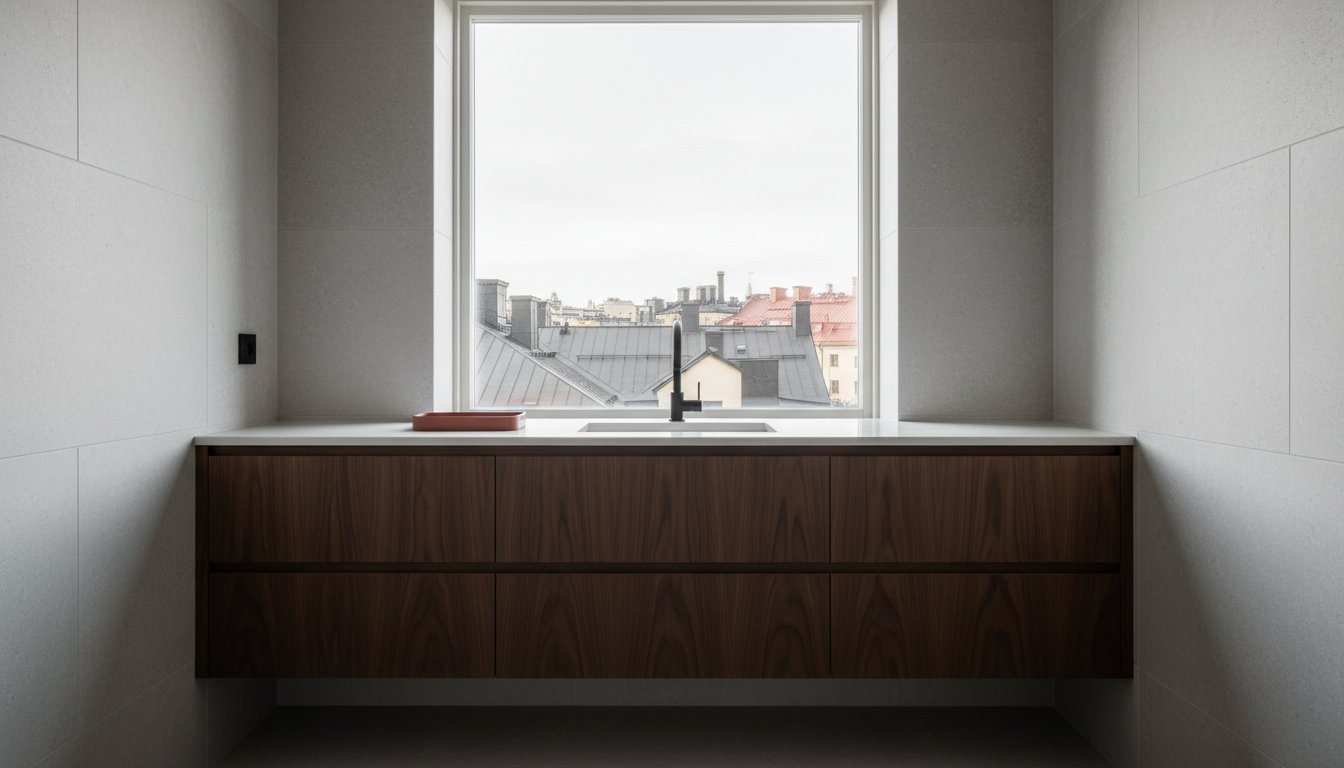
We see the home as a cohesive unit rather than a collection of separate rooms. An acoustic solution should act as a bridge between different environments. You can advantageously create harmony by matching the panel's wood species with a walnut bathroom vanity to connect the bedroom with the home's private oases. The same aesthetic can then be seamlessly integrated into your wooden kitchen, where the soft wood slats contrast with hard countertops and stainless steel appliances.
Our personal advice is a central part of the experience at Indoor Wood. We help you choose the right shade and dimension to realize your vision. Here are some benefits of planning your interior design with us:
- Direct contact: You speak directly with experts who know the material inside and out.
- Sustainable choices: We guide you to materials that age with dignity and are environmentally friendly.
- Total harmony: Opportunity to order complementary furnishings in the exact same wood species for a unified expression.
Investing in an acoustic panel from us is a decision that combines technical expertise with Scandinavian design tradition. We are with you from the initial thoughts about material selection until the last panel is in place, ready to transform your home into a calmer and more beautiful place.
Give your home a new acoustic dimension
Investing in an acoustic panel is about much more than just technical sound dampening; it is a conscious choice to give the room a soul and a natural foundation to rest upon. By choosing between our high-quality wood veneers in walnut, oak, or ash, you get a surface that ages with dignity and adds a timeless elegance to your interior. We see that the trends for 2026 are clearly moving towards materials that combine functional precision with a warm, organic feel in every corner of the home.
Our direct sales model ensures that you get access to first-class craftsmanship at competitive prices, completely without unnecessary intermediaries. With fast delivery throughout Sweden, your renovation project can go from vision to finished result in an impressively short time. It's about creating an environment where the eye can rest and where conversations finally get the space they deserve. Every plank carries a unique character waiting to become a permanent part of your everyday life.
Explore our range of exclusive acoustic panels here
Let your home transform into the calm and aesthetically pleasing oasis you dream of by letting genuine craftsmanship take its place on your walls.
Common questions about acoustic panels and sound environment
How much does an acoustic panel dampen sound in a room?
An acoustic panel significantly reduces reverberation time and can lower the sound level by up to 10 decibels in specific frequency ranges. By using panels with a 9 mm thick acoustic felt made from recycled plastic, up to 85 percent of incident sound is absorbed. This creates an immediate sense of calm and makes conversations feel more intimate and clear.
In a standard 20 square meter room, covering 25 percent of the wall area is often sufficient to achieve a noticeable difference in sound comfort. It's about breaking up the hard surfaces where sound waves would otherwise bounce unimpeded. The result is a harmonious environment where craftsmanship and function work together for your well-being.
Can acoustic panels be installed in bathrooms?
No, we do not recommend installing standard wooden panels in bathrooms or other areas where humidity regularly exceeds 70 percent. Wood is a living material that moves with changes in moisture content, which can cause the slats to warp or the veneer to peel off. Moisture also risks damaging the underlying felt over time.
For environments with high moisture exposure, you should instead look for specially treated composite materials that mimic the aesthetic of wood. In dry zones such as well-ventilated laundry rooms, it can work, but near showers and baths, it is technically unsuitable. We care about the lifespan of our materials and want your investment to remain beautiful for many years.
What is the best way to clean a slatted panel?
The most effective way to keep your slatted panel dust-free is to use a vacuum cleaner with a soft brush attachment. Gently move the attachment vertically along the gaps between the slats to remove particles trapped in the felt. This preserves the wood's natural luster and keeps the fabric's absorption capacity at its peak.
If stains appear on the wooden slats, you can use a well-wrung microfiber cloth with a drop of mild soap. Avoid strong chemicals or too much water, as this can stain the thin veneer or leave marks on the matte surface. A gentle touch is key to maintaining the exclusive feel of the material.
Is an air gap behind the panel necessary for the best effect?
Yes, a 45 mm air gap behind your acoustic panel significantly improves the absorption of low-frequency sounds and bass. By mounting the panel on battens with mineral wool behind it, you can achieve sound class A, which is the highest level of sound absorption. Without an air gap, most panels would instead be in sound class C.
The choice depends entirely on the room's acoustic challenges and your aesthetic preferences. In a normal home office, direct mounting works perfectly for dampening speech and treble sounds. For a home cinema or music room, however, the extra construction height is a necessity to achieve the technical precision required for a perfect soundscape.
Can you paint or stain an acoustic panel yourself?
It is perfectly fine to stain or glaze an acoustic panel with untreated wood veneer to give it a personal character. We recommend using a thin product that does not clog the wood's pores or run into the felt. Apply the stain with a sponge or brush before mounting the panel on the wall for best results.
However, avoid using thick opaque paint, as this can alter the panel's acoustic properties and hide the wood's natural grain. The goal of a slatted panel is often to highlight the organic material, and light pigmentation can enhance the timeless feel of the room. Be sure to test on a scrap piece first.
How do you best cut an acoustic panel without the veneer cracking?
Use a fine-toothed plunge saw with a guide rail or a jigsaw with a blade specifically designed for laminates and finer woodworking. To minimize the risk of splintering in the brittle veneer, you should place a strip of masking tape where the cut is to be made. This holds the fibers together during the cutting process and provides a razor-sharp edge.
Always cut the panel from the back if using a jigsaw, so that the teeth work towards the wood surface instead of away from it. Precision is crucial for the final result, and a calm pace ensures that the craftsmanship is of the highest quality. Once the wood is cut, you can easily cut through the felt with a sharp utility knife.
Are acoustic panels fire-rated?
Many of our more exclusive panels are tested and meet fire class B-s1, d0, which is required for use in public environments and escape routes. This means that the material contributes very little to fire and smoke development. However, it is important to know that standard panels for private use often have a lower classification, such as D-s2, d2.
In a private villa, there are rarely requirements for the highest fire class, but for projects in restaurants or open-plan offices, certification is an absolute requirement according to Swedish building regulations. Always check the documentation for the specific product before starting your renovation. Safety and aesthetics should always go hand in hand in a modern home.
Can acoustic panels be installed directly on a plasterboard wall?
It is perfectly fine to mount the panels directly on a plasterboard wall using either mounting screws or a strong adhesive. If you choose screw mounting, we recommend black screws that are naturally concealed in the black felt between the slats. Use about 15 screws per standard panel to ensure it sits flat and stable across the entire surface.
For a completely invisible installation, adhesive is a popular alternative, but keep in mind that it will be more difficult to remove the panel without damaging the plasterboard in the future. A combination of individual screws and adhesive often provides the most durable result. Regardless of the method, the panel becomes a permanent part of the room's foundation and a long-term investment in your living environment.