Shaker Kitchens: A Guide to Timeless Design and Craftsmanship
In a world where interior design trends often have a shorter lifespan than appliance warranties, the Shaker style remains an unshakeable symbol of honest sustainability. It's easy to feel a nagging worry that an extensive kitchen renovation will feel outdated after just five years, especially when the market is flooded with mass-produced solutions lacking the weight of true craftsmanship. You're likely seeking that rare balance where every detail feels thoughtfully designed and where the inherent beauty of natural materials is allowed to shine. A genuine Shaker kitchen isn't just about appearances; it's a tribute to precision and materials that only grow more beautiful with time.
We understand the value of creating a foundation for the home that can withstand everyday wear and tear without losing its elegance. In this article, you will learn everything about the principles of Shaker style, which date back to the 18th century, and how these values can be translated into a modern Swedish home in 2024. We will guide you through the selection of solid hardwoods and tactile finishes, while also showing you how to seamlessly integrate modern technology within a classic framework. You will receive clear guidance to transform your vision into a functional dream kitchen that never goes out of style.
Key Takeaways
- Understand the fundamental principles of simplicity and honesty that make a Shaker kitchen a timeless investment for the home.
- Learn to distinguish between inset and overlay doors to achieve the correct architectural feel in your kitchen project.
- Discover how the choice of noble woods like oak, ash, or walnut sets the tone and creates a durable foundation for the room's atmosphere.
- Explore smart methods for integrating modern technology and hidden storage without compromising the classic aesthetic.
- Gain insight into the benefits of custom-made solutions directly from the manufacturer to maximize both function and precision.
What is a Shaker Kitchen? The Philosophy Behind the Design
A Shaker kitchen is much more than just an interior design trend; it represents a philosophy of life where every detail serves a specific purpose. The style has its roots in the religious Shaker movement that flourished in the USA during the 19th century. Their conviction that beauty lies in utility created an aesthetic that, even today, more than 200 years later, feels modern and deeply relevant in Scandinavian homes. For us at IndoorWood, it's about respecting the material, allowing the craftsmanship to speak for itself without being overshadowed by temporary whims of fashion.
As we explore the origins of this timeless design, it's impossible not to mention the legacy of Shaker furniture and its fundamental influence on the art of furniture making. By stripping away all excess, craftsmen as early as the 1800s managed to create solutions that were both lightweight and extremely durable. This honesty in construction means that how a piece of furniture is joined is not hidden. Instead, the technical solutions, such as dovetailed drawers and precise joints, become part of the visual expression. It is a form of luxury that doesn't shout, but rather whispers of quality and precision.
Many often confuse a Shaker kitchen with a traditional country kitchen, but the differences are clear to the trained eye. While the classic country kitchen often includes profiled cornices, decorative carvings, and a more maximalist appearance, the Shaker style rests in a more austere elegance. Here, there are no unnecessary frills. Every line is carefully considered and every surface has a function, creating a harmonious environment that brings peace to the mind and the room.
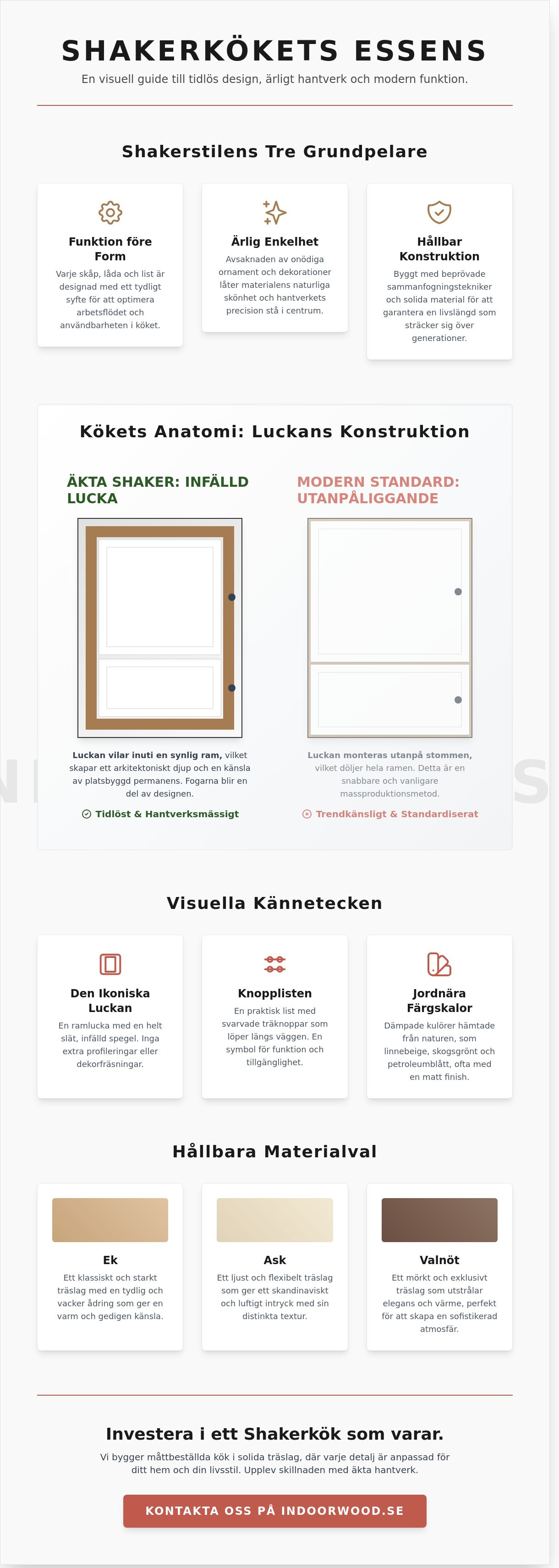
The Three Pillars of Shaker Style
To understand why a Shaker kitchen ages with such dignity, we need to look at the principles that govern its design. It's a methodical approach to interior design that puts the user at the center.
- Function before form: Every cabinet and drawer is placed with consideration for the workflow in the kitchen. Nothing is there just for show.
- Simplicity: The absence of ornamentation means that the natural grain of the wood and the quality of the craftsmanship are highlighted.
- Durability: The construction is based on proven techniques that ensure the kitchen functions just as well in 50 years as it does today.
The Visual Characteristics You Should Look For
There are specific details that define the style and create that unique atmosphere of solid craftsmanship. These elements are fundamental to achieving the right expression in a genuine Shaker kitchen.
- The iconic door: A framed door with a completely smooth, inset panel without extra profiling or decorative milling.
- The peg rail: A practical rail with turned wooden pegs running along the wall, originally used to hang chairs for cleaning but today a symbol of accessibility.
- Earthy color palettes: Colors drawn directly from nature, such as muted linen beige, forest green, or deep petrol blue, often with a matte finish that enhances the tactile feel of the wood.
The Anatomy of a Shaker Kitchen: Doors, Frames, and Craftsmanship
What defines a genuine Shaker kitchen is the perfect balance between function and visual tranquility. The heart of the design lies in the inset doors, a construction often called in-frame. Unlike modern standard kitchens where the door is mounted on the outside of the cabinet carcase, the Shaker door sits within a visible wooden frame. This creates architectural depth and a solidity that permeates the entire room. Precision in this element is crucial. A frame that is too wide can feel heavy, while a too narrow frame loses its historical authority. Often, the optimal measurement lands between 60 and 75 millimeters to achieve the right harmony.
The craftsmanship rests on historical Shaker design principles that emphasize honesty in material selection and construction. A clear example of this philosophy is the dovetailed drawers made of solid wood. This joining technique is not only beautiful to behold when the drawer is pulled out; it is technically superior for handling the stresses that naturally occur in wood over time. It is a craftsmanship gold standard that guarantees the drawer will last for generations, long after modern metal runners have worn out.
Door Construction in Detail
In a true Shaker door, the central panel, also called the "spegel" (panel), is mounted as a floating infill. Since wood is a living material that expands and contracts with seasonal changes, the panel must be able to move freely within the frame. This prevents the wood from warping or unsightly cracks appearing in the lacquer. The choice between solid wood and veneered surfaces affects both the weight and the character of the surface. Enormous precision is required in milling the frame's groove for the door to feel solid and substantial without sticking during humid summer months.
Kickboards and Cornice Mouldings
The details at floor and ceiling define the kitchen's final character. A recessed kickboard provides better ergonomics and a lighter impression, while an overlay kickboard reinforces the feeling of a heavy, freestanding piece of furniture. To create the desired built-in feel, cabinets are often finished with a discreet cornice moulding against the ceiling. It is these deliberate finishes that distinguish a quality kitchen from a mass-produced copy. If you want to explore how the right choice of materials can transform your home into a cohesive oasis, you can view our custom interior solutions that put wood at the center.
Fittings serve as the final detail of the kitchen and can alter its entire expression. Traditional wooden knobs, often painted in the same color as the door, give a minimalist and historically accurate impression. For a more contemporary feel, fittings in unbrushed brass or linseed oil-blackened iron are popular choices. Regardless of the material, the fittings should reflect the same durability as the rest of the construction. A Shaker kitchen is about choosing details that age gracefully and only become more beautiful the more they are used in everyday life.
Material Choices for Shaker Kitchens: Walnut, Oak, or Ash?
The choice of wood type is the single most important decision when planning your Shaker kitchen. It's not just about aesthetics; it's about how the room breathes and how the surfaces will age over decades. The original philosophy behind Shaker furniture design emphasized honesty in materials, where every knot and grain is allowed to tell its own story. In Sweden, we see a clear trend where natural materials are gaining increasing prominence, driven by a desire for both sustainability and tactility in our homes.
The type of wood defines the kitchen's atmosphere. A light ash provides an airy, Scandinavian feel, while a dark walnut creates weight and elegance. The surface treatment plays a crucial role in the final result. By using techniques such as oil, wax, or stain, we can highlight the grain without hiding the wood's natural soul. A hard wax oil, for example, provides robust protection that can withstand everyday spills, while preserving the matte, genuine feel of pure wood.
The Enduring Charm of Oak Kitchens
Oak is undoubtedly the most popular choice for Shaker kitchens in Sweden. It is a type of wood associated with strength and security. Oak has a unique ability to withstand tough treatment, making it ideal for an environment where cooking and social gatherings are central. Its structure contributes to a natural and vibrant surface that only becomes more beautiful with time. If you want to delve deeper into why this material is so timeless, you can read more about the advantages of an oak kitchen in our comprehensive guide.
Walnut for the Modern Shaker Kitchen
Daring to choose dark woods like walnut gives the kitchen an immediate sense of exclusivity and warmth. Walnut's deep tones create a sophisticated contrast, especially when combined with light natural stone or limestone countertops. It is a choice for those seeking a sleek yet inviting design. To create a harmonious whole in the home, many of our customers choose to match the kitchen joinery with a walnut bathroom vanity, which creates a common thread of quality throughout the home.
- Oak: The durable classic with distinct character and long lifespan.
- Walnut: An exclusive choice that provides warmth and an international sense of luxury.
- Ash: A light and tough wood that is perfect for a minimalist interpretation.
Regardless of which wood type you choose, craftsmanship is the foundation. The precision in the joints and the sensitivity in the surface treatment determine whether your kitchen becomes a short-lived trend or an investment for life. We often see that the choice of material reflects the personality of those living in the home, where the natural variations of the wood make each project unique.
Planning Your Shaker Kitchen 2026: Modern Features in Classic Attire
A Shaker kitchen is about the balance between the functional and the beautiful. Looking ahead to 2026, we see a clear movement where technology occupies a more obvious yet more discreet place in the home. It's about creating a room that feels calm and cohesive, even though it houses advanced solutions for modern daily life. By focusing on honest materials and hidden functions, you create an environment that stands the test of time, both aesthetically and practically.
Technology and Tradition in Harmony
To preserve the timeless feel of a Shaker kitchen, integration is key. Modern appliances like refrigerators and dishwashers are preferably concealed behind handcrafted fronts that match the rest of the joinery. This creates an unbroken line in the room that allows the craftsmanship to speak instead of the machines. Electrical outlets are strategically placed but invisibly, for example, recessed in drawers or discreetly mounted under the front edge of wall cabinets to keep the backsplash clear of disruptive elements.
The choice of cabinet carcases and fronts in solid wood is the single most important investment for the future. It provides a weight and acoustics in the kitchen that particle board can never replicate. Furthermore, it allows for repairs and repainting in 15 or 20 years, making the kitchen a circular investment rather than a consumable item.
Color Scheme and Personal Choices
The color palette for 2026 is moving away from the sterile and towards the embracing. We see many muted, natural tones like sage green, warm gray with brown undertones, and deep terracotta. A strong trend is to combine painted surfaces with elements of natural wood, for example, a kitchen island in oiled oak against wall cabinets in a subdued color. This creates a break and gives the room a more furnished feel.
- Knobs and handles: Details in untreated brass or linseed oil-blackened iron age gracefully and add character.
- Lighting: Use warm white LED lighting (approx. 2700K) directed to highlight the wood's texture and the handcrafted joints.
- Countertops: Natural stone such as Swedish limestone or granite are popular choices for their durability. For a warmer feel, a solid end-grain wooden countertop is a fantastic alternative that only becomes more beautiful with frequent use.
Storage has also become smarter. Waste sorting is now integrated into deep pull-out drawers with specially adapted containers that make recycling easy without being visible. Every centimeter is utilized with precision, from narrow pull-outs for spices to custom-built pantries with pull-out trays in solid wood.
Do you want to create a kitchen that combines traditional craftsmanship with modern functionality? Explore our tailored solutions for a timeless home.
Invest in a Shaker Kitchen from Indoor Wood
Choosing a Shaker kitchen from us means you're investing in craftsmanship that extends far beyond temporary trends. Our philosophy is built on an unbroken chain of quality, where we deliver directly from the manufacturer without expensive intermediaries. This gives us full control over every detail, from the initial selection of timber to the final finish. We view every project as a unique collaboration where your vision meets our technical expertise and deep love for the material.
Sustainability is the foundation of our business. We work exclusively with certified wood species from responsible forestry, ensuring that your kitchen is built to last for generations. The process from dream to reality begins with your needs. We listen to how you live and move in the space, and then translate these insights into a technical drawing. Every carcase and door is manufactured with precision, combining traditional methods with modern solutions for optimal function.
Why Choose a Custom-Made Wooden Kitchen?
Standard sizes in the kitchen industry often lead to compromises and unnecessary filler panels that steal valuable space. When we create a custom-made kitchen, we adapt the interior to the exact conditions of the room, not the other way around. This allows you to maximize storage even in challenging corners or under sloped ceilings. In addition to the daily joy of a perfectly functioning kitchen, custom-built solid wood craftsmanship significantly increases the value of your home. It's an investment that future buyers see as a mark of quality, as authentic materials age with a beauty that particle board can never replicate.
Visit Us and Experience the Craftsmanship
No digital tool can replace the feeling of running your hand over a perfectly sanded wood surface or hearing the muted sound of a solid wood drawer gliding into place. We invite you to visit us to see and feel our materials in person. Here you will receive personal advice from our experts who live and breathe solid wood every day. We will help you navigate between different surface treatments and details that create the right atmosphere in your home. Book a consultation for your new Shaker kitchen today and let us together create a space where life can unfold on your terms.
Let Your Home Breathe Genuine Craftsmanship
Choosing a Shaker kitchen is about investing in an aesthetic that never goes out of style and materials that only grow more beautiful with age. By combining the simplicity of historical philosophy with modern functions for 2026, you create a focal point in the home where every detail has a clear purpose. The choice of solid walnut, oak, or ash sets the tone for the entire room's atmosphere and provides a sense of calm and quality that you can feel under your fingertips every day.
At Indoor Wood, we work closely with raw materials to realize your vision without unnecessary intermediaries. Because we deliver products directly from the manufacturer, we can offer competitive prices on fully custom-made solutions adapted to your home's unique measurements and angles. Every frame and every door is manufactured with a precision that reflects our deep passion for Scandinavian design heritage and the inherent power of wood. Your next kitchen should be a long-term investment that unites form and function in an obvious way.
Design your timeless Shaker kitchen with Indoor Wood
We look forward to being your advisory partner on the journey towards a home where craftsmanship is central and every morning begins with a feeling of genuine luxury.
Frequently Asked Questions about Shaker Kitchens
How does a Shaker kitchen compare in cost to a regular kitchen?
A Shaker kitchen typically costs 20 to 40 percent more than a standard kitchen from large furniture chains. This price difference is due to the use of solid wood and the higher degree of craftsmanship in the construction. While a mass-produced kitchen often relies on particle board, we build Shaker kitchens to last for generations. The investment reflects the quality of the materials and the precision required to create the characteristic framed doors.
Can a Shaker kitchen be incorporated into a modern apartment?
A shaker kitchen works perfectly in a modern apartment, as its clean lines create a harmonious balance against contemporary architecture. The minimalist design philosophy behind the shaker style makes the kitchen feel timeless rather than old-fashioned. By choosing a stricter color palette or integrating modern appliances, a sophisticated contrast is created between traditional craftsmanship and urban aesthetics. It becomes a natural focal point in the home, giving character to newly built spaces.
Which countertop is best suited for a shaker kitchen?
Natural stone such as limestone from Öland or classic marble is best suited to enhance the genuine feel of the room. These materials age beautifully with the wood and develop a unique patina over time. For a warmer and more earthy appearance, a solid oak countertop is an excellent choice. According to industry statistics, about 60 percent of customers choose natural stone to combine durability with an exclusive visual experience.
Are shaker cabinet doors difficult to keep clean?
Shaker cabinet doors are easy to keep clean thanks to their straight lines and lack of intricate profiles. The small ledge on the frame can collect some dust, but it can be quickly wiped away with a damp microfiber cloth. Since we often use high-quality paints or oils, the surface effectively resists stains and spills. Regular maintenance preserves the luster of the wood and ensures that the kitchen retains its beauty for decades.
What is the difference between a built-in and a modular shaker kitchen?
The difference is that a built-in kitchen is custom-made to the exact dimensions of the room without disruptive filler pieces, while modular kitchens are based on standardized measurements. With a built-in solution, we can utilize every millimeter from floor to ceiling, often resulting in 15 to 20 percent more storage space. This provides seamless integration where the kitchen feels like part of the house's architecture rather than freestanding furniture mounted along a wall.
Which colors are most classic for a shaker kitchen?
The most classic colors are muted and nature-inspired tones such as pearl grey, warm white, and deep forest green. These colors highlight the details of the craftsmanship without completely dominating the room. In 2023, we saw a clear trend where earthy shades such as beige and greige dominated 45 percent of all new projects. Choosing a timeless color ensures that the kitchen feels current regardless of prevailing trends.
How long is the delivery time for a custom-made wooden kitchen?
The delivery time for a custom-made wooden kitchen is normally between 8 and 12 weeks from the approval of the drawings. This period is required for us to select the right timber, perform precision carpentry, and allow the surface treatment to cure properly. Each project is treated as a unique craft where quality should never be rushed. We maintain close communication throughout the process to ensure that the installation can proceed exactly as planned.