Oak Acoustic Panel: A timeless guide to Scandinavian design and acoustics
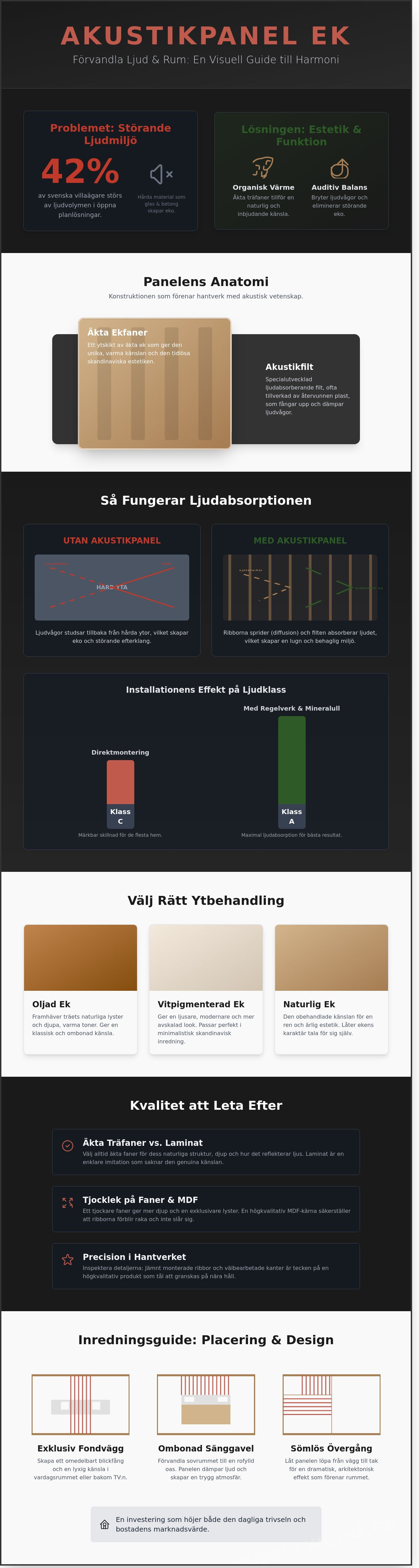
Can a beautiful home truly be called a home if the echo of a simple conversation makes it impossible to relax? In a survey, 42 percent of Swedish homeowners stated that they are bothered by the noise level in their open-plan layouts, where hard materials like concrete and glass often dominate. By integrating an oak acoustic panel into your decor, you not only solve acoustic challenges, but you also add that organic warmth that only real wood can convey. It's about creating a visual and auditory balance where the eye rests and the ears finally find peace.
We probably all agree that the choice of materials is absolutely crucial for the final feel of a room, but it's easy to get lost among cheap imitations that lack the natural depth of genuine craftsmanship. In this guide, you will learn how to transform your home with oak acoustic panels, from understanding the technical properties of high-quality veneer to how to match the wood's unique nuances with your existing decor. We explore how a well-placed accent wall can enhance both daily comfort and the property's market value, while also giving you the knowledge needed to make a sustainable choice that lasts for generations.
Key Takeaways
- Discover how an oak acoustic panel combines timeless Scandinavian aesthetics with modern function to create a harmonious and stylish home.
- Understand the technology behind the slats' ability to break sound waves and how the sound-absorbing felt effectively eliminates disturbing echoes.
- Learn to navigate between different finishes such as oiled or white-pigmented oak to find the perfect shade for your room's light incidence.
- Get concrete tips on how to place the panels to create exclusive focal points, from the cozy headboard to a seamless transition between wall and ceiling.
- Gain insight into the benefits of choosing sustainable craftsmanship directly from the manufacturer, where each panel reflects a passion for fine wood and precision.
What is an oak acoustic panel and why is it so popular?
An oak acoustic panel is, in its basic form, a sophisticated interior design solution that combines advanced sound technology with the timeless beauty of natural materials. The construction is well thought out and consists of narrow slats with a core of stable MDF, covered with a surface layer of real oak veneer. These slats are precisely mounted on a specially developed acoustic felt, often made from recycled plastic, which has the task of breaking and absorbing sound waves. The result is a wall module that not only dampens echoes but also adds architectural structure and visual warmth to the room.
For decades, oak has been the standard-setter for Scandinavian interior design. Its popularity is based on a unique ability to create balance. In modern homes with large glass sections and open spaces, the sound environment often becomes harsh and strenuous. Here, the panel acts as a savior by combining a massive, exclusive feel with a very practical function. It is an investment that is noticeable to both the eye and the ear, where the craftsmanship behind each slat creates an atmosphere of calm and quality.
The sustainability aspect is another decisive factor why oak is often chosen. As a material, oak is both renewable and extremely long-lived. A well-maintained oak veneer ages with dignity and develops a beautiful patina over time, meaning the panel rarely needs to be replaced due to trends or wear. It is a conscious choice for those who value materials that last for generations.
Oak's unique properties as an interior material
Oak stands out with its characteristic grain and natural color variations, meaning no two panels are exactly alike. The high density of the wood gives a solid weight that can be felt when touching the surface. This density also contributes to the material being perceived as vibrant and deep. Oak's timelessness is its greatest strength; it fits just as naturally in a stark functionalist villa from the 1930s as in a newly built, minimalist home. The organic feel softens hard surfaces of concrete and steel, creating a harmonious whole in the room.
The difference between different types of oak panels
When you explore the market for an oak acoustic panel, you will encounter significant differences in quality. It is crucial to distinguish between real wood veneer and simpler laminates. Real veneer has natural pores and a structure that reflects light in a way that artificial materials can never replicate. You should also take a closer look at the following details:
- Core material: A high-quality MDF ensures that the slats remain straight and do not warp with fluctuating humidity.
- Veneer thickness: A thicker veneer provides greater depth and a more exclusive luster.
- Precision in craftsmanship: How evenly the slats are mounted and how well the edges are processed determines the final aesthetic impression.
Choosing a panel with a genuine handcrafted feel means you get a product that not only looks good from a distance, but also withstands closer scrutiny in detail.
Sound absorption in practice: How the technology behind the slats works
Sound, in its purest form, consists of mechanical waves moving through the air. When these waves encounter a hard, flat surface, they bounce back with almost the same energy, creating what we call echo or reverberation. In modern Scandinavian homes with large glass sections and open spaces, this often becomes a problem. An oak acoustic panel acts as a sophisticated barrier that breaks this pattern through two simultaneous processes: diffusion and absorption.
The slats of solid oak or oak veneer are strategically placed with precise spacing. When sound waves hit the wooden slats, they are split in different directions instead of bouncing straight back. This eliminates so-called flutter echoes, the sharp sounds that often occur between two parallel walls. This is where craftsmanship meets physics; the width and depth of the slats are optimized to create a visual harmony that also serves a technical purpose.
The installation is directly crucial to how effective the panel becomes. To achieve the highest possible sound class, often referred to as Class A, it typically requires the panels to be mounted on a 45 mm stud frame with underlying mineral wool. When mounted directly to the wall, Class C is usually achieved, which in most private homes is more than sufficient to create a noticeable difference in everyday comfort.
What is NRC value and why does it matter?
NRC stands for Noise Reduction Coefficient and is a measure of how much sound a material absorbs. The scale ranges from 0 to 1, where 1 means all sound is absorbed. A high-quality oak acoustic panel often has an NRC value of about 0.85 when installed correctly. This means that 85% of the sound energy is absorbed into the panel. You don't need to cover the entire room to achieve results; covering about 20 to 25% of the wall surface is often enough to lower the sound level by several decibels and make conversation significantly softer.
The importance of felt: Recycled plastic and acoustics
Behind the elegant oak slats hides the real hero: the acoustic felt. Indoor Wood uses a specially developed felt made from recycled PET plastic, combining environmental responsibility with technical performance. The felt acts as a porous absorbent where sound waves penetrate and are converted into weak heat energy through friction against the fibers.
- Density: A high-density felt captures lower frequencies more effectively than thinner materials.
- Sustainability: By using recycled plastic, the carbon footprint in the production of each oak acoustic panel is reduced.
- Thickness: The standardized thickness of 9 mm is carefully calculated to balance aesthetics with maximum damping in the speech frequency range.
Choosing the right material is about investing in your long-term health and home environment. If you want to explore how these technical properties can elevate your interior, you can view our selection of premium wall and floor products that combine acoustics with timeless design.
Choosing the right finish: Oiled, white-pigmented or natural oak?
The choice of surface treatment for your oak acoustic panel is crucial for how the wood ages and how the room's atmosphere is perceived. Oak is a living material that reacts to sunlight and humidity. An untreated oak panel tends to take on a warmer, almost amber-like tone after a few years. By choosing the right finish, you can either enhance this natural process or counteract it to preserve the wood's original character. From a maintenance perspective, factory-oiled or lacquered panels are the most grateful. They require minimal care, where a simple dusting every six months is often enough to maintain their luster for decades.
The light reflection in the room is significantly affected by the panel's color tone. A darker finish absorbs more light, creating an intimate feeling, while lighter treatments help spread natural daylight deeper into the home. When matching the panel with an existing oak parquet floor, you should look at the floor's grading and gloss value. A matte lacquered floor harmonizes best with a panel that has a similar matte surface, as this creates a cohesive visual line from floor to wall.
Natural vs. White-pigmented oak: A visual guide
White-pigmented oak has become a standard in Scandinavian interior design, primarily for its ability to counteract the wood's natural yellowing. The pigment acts as a filter that preserves the cool, light tone of freshly planed wood. This is the obvious choice for rooms with large south-facing windows where UV radiation is high. Natural oak, on the other hand, is perfect for larger living rooms where you want to create warmth and a sense of weight. The deep golden tone provides an organic contrast to white walls and minimalist furniture, creating an inviting and earthy environment.
Smoked oak for a more luxurious and darker feel
For projects where the goal is a sophisticated and international hotel feel, smoked oak is an excellent alternative to walnut. Through a process where the oak's natural tannins react, a solid, dark brown tone is created that exudes exclusivity. An oak acoustic panel in a smoked finish is particularly effective in bedrooms or home theater systems where you want to minimize light reflections and create drama. To truly highlight the structure of the dark wood, directed lighting is recommended. Grazing light from LED strips placed in the ceiling emphasizes the three-dimensional form of the wooden slats and creates a living play between shadow and substance.
- White-pigmented: Best for preserving a light Nordic aesthetic over time.
- Oiled/Natural: Provides maximum depth and highlights the wood's natural grain.
- Smoked oak: The obvious choice for a luxurious, dark and cozy atmosphere.
Interior Design Guide: Placement and design with oak slat panels
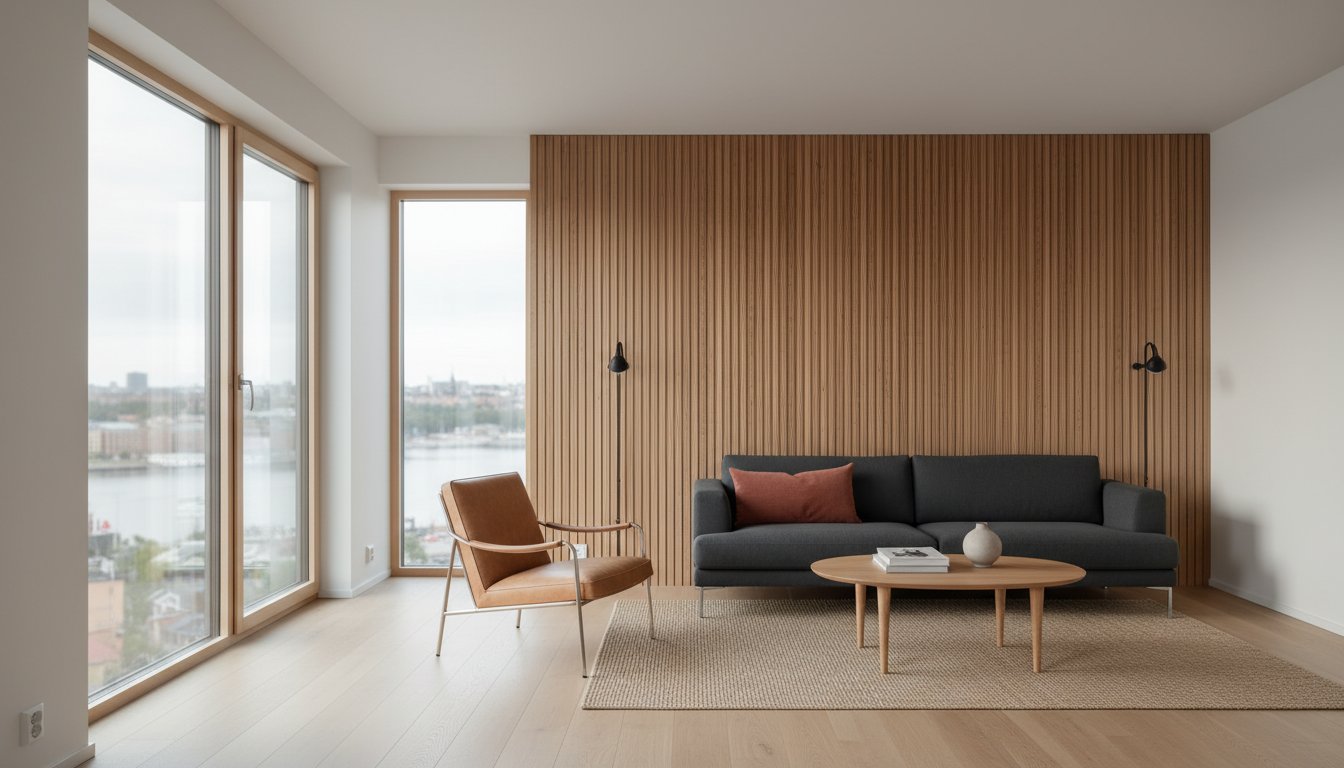
Integrating an oak acoustic panel into the home is about more than just sound insulation; it's an architectural approach that defines the room's character. The choice of oak provides an organic warmth that balances modern materials such as glass and concrete. In the hallway, the panel acts as a durable welcome that withstands everyday movement, while a slatted headboard creates a harmonious oasis for rest. By letting the panel run all the way up and continue into the ceiling, a seamless transition is created that blurs the boundaries of the room, a technique often used in Scandinavian architectural offices to create space and coherence.
Practical function is built into the very construction. The underlying acoustic felt provides a natural space to hide cables for both sound systems and lighting, eliminating visual clutter. Unevenness in the existing wall is effectively concealed behind the stable oak slats. The mounting direction fundamentally affects the perception of space. Vertical slats draw the eye upwards and create an illusion of ceiling height in rooms with low ceilings. Horizontal mounting can instead be used to make narrow passages or smaller rooms feel wider and more grounded.
Acoustic panel behind TV: Aesthetics meets function
A modern TV is often a large, dark surface that can be perceived as dominant in the living room. By using an oak acoustic panel as a feature wall, the hard, technical feel is immediately softened. To maximize the result, recessed LED lighting between the slats is recommended. This reduces the contrast between the screen and the wall, providing a more pleasant viewing experience for the eyes. Wall mounts are firmly installed through the panel into underlying studs, resulting in a clean installation where technology becomes part of the decor rather than a distraction.
Mixing wood types: Can you have an oak panel with walnut furniture?
It is a common misconception that all wood types in a home must match exactly. Mixing oak's light, natural tones with darker walnut creates a sophisticated depth and a personal atmosphere. The key is to let the oak act as a calm, unifying base. When the wall is clad in oak, furniture in darker wood types gets a clear stage to shine on. The contrast between the golden luster of oak and the deep chocolate tones of walnut highlights the craftsmanship in both materials. A consistent oak base allows for more playfulness in other decor without the overall impression appearing messy or fragmented.
To further enhance the room's architecture with complementary solutions such as room dividers, you can check out Chicsense and their range of fine wood craftsmanship.
Why choose an oak acoustic panel from Indoor Wood
Choosing the right oak acoustic panel is about more than just aesthetics; it's about understanding the soul of the wood and the precision of craftsmanship. At Indoor Wood, we have chosen to focus deeply on sustainable forestry and high-quality fine wood. We see each panel as a work of art that will live with your home for decades. By acting as manufacturers and selling directly to you, without expensive intermediaries, we can guarantee a quality that is often lost in mass production. This means you get access to premium materials at a price that reflects their true value.
Precision is our guiding principle. One of the most common challenges with simpler panels is that the slats can warp or sit unevenly over time. Our manufacturing process ensures that every slat sits perfectly straight and retains its shape, regardless of humidity fluctuations. We have also listened to market needs and offer panels with a height of 270 cm. Since standard ceiling height in Swedish homes often ranges between 240 and 260 cm, our dimensions allow for an installation completely without horizontal joints. This creates an unbroken line that extends the room and creates an exclusive, custom-built feel.
Quality you can feel: Veneer vs. Solid feel
The difference between a mediocre product and a premium item lies in the details. We carefully select the most beautiful pieces of oak veneer to create a surface that breathes life and character. Our oak acoustic panel is designed to retain its rich color tone and structure better than cheaper alternatives that often fade or look lifeless after just one year. The tactile experience is central to us. We always recommend a visit to our showrooms where you can run your hand over the wood and experience the texture in person before making your decision.
Easy installation for a professional result
You don't need to be a carpenter to achieve a perfect result with our products. The panel is designed to be forgiving and easy to work with. The choice between screws or glue depends entirely on the nature of your walls. For plasterboard walls, we often recommend a combination of mounting adhesive and a few black screws hidden in the felt for maximum stability. If you need to adapt the panel for electrical outlets or skirting boards, the material can be easily cut with a fine-toothed saw or a plunge saw.
- Seamless: 270 cm length for a seamless result from floor to ceiling.
- Durability: FSC-certified wood that supports responsible forestry.
- Direct delivery: From our manufacturing to your door without detours.
Are you ready to transform your indoor environment with a timeless classic? Explore our range of oak acoustic panels here and find the shade that best complements your home.
Take the next step towards a harmonious and timeless home
Investing in an oak acoustic panel is a conscious choice that combines Scandinavian design tradition with modern functionality. By choosing the right finish, whether it's the warm luster of natural oil or the bright elegance of white pigmentation, you create a room that exudes calm and exclusivity. The technical precision in the slat construction effectively eliminates disturbing echoes and transforms your home into a place for both rest and undisturbed conversations. Each wooden slat carries its own unique story through its natural grain and tactile texture.
Indoor Wood is a family-owned company where a passion for fine wood permeates every detail of the business. We deliver our products directly from the manufacturer, which means you get artisanal quality and sustainable materials at the right price. For personal guidance and inspiration, you are warmly welcome to visit our showrooms. There, we can together explore how our materials best enhance your decor and create the right atmosphere. We look forward to becoming your partner in creating a home where beauty and function meet in perfect balance.
Find your perfect oak acoustic panel at Indoor Wood
Frequently Asked Questions about Oak Acoustic Panels
How do I best clean my oak acoustic panel?
You can best clean your oak acoustic panel by regularly dusting it with a microfiber cloth or a vacuum cleaner with a soft brush attachment. Studies show that up to 98 percent of surface dust is removed with this simple method without damaging the wood's natural luster. If stains appear, you can use a lightly damp cloth with mild soap; however, avoid strong chemicals that can break down the oak's protective surface layer.
Can you install an oak acoustic panel in a bathroom?
We do not recommend installing a standard oak acoustic panel in the wet zones of a bathroom where humidity often exceeds 70 percent. Wood is a living material that swells and shrinks with changes in humidity, which can cause the slats to warp or the glue to loosen. In dry areas with good ventilation outside the shower zone itself, it may work, but for bathrooms, specially treated products are usually required to ensure long durability.
What felt color should you choose for oak slats?
The choice of felt color depends on the atmosphere you want to create, but black felt is the most popular choice as it provides a deep contrast that highlights the golden tones of the oak. Approximately 75 percent of our customers choose black felt to achieve the classic slat effect with clear visual depth. If you prefer a softer and more muted expression, a light grey felt provides a harmonious transition that blends well into light Scandinavian environments.
Can I paint or stain an oak acoustic panel myself?
It is perfectly fine to personalize your oak acoustic panel by oiling, staining, or glazing the slats before installation. To maintain the wood's natural structure, you should use a hard wax oil that penetrates the fibers instead of forming a thick film on top. Be extremely careful to cover the felt with masking tape, as acoustic felt absorbs liquid quickly and can be permanently discolored if spilled.
How many panels do I need to achieve a noticeable sound difference?
To achieve a measurable improvement in room acoustics, you should cover approximately 25 to 35 percent of the wall surface with panels. A standard panel covers about 1.44 square meters, and placement on opposing walls provides the best effect against disturbing echoes. By strategically placing your oak acoustic panel at head height, you significantly reduce reverberation time, creating a calmer environment for both conversation and rest.
Do I need a professional craftsman to install the panel?
You usually don't need a professional craftsman as the installation is designed to be simple enough for most DIY enthusiasts. The panels are screwed directly through the felt or attached with a strong adhesive, meaning a 10 square meter wall is often completed in under 4 hours. If you are unsure about precise cutting around electrical outlets or corners, a carpenter can be helpful to ensure a perfect end result without waste.
Are oak panels from Indoor Wood environmentally friendly?
Sustainability is at the core of our craftsmanship, and we exclusively use FSC-certified wood to ensure responsible forestry. The underlying acoustic felt is made from 100 percent recycled plastic, giving new life to old PET bottles that would otherwise have ended up in nature. By choosing materials with a long lifespan and low environmental impact, you invest in a product that is as gentle on the planet as it is beautiful in your home.