Solid wood: A complete guide to timeless interiors and quality
Why do conscious interior designers choose to invest in a material that truly lives and breathes, when the market is flooded with soulless imitations? There is a special weight and warmth in a home where every surface feels authentic under the fingertips. We share your passion for the unique character that only solid wood provides, but we also understand the hesitation that can arise from the material's natural movements. The concern that a countertop might warp in the bathroom or the difficulty in distinguishing between the quality of different suppliers are challenges we face daily.
In this complete guide, we will clear up all uncertainties and show you how to transform your home with materials that age with dignity. You will learn to understand the unique properties of oak, ash, and walnut to find the perfect expression for your vision. We cover everything from technical precision in wet rooms to how to create a harmonious sound environment with acoustic panels. The goal is to give you the knowledge to make choices that combine Scandinavian design tradition with modern sustainability, so that your home becomes the safe and elegant oasis you dream of.
Key Takeaways
- Understand the difference between living materials and lifeless surfaces to create a harmonious and genuine atmosphere in your home.
- Explore the unique properties of noble woods such as walnut and oak to find the right balance between luxury and durability.
- Learn when solid wood is the superior choice and how it is best combined with other materials for optimal durability.
- Discover how the right wood choice can create an exclusive spa feeling in the bathroom or make the kitchen the natural heart of the home.
- Get expert advice on surface treatment and maintenance routines that ensure your investments retain their beauty for generations.
What is solid wood and why is it the foundation of a room?
When we talk about a home that exudes quality, everything starts with the feet. A solid wood floor is not just a surface to walk on; it is a living organism that sets the tone for the entire room's atmosphere. Unlike inert materials such as laminate or vinyl, solid wood consists of continuous natural material with no hidden cores or artificial layers. To understand the technical definition, one can look at What is solid wood and how it differs from composite materials. It involves planks cut directly from the log, preserving the tree's natural structure, cellular composition, and inherent strength.
Wood has a unique ability to regulate the indoor climate by absorbing and releasing moisture in sync with seasonal changes. This natural breathing creates a more balanced environment and contributes to a tangible sense of well-being for those in the room. The scent, warmth, and way the material ages create a connection to nature that is impossible to replicate with synthetic substitutes. It is an investment that not only increases the property's economic value but also its emotional significance.
The role of craftsmanship in the modern home
Precision in processing is what distinguishes a simple wooden floor from an architectural masterpiece. Indoor Wood's philosophy rests on a deep respect for the raw material, from careful selection in the forest to the final finish in your home. The tactile experience of running your hand over a perfectly planed surface of oak or walnut is irreplaceable. It requires an aesthetic sensibility to allow each grain and knot to tell its story without compromising the floor's function. The modern home needs this counterweight to the sterile; an honest surface that can be touched and experienced with all senses.
Sustainability through longevity
A solid wood floor is the most responsible choice for the conscious consumer. While thin surface layers and laminates often need to be replaced and discarded after only a decade or so, a solid floor can be sanded and renewed multiple times. It can be passed down through generations and only become more beautiful with age as it develops its natural patina. From a climate perspective, the wood in your fixed furnishings acts as an effective carbon sink throughout its lifespan. By binding carbon in your floors, you contribute to long-term environmental benefits. It is circular economy in its most elegant form, where sustainability and timeless design are allowed to merge.
The noble woods: Character of walnut, oak, and ash
Choosing the right material for your home is about more than just aesthetics; it's about understanding the material's soul and technical requirements. When we work with solid wood, we see how each individual plank carries a unique story through its grains and natural color variations. The choice of wood species lays the foundation for the entire room's atmosphere, where factors such as light incidence and room volume play crucial roles in the final result. The noble woods offer a wide palette of properties, from the bright transparency of ash to the deep, saturated tones of walnut.
Walnut - A deep and sophisticated atmosphere
Walnut is the ultimate symbol of exclusivity and warmth. Its natural color spectrum ranges from light gray-brown to dark chocolate-brown, often with hints of purple shifts that give an outstanding luster. We find that walnut works best when it acts as a sophisticated contrast in bright environments. It is a wood species that demands its place but gives back a thousandfold in terms of character.
- Bathroom vanities: Walnut's resistance and rich color make it ideal for bathrooms where you want to create a spa-like, luxurious feel.
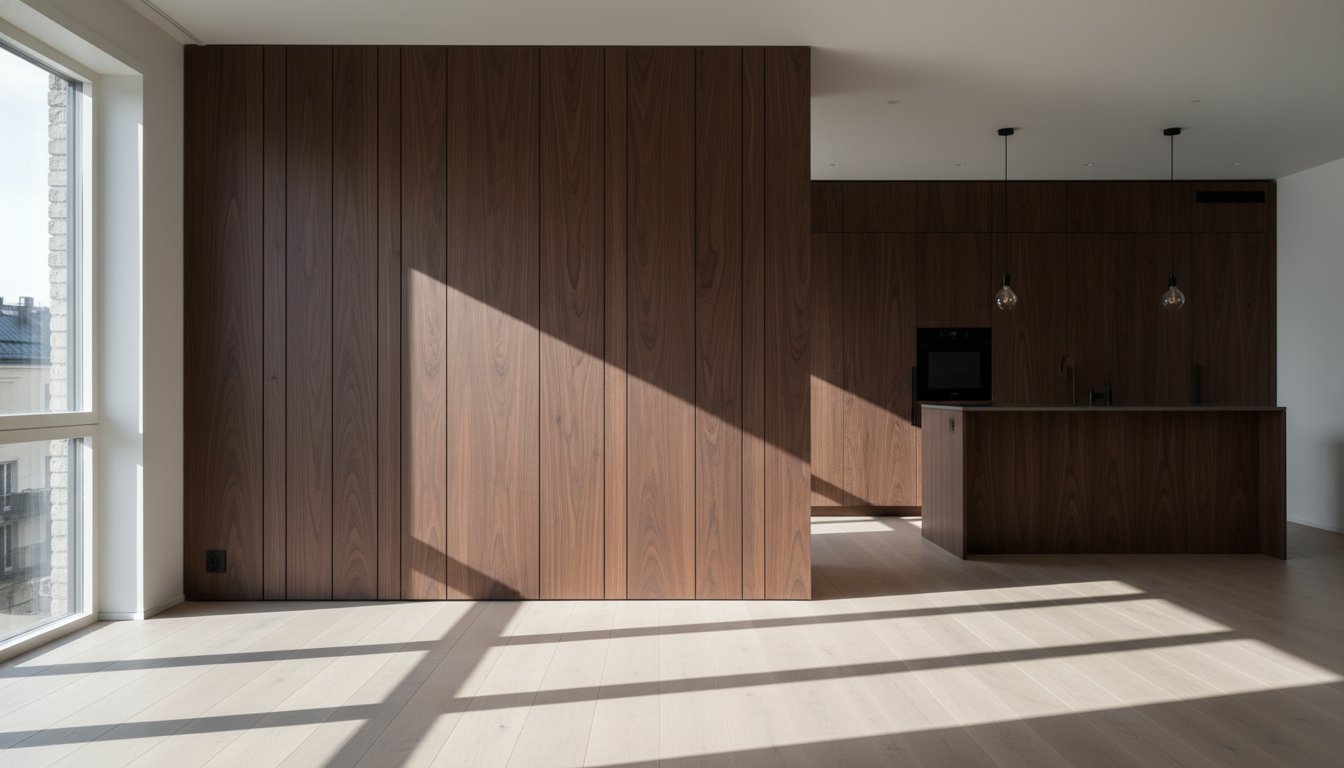
- Accent walls: A wall of solid wood walnut absorbs light in a way that creates calm and effectively dampens acoustics.
- Contrasts: Combine dark walnut with light stone floors or white walls to highlight the wood's natural grain.
Oak and Ash - Nature's own durability
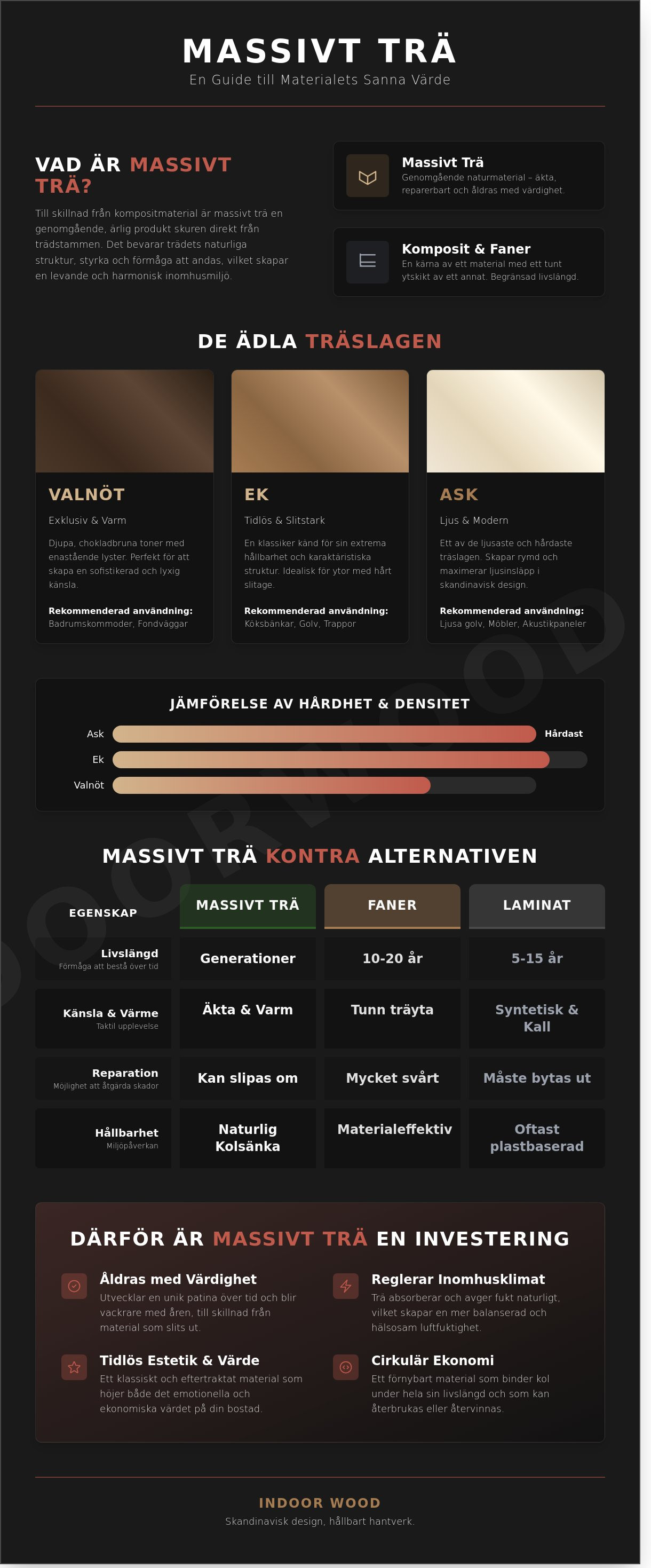
Oak is a timeless classic that never goes out of style, primarily due to its extreme durability and characteristic structure. With a density often around 700 kg/m³, oak is the obvious choice for surfaces exposed to heavy wear, such as kitchen countertops and floors. Its ability to age with dignity makes it an investment that spans generations.
Ash, on the other hand, is the modern tool for creating space. It is one of our absolute lightest wood species and is widely used in Scandinavian minimalism to maximize natural light in smaller rooms. Technically, ash is actually often harder than oak, which surprises many. While oak has a more pronounced and coarse-grained structure, ash offers a cleaner and more linear aesthetic that feels both light and airy.
The choice between these wood species should always be guided by the room's natural conditions. A room with limited light incidence benefits from ash's reflective surface, while a large, open area can bear the weight of walnut without feeling cramped. To gain a deeper understanding of how these materials can transform your home, you can read more about our specific solutions at indoorwood.se where craftsmanship meets modern design.
Solid wood versus veneer and plywood: An honest comparison
The choice between genuine materials and industrial substitutes often determines whether a piece of interior decor becomes a lifelong companion or a temporary solution. Solid wood is the only rational choice when demands for durability and authenticity are paramount. In Swedish homes, where we value craftsmanship tradition, solid material provides a weight and acoustic dampening that hollow alternatives can never replicate.
Plywood serves an important technical function in modern construction, especially as a stabilizing core behind solid surfaces. By gluing wood layers crosswise, nature's inherent movements are counteracted. This allows us to build large, flat surfaces that remain straight despite fluctuating humidity. Veneer, on the other hand, has significant limitations in daily use. With a surface layer rarely exceeding 0.6 millimeters, there is no margin for most types of repairs. A deep scratch in a veneered surface often exposes the particle board underneath, while solid wood can easily be sanded down and restored to new condition.
Economically, the investment in genuine materials is measurable. Investments in custom-built solutions of solid materials can often increase the final price of a home by 5 to 10 percent upon sale. This is an appreciation in value that reflects the buyer's confidence that the material will last for generations and never go out of style.
Repairability and longevity
If an accident occurs with a solid wood panel, a fine sandpaper and a new application of oil are often enough for the damage to disappear completely. A solid panel of 30 millimeters can be sanded numerous times over a century without losing its integrity or character. Laminate and thin veneer surfaces lack this depth; they wear out rather than beautifully age. Solid wood is the only surface that ages with dignity.
Construction and stability
Wood is a living material that interacts with its surroundings. In the Swedish climate, relative humidity can vary greatly, from 20 percent during cold winters to 70 percent during humid summers. We manage these natural movements by drying the raw material to a precise moisture content of approximately 8 percent before processing. By combining solid fronts with stable, technical frames, we create interiors that do not warp or crack as the seasons change. Precision in the drying process is the crucial factor for solid wood to maintain its shape for decades.
Behind the beautiful wood surfaces in a modern home are often complex technical solutions. For installers working with durable plastic piping systems, it is essential to use the right machines, and to buy butt welders of high quality ensures that the joints last as long as the house's frame.
From bathroom vanities to acoustic panels: How to elevate your home
Integrating solid wood into a home's fixed furnishings is about creating a common thread of quality and natural warmth. The kitchen often functions as the heart of the home, and it is here that solid materials make the biggest impression. A countertop in oak or ash can withstand generations of use if properly cared for. It is a living material that can be sanded and renewed, unlike composite materials or veneer which have a limited lifespan. By choosing custom-made solutions, you can adapt each module to the room's unique proportions. This eliminates unnecessary gaps and creates a custom-built feel that exudes craftsmanship and precision.
Timeless elegance in the bathroom
The bathroom has evolved from being a practical wet room to a place for recovery and reflection. A vanity in solid walnut adds an immediate spa-like feel thanks to its dark, rich tone and dramatic grain. The contrast between the wood's organic texture and cold surfaces like limestone or white ceramic creates a visual balance that feels both modern and classic. To ensure durability in the humid environment, the choice of surface treatment is crucial. A high-quality hard wax oil penetrates deep into the pores. It provides a water-repellent protection that allows the wood to breathe without concealing its natural luster.
For those who want to deepen their knowledge of wood-based wellness, you can explore solid wood saunas and see how HOLZHEIM Garten & Wellness creates exclusive environments for relaxation with the same respect for the material that we advocate.
Acoustic panels - More than just sound dampening
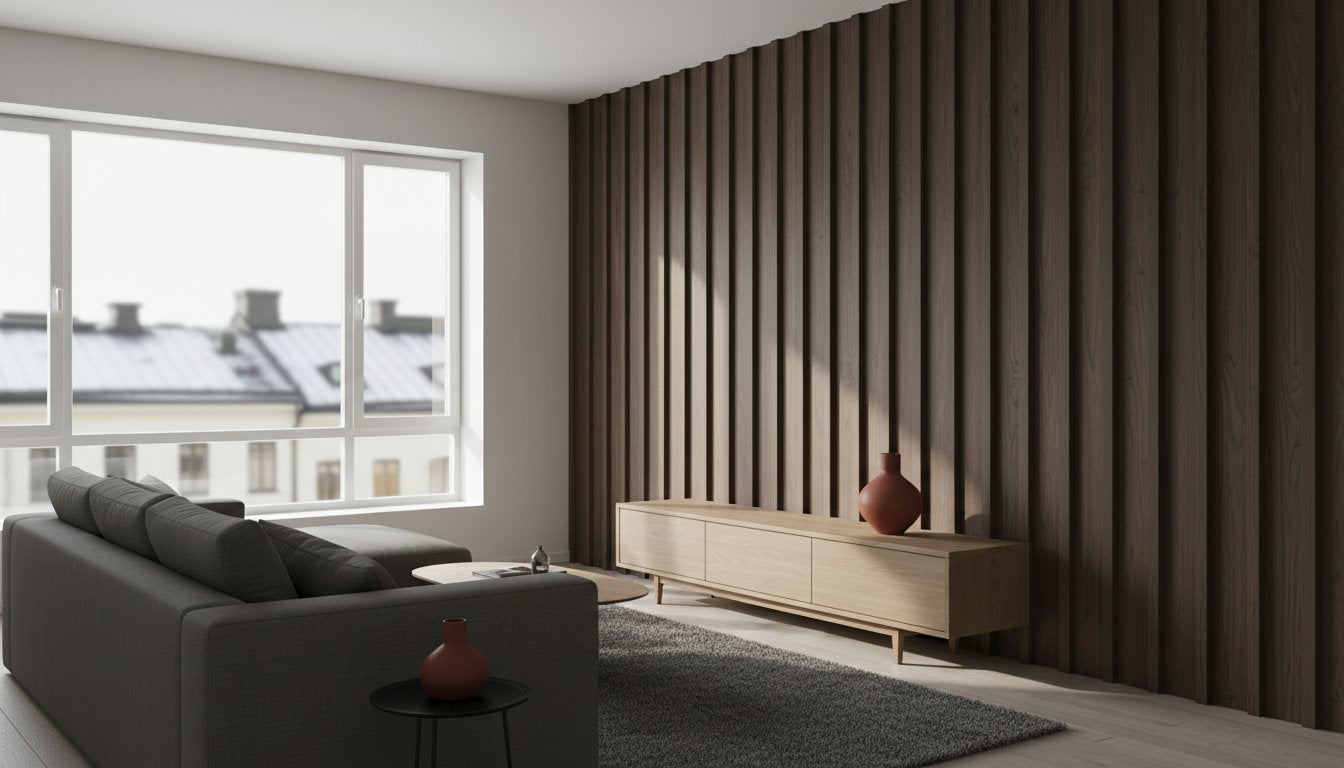
Modern homes with open floor plans and large glass sections often suffer from a challenging sound environment. Here, acoustic panels in solid wood offer a solution that combines acoustic science with pure aesthetics. The vertical wooden slats effectively break up sound waves and reduce disruptive echo, creating a harmonious atmosphere for both rest and conversation.
- Choose oak slats for a bright, Scandinavian look that beautifully reflects daylight.
- Use walnut to create depth and a sense of exclusivity in the living room or home cinema.
- Allow the panels to run seamlessly from wall to ceiling to create an enveloping and architectural feel.
By matching the wood species of your acoustic panels with the home's flooring, a cohesive visual identity is created. This gives a calm impression where the materials speak their own clear language, from the floor's foundation to the walls' structure. This holistic approach to interior design makes every room feel thoughtful and personal.
Realize your vision of a harmonious home with custom-made solid wood solutions from Indoor Wood.
Living with solid wood: Care and Indoor Wood's craftsmanship
Choosing solid wood for your home is a decision that spans generations. It's more than just interior design; it's a living material that ages with dignity and character. To preserve the deep luster of a walnut countertop or the bright elegance of ash, no advanced methods are required, just the right knowledge and a touch of care. By understanding the wood's needs, maintenance becomes a natural part of the home rather than a burden.
The choice between oil and hard wax oil depends entirely on your lifestyle and how the surface will be used. An oiled surface provides the most natural feel, allowing you to feel the wood's pores directly under your fingertips. However, it requires more regular maintenance to prevent drying out. Hard wax oil combines the penetrating properties of oil with the protective surface of wax. This creates a more resistant barrier against spills and moisture, which is often the preferred choice for kitchen environments where spills of red wine or coffee are common.
Indoor Wood's business model is based on cutting out unnecessary intermediaries. By controlling the entire chain, we can deliver exclusive quality at a reasonable price. This means that resources are invested in the craftsmanship and raw material itself, rather than in expensive warehousing or external sales channels. The result is a product that feels as solid as it actually is.
Maintenance that feels like a joy
Caring for wood is an investment in its future. To oil a countertop or vanity, start by thoroughly cleaning the surface. Lightly sand with fine sandpaper along the grain if the surface has become rough. Apply the oil evenly, let it soak for 15 to 20 minutes, then wipe off all excess with a lint-free cloth. It is critical to avoid strong cleaning agents containing ammonia or highly concentrated degreasers. These substances dissolve the wood's natural fats, leaving the surface gray and vulnerable. For most surfaces, a thorough treatment once a year is sufficient to keep the material saturated and beautiful.
Indoor Wood's promise to the customer
Our focus is on offering walnut, oak, and ash of the highest grade. We select each plank with precision to ensure harmonious grain and minimal knots in our premium products. Because we understand that every home has its unique conditions, we offer extensive possibilities for custom sizing. Whether it's a specific length for a dining table or a unique solution for a bathroom vanity, we ensure that the craftsmanship fits your vision. We invite you to our showrooms to experience the scent, texture, and weight of our materials firsthand. It's only when you touch solid wood that you truly understand its value.
Invest in a home that ages with dignity
Choosing the right materials for your home is about creating an environment that breathes tranquility and quality for many decades to come. By opting for solid wood, you not only get a beautiful surface but a living product that can be sanded and renewed over and over again. It is an investment in genuine sustainability that withstands the test of time significantly better than thin veneer solutions. Each plank carries a unique character from oak, ash, or walnut, providing the room with its fundamental soul and a natural warmth underfoot.
Indoor Wood is a family-owned company where a passion for craftsmanship permeates every detail of the manufacturing process. We deliver our floors and interior details directly from the manufacturer. This enables competitive prices on exclusive materials that often carry high markups from intermediaries. You are warmly welcome to experience the unique texture and scent of our materials in our showrooms in Stockholm and Gothenburg. Here you will receive personal advice that will help you transform your vision into a lasting and beautiful result.
Discover timeless solid wood interiors at Indoor Wood
Let your next interior design choice be the beginning of a lifelong relationship with nature's finest materials and craftsmanship that truly makes a difference in your everyday life.
Common questions about solid wood
What is the advantage of solid wood compared to veneer?
The primary advantage is that solid wood can be sanded and renovated over several generations. A solid wood surface can often withstand 3 to 5 sandings during its lifetime, unlike veneer which has a thin top layer of only 0.6 to 3 millimeters. This gives the furniture an eternal lifespan and a genuine feel that only gets more beautiful with age.
Can a solid wood bathroom vanity really withstand moisture?
Yes, a solid wood bathroom vanity can handle moisture excellently if treated correctly with hard wax oil or linseed oil. It is crucial to wipe away any standing water within 30 minutes to avoid marks on the surface. By saturating the wood's pores, a protective barrier is created that withstands the bathroom's fluctuating climate for decades.
Which wood species is the hardest and most durable among oak, ash, and walnut?
According to the international Brinell scale, ash is the hardest and most durable wood of these three. Ash has a Brinell value of approximately 4.0, while oak is 3.7 and walnut is about 3.4. Although oak is the classic workhorse, ash offers superior toughness, making it ideal for high-stress surfaces.
How often do I need to oil my solid wood furniture?
You should oil your solid wood furniture one to two times a year to maintain its luster. A good rule of thumb is to perform maintenance before the major seasonal changes in October and April when indoor humidity changes the most. If the surface starts to look dull or quickly absorbs liquid, it is a clear sign that the wood needs more nourishment.
Can you sand an acoustic panel made of solid wood?
Yes, you can sand an acoustic panel if the slats are solid wood all the way through. Many simpler panels only have a paper-thin surface layer, but with solid slats, you can sand away scratches or completely change the color. This means your acoustic solution can remain in the room even if you choose to change your interior design style or repaint the walls.
Why is walnut more expensive than oak and ash?
Walnut is more expensive because the tree grows slowly, and the supply of high-quality timber is limited on the world market. It often takes between 50 and 80 years for a walnut tree to reach harvestable size, and the wood constitutes less than 1 percent of the total stock in many deciduous forests. The exclusive dark color and unique grain patterns make each plank a valuable investment.
Is solid wood an environmentally friendly choice?
Solid wood is one of the most environmentally friendly choices thanks to its ability to bind carbon dioxide throughout its lifespan. One cubic meter of wood stores approximately 1 ton of CO2, making the material a natural carbon sink in your home. Since a piece of solid wood furniture can last for over 100 years, it reduces the need to produce new, short-lived replacement products.
How do you prevent solid wood from warping or cracking?
You prevent the wood from cracking by maintaining a stable relative humidity of between 30 and 60 percent in your home. Avoid placing the furniture directly against a hot radiator or in strong sunlight, as extreme temperature fluctuations force the wood to move too quickly. By using a humidifier during the dry winter months, you protect the craftsmanship from tension and cracking.