Wooden Kitchen: A complete guide to timeless design and natural quality
A kitchen made of sterile composite materials can never replace the living warmth and unique annual rings that define a genuine wooden kitchen. We consider the choice of kitchen interior to be one of the most significant investments in a home, and according to statistics from the industry organization Svenskt Trä in 2023, the demand for natural materials in Scandinavian homes has increased by 35 percent in just three years. You likely appreciate the timeless aesthetic but feel some hesitation about how solid oak or dark walnut handles everyday spills and moisture. This is a natural concern, especially when the differences between veneer, laminate, and solid wood often feel unclear to the untrained eye.
We help you dispel uncertainty by combining technical expertise with a deep passion for craftsmanship. In this complete guide, you will learn how to choose the right wood type based on both style and durability, as well as how to plan a surface that ages gracefully. We provide you with the decision-making basis required to create a personal space where quality and function interact perfectly. You will also receive practical advice for maintenance that ensures your kitchen remains a beautiful foundation for your home for many decades to come.
Key Takeaways
- Learn how the choice between fine woods like oak, walnut, and ash affects a room's character and how to best match the material with the home's natural light.
- Discover how a solid wooden kitchen can be customized to suit everything from minimalist modernism to timeless Shaker design through the right proportions.
- Get expert tips on surface treatments and daily care that protect natural materials and allow your kitchen to age gracefully for generations.
- Understand the economic and aesthetic benefits of choosing custom-made solutions in fine wood directly from the manufacturer for a unique end result.
Why choose a wooden kitchen? The benefits of natural materials in the home
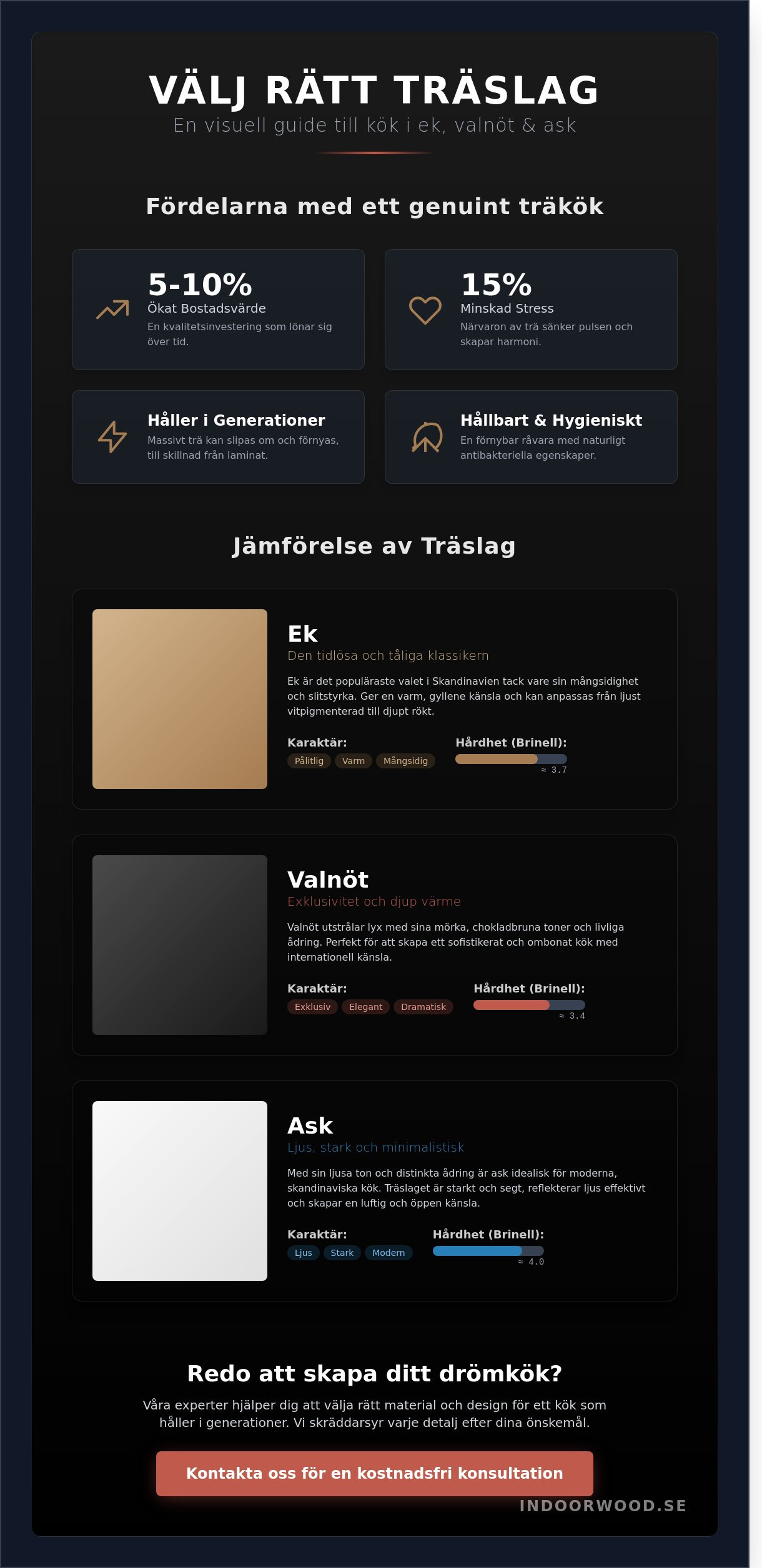
A kitchen is more than just a place for cooking; it is the beating heart of the home where life's small and large moments unfold. Choosing a wooden kitchen is to invite nature into everyday life in a way that few other materials allow. Wood carries an inherent warmth and an organic texture that creates an immediate sense of security and harmony. According to real estate agents, an investment in a high-quality kitchen made of natural materials can increase a home's market value by between 5 and 10 percent, making the choice a smart financial strategy for the future.
By studying the broader history and design of kitchens, we see how wood has been a constant companion throughout the centuries. It is a material that never goes out of style, whether trends dictate minimalism or rustic charm. Wood is also a renewable raw material with a significantly lower climate footprint than laminate or plastic-based materials. Every plank stores carbon dioxide throughout its lifespan, making your kitchen choice an active step towards a more sustainable planet.
The sensory value of a wooden kitchen cannot be overstated. The scent of freshly sawn timber and the tactile experience of running a hand over a finely sanded surface of oak or ash provides an earthy luxury in everyday life. It is an aesthetic that appeals to all senses and creates an environment where you genuinely want to linger long after dinner is over.
Wood's natural life cycle and aging
Unlike artificial materials that wear out and lose their luster, wood only becomes more beautiful with age. We see a clear difference between mechanical wear and the noble patina that a natural material develops. A mark on a solid wooden door tells a story and becomes part of the furniture's character rather than a defect. This makes a wooden kitchen a circular investment. If the surface becomes too marked by life, it can be sanded and re-treated, a process that can be repeated for several generations.
Health benefits of wood in interior design
Wood contributes to a healthier indoor climate through its ability to naturally regulate humidity. The material absorbs moisture when it's humid and releases it when the air is dry, creating a more stable environment for both people and the building. Studies in biophilic design show that the presence of visible wood in the home can lower heart rate and reduce stress levels by up to 15 percent. Additionally, wood surfaces have natural antibacterial properties thanks to their tannins, making them a hygienic choice for surfaces that come into contact with food.
Material choice: Walnut, oak, or ash for your kitchen?
Choosing the right wood type for your wooden kitchen is about more than just aesthetics; it's a decision that affects the entire atmosphere of the room and the kitchen's lifespan for decades to come. A fundamental concept in this process is solid wood, which serves as the primary quality indicator. Unlike simpler material choices, solid surfaces can be sanded, oiled, and maintained so that they age with a unique patina. When planning your material choice, you should consider the room's natural light and how the wood interacts with existing flooring. Dark walnut can absorb a lot of light in a north-facing room, while light ash reflects and opens up the space effectively.
To ensure your investment is ethically sound, it's crucial to choose materials that come from sustainable forestry and wood products. By prioritizing certified wood, you support production that considers biodiversity and long-term forest health, which is a central part of a modern and conscious home.
Oak kitchens: The timeless and durable classic
Oak is the most sought-after choice for Scandinavian environments, largely thanks to its impressive hardness of approximately 3.7 on the Brinell scale. It is a material that withstands everyday wear without losing its character. An oak kitchen offers an enormous visual range depending on the surface treatment. Natural oak provides a golden warmth that grounds the room, while white-pigmented oak creates a modern and cool feel that often harmonizes with light wooden floors. For those seeking a more dramatic expression, smoked oak, with its deep brown variations, is a sophisticated option that exudes international elegance.
Walnut kitchens: Exclusivity and deep warmth
Walnut radiates an immediate sense of luxury and craftsmanship. Its dark, chocolate-brown tones and lively grain create a furniture feel rather than just kitchen storage. The material works excellently in both minimalist environments and more classic homes where you want to add weight and warmth. To balance walnut's rich character, combinations with cool materials such as stainless steel or light natural stone are often recommended. This creates a visual contrast that highlights the wood's natural luster and prevents a wooden kitchen from feeling too heavy in smaller spaces.
Ash kitchens: Brightness and Scandinavian minimalism
Ash is the ideal choice for smaller kitchens where the goal is to maximize light reflection. Its light surface and clear, almost graphic pattern bring life to large cabinet fronts without dominating the room. Despite its light appearance, ash is actually one of our hardest native wood types, often with a density exceeding that of oak. This makes it an extremely durable choice for active households. Ash's natural ability to retain its light tone over time ensures that the kitchen feels fresh and inviting for many years.
Are you unsure which type of wood best complements your home? Explore our range of exclusive wood materials to find the perfect balance between aesthetics and function.
Design styles for wooden kitchens: From Shaker to modern minimalism
A wooden kitchen is not bound to a specific era or a limited aesthetic. It is a living material that breathes in tune with the house's architecture. Wood's greatest strength is its ability to adapt; it can be rustic and comforting in a farmhouse setting, yet sharp and sophisticated in an urban penthouse. It's about understanding the material's soul and letting it interact with the room's proportions. Small details such as the plinth's height or the choice of handles in patinated brass determine whether the kitchen feels historically rooted or progressive.
Many today choose to combine natural wood with color to create depth. By letting the kitchen island retain its raw wooden surface while the wall cabinets are painted in a subdued, earthy tone, a visual balance unique to each home is created. It is at the meeting point between the tactile wooden surface and the smooth paint that the craftsmanship truly shines.
Shaker kitchens in wood: Functional simplicity
The Shaker style originated from a philosophy where honesty, utility, and simplicity were central. In modern interior design, this has translated into a timeless design. A Shaker kitchen is built on the clear geometry of the frame door, where solid wood forms the basis for both stability and aesthetics. To modernize the style, we often choose to combine traditional doors with countertops in natural stone, such as Carrara marble or dark granite. This creates a contrast between the warm craftsmanship and the cool elegance of the stone, giving the room a harmonious order.
Minimalist and smooth wooden kitchens
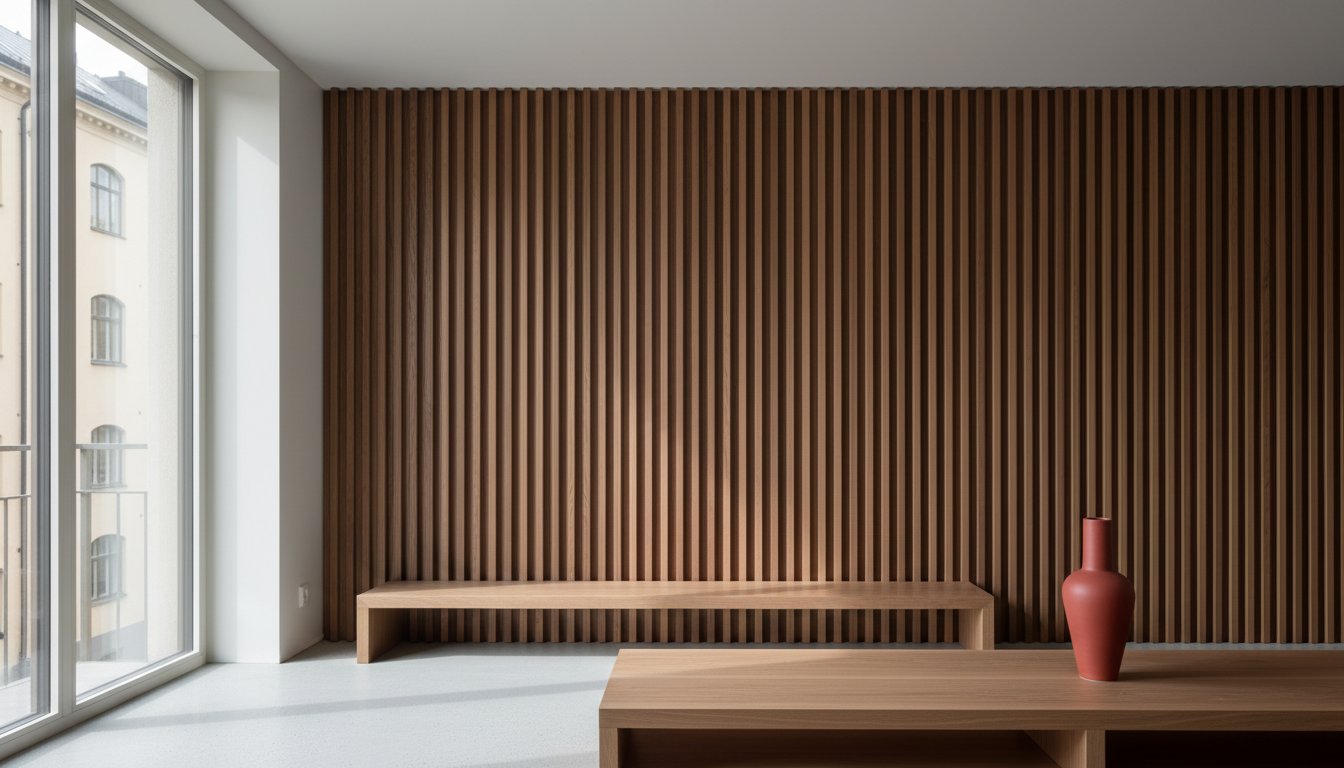
In minimalist design, the wood grain plays the leading role. Here, we work with large, unbroken surfaces where the pattern in an oak veneer or light ash runs seamlessly across several fronts. By using push-to-open fittings or discreet integrated handle strips, all unnecessary details are eliminated. The result is a wooden kitchen that feels more like an exclusive piece of furniture than a functional workspace. This style is ideal for open-plan living where the kitchen should blend with the living room's decor and create a calm, cohesive flow.
Funkis and retro: The role of wood in Swedish design history
Inspiration from the Swedish kitchens of the 1950s and 60s is stronger than ever. During this golden age of Scandinavian design, teak and oak were the obvious choices. To recreate the funkis feel today, we use modern manufacturing methods but retain the period-typical expression with straighter lines and functional solutions. By working with high-quality plywood and visible veneer edges, a playful yet sophisticated retro feel is created. It is a tribute to a time when quality and durability were a given, adapted to today's demands for ergonomics and precision.
- Proportions: A recessed plinth can give heavy wooden cabinets a floating feel.
- Material combinations: Wood against stainless steel enhances the industrial funkis look.
- Texture: Brushed wood highlights the fibers and provides a more tactile experience.
Durability and care: How to make your wooden kitchen last for generations
A genuine wooden kitchen is a living investment that breathes with your home. Unlike mass-produced materials with laminate surfaces, wood has a unique ability to age gracefully. Preserving its natural luster doesn't require advanced science, but rather an understanding of the material's needs. It's about working with nature instead of against it.
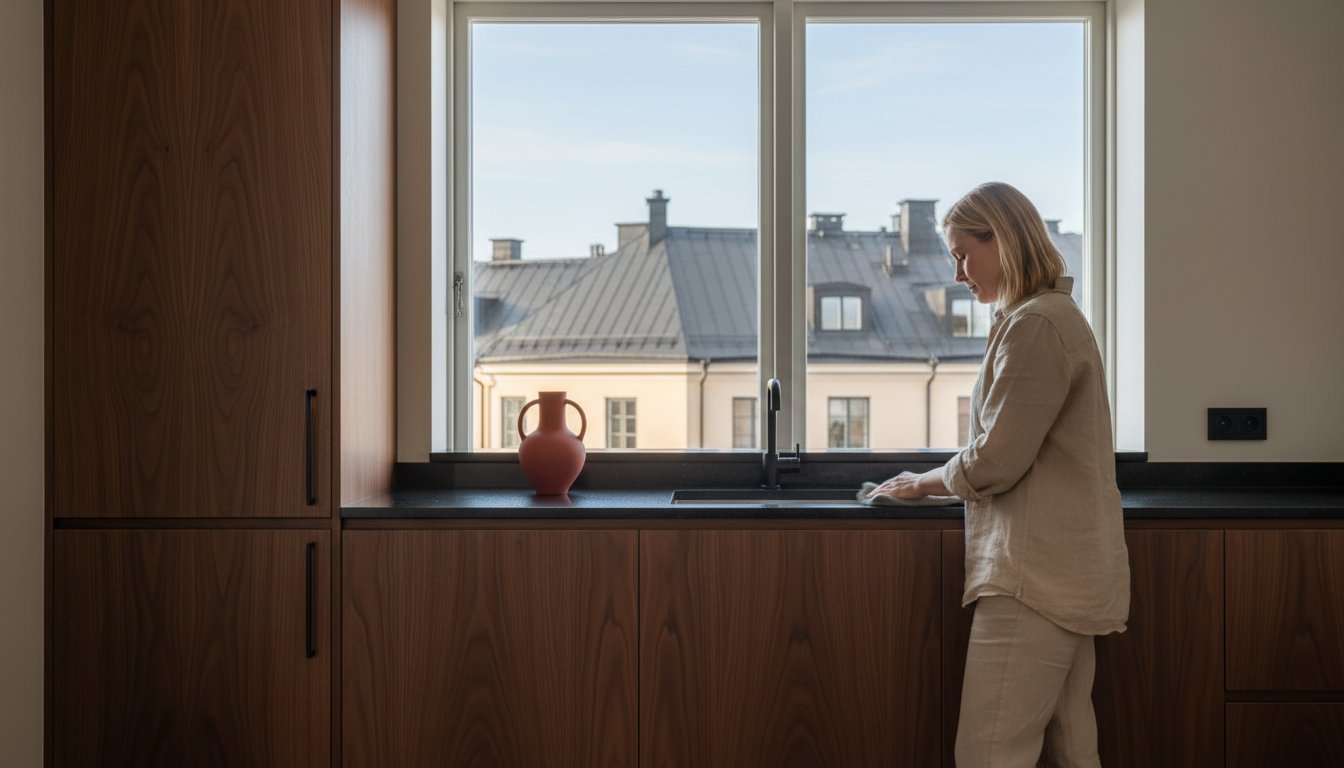
Daily care is simple. Use a soft, well-wrung cloth and a mild soap solution or linseed oil soap. By all means, avoid strong chemicals, ammonia, or abrasive sponges. These agents break down the wood's natural oils, leaving the surface dry and vulnerable. At the sink, vigilance is your best friend. Wipe up water splashes immediately to prevent moisture from penetrating deep into the fibers, which can otherwise lead to dark stains or swelling over time.
One of the primary advantages of a solid wood kitchen is its repairability. If the surface gets a scratch or a dent, it's not the end for your interior. You can sand down the specific area and re-treat it. This circular property means the kitchen can be restored to new condition again and again, saving both money and environmental resources.
Surface treatments and their properties
- Oil: Penetrates deep into the wood and maximizes the grain. It provides a tactile feel but requires maintenance with new oil approximately every six months to maintain its protection.
- Hardwax oil: This treatment is often the optimal choice for kitchen environments. It combines the depth of oil with the protective surface of wax, creating a water-repellent barrier that withstands everyday spills.
- Varnish: Creates a hard, sealed surface that is very easy to wipe clean. The disadvantage is that it is difficult to spot-repair damage without sanding down the entire door.
Preventive maintenance and seasonal adjustments
Wood is a hygroscopic material that reacts to the humidity in your home. During the Swedish winter, when the air is dry, the wood contracts. During the summer, it swells. To minimize the risk of cracking, you should maintain a consistent indoor temperature and aim for humidity between 40 and 60 percent.
Do you notice that the surface is starting to look dull or that water no longer beads on the countertop? Then it's a clear sign that it's time for a new treatment. By being attentive to the wood's signals, you ensure that your kitchen remains the heart of your home for decades to come.
Create your dream kitchen with Indoor Wood
Our philosophy at Indoor Wood rests on a simple yet uncompromising foundation: to deliver the highest quality in fine wood directly from our own production to your home. By owning the entire process, we can ensure that every wooden kitchen that leaves our hands meets the strict demands for precision and aesthetics that we live by. We have chosen to completely eliminate costly intermediaries. This means that as a customer, you get more value for your investment, with resources going directly to the material and craftsmanship rather than to external margins.
Every home has a unique character, and standard dimensions are rarely sufficient to realize a genuine vision. We specialize in custom-made solutions that optimize every square meter of your unique space. To create a common thread throughout the home, we also offer the option of matching the kitchen's aesthetic with an exclusive walnut bathroom vanity. This holistic approach to interior design transforms the house into a coherent home where material choices speak the same language and create a calm, luxurious atmosphere.
Personal advice and showrooms
Choosing a new kitchen is a decision that should last for decades. Therefore, we place great importance on physical meetings in our showrooms. Here, you get the chance to feel the texture of the wood, see the natural variations of the grain, and experience the weight of the material. Our experts guide you through the entire journey, from the first sketch to the finished plan. We work closely with you to understand your specific needs and translate them into a customized order that combines modern function with timeless beauty.
Sustainability in every step
A wooden kitchen from us is not just an aesthetic investment; it is a conscious choice for the environment. We take deep responsibility in the selection of raw materials and collaborate exclusively with suppliers who share our view on responsible forestry. Mass production often prioritizes quantity and quick profits, but we believe in the superiority of craftsmanship.
- Longevity: By building kitchens that last for generations, we reduce the need to replace and discard.
- Material choice: We use only certified fine wood that ages gracefully.
- Precision: Every joint and surface is treated with a meticulousness that machines can never replicate.
Ultimately, it is craftsmanship that triumphs over mass production. By choosing Indoor Wood, you choose a partner who sees your kitchen as a unique work of art, created to be the heart of your home for a very long time to come.
Invest in a future of natural beauty
A kitchen serves as the foundation of the home where life's small and large moments unfold every day. By choosing a wooden kitchen in oak, walnut, or ash, you are investing in a living material that only becomes more beautiful with age. Our experience shows that a well-maintained solid wood kitchen has a lifespan that extends over several generations, making it one of the most sustainable choices for your home.
We at Indoor Wood specialize in transforming carefully selected raw materials into tailor-made perfection for your unique environment. As we deliver directly from the manufacturer, we guarantee the highest quality without extra costs for intermediaries. Each solution is completely custom-made to fit your home, whether you prefer modern minimalism or the timeless feel of Shaker design. It is the small details in the craftsmanship that create that genuine sense of luxury felt in every touch.
Explore our timeless wooden kitchens and order wood samples here to experience the texture and quality up close. We look forward to helping you realize your vision of a home characterized by warmth, precision, and uncompromising Scandinavian design.
Frequently asked questions about wooden kitchens
Are wooden kitchens harder to keep clean than painted kitchens?
No, a well-treated wooden kitchen is no harder to maintain than a kitchen with painted surfaces. Modern surface treatment with hardwax oil or matte lacquer creates a resistant surface that effectively repels both spills and everyday dirt. You simply clean the doors with a soft, damp cloth and a drop of pH-neutral soap. The natural pattern in the wood also has the great advantage of hiding fingerprints and dust much better than a high-gloss, painted surface.
Which type of wood is most durable for a family with children?
Oak and ash are the most resistant options for an active family with children thanks to their high density. According to the Janka scale, which measures the hardness of wood species, these hardwoods rank significantly higher than softer woods such as pine. If an accident still occurs and a scratch appears, solid wood doors can be sanded locally and re-oiled. This gives the kitchen an impressive lifespan of over 40 years, regardless of how much life and movement it is exposed to.
Can I combine wood doors with my existing IKEA cabinets?
Yes, it is perfectly possible to mount custom-made wood doors on existing IKEA cabinets from the Metod or Faktum series. By keeping the functional cabinet frames and just upgrading the fronts, you create an exclusive, built-in feel at a fraction of the cost of a total renovation. We manufacture the doors with millimeter precision to fit IKEA's specific hinges and drawer systems. It is a sustainable way to renew your home without having to tear out perfectly functional furnishings, saving both time and the environment.
How often do I need to oil my wooden kitchen doors?
You should maintain your oiled kitchen doors approximately every two years to preserve the wood's natural protection and deep luster. In high-traffic areas, such as the surfaces closest to the sink or stove, an extra treatment may be needed more often. You can easily tell when it's time by dropping a little water on the surface; if the water is absorbed instead of beading up, it's time for new oil. Regular care ensures that the material ages with dignity and becomes more beautiful with each passing year.
Are wooden kitchens more expensive than other types of kitchens?
The investment cost for a wooden kitchen is often 20 to 30 percent higher than for a laminate kitchen, but in terms of lifecycle, it is a financially smart deal. A kitchen made of real wood can be renovated and sanded multiple times during its lifetime, while a kitchen made of artificial material often has to be replaced entirely when the surface is damaged. The long-term increase in value of your home is also an important factor. The quality of natural material conveys a timeless elegance that endures through changing trends for decades.
How does sunlight affect a wooden kitchen over time?
Sunlight gives the wood a natural patina that gradually changes the shade, primarily during the first 12 to 18 months after installation. Light woods like ash may acquire a slightly warmer tone, while dark woods like walnut often lighten slightly with direct exposure. We use modern surface treatments with built-in UV filters that significantly slow down this process to preserve the original color longer. It's part of the charm of living materials that they mature and gain character along with the home.
What is the difference between solid wood and wood veneer in the kitchen?
The difference lies in the construction where solid wood consists of solid planks throughout, while veneer is a thin layer of real wood glued to a core. Solid doors offer unparalleled weight and can be sanded deeply if renovation is needed. Wood veneer, often between 0.6 and 3 millimeters thick, is an excellent choice for creating large and even surfaces with beautiful grain without the risk of the material warping. Both options provide the same warm and authentic feel of real natural material in the room.
Can you have a wooden kitchen in a small and dark room?
A wooden kitchen works excellently in smaller spaces if you choose light wood species such as ash, maple, or white-pigmented oak. These wood species effectively reflect light and create an airy atmosphere that makes the room feel significantly more spacious than it actually is. By combining the wood with light countertops and well-thought-out lighting, you enhance the warm feeling without the room feeling cramped. The natural texture of the wood adds a depth that makes even the smallest kitchen inviting and personal.