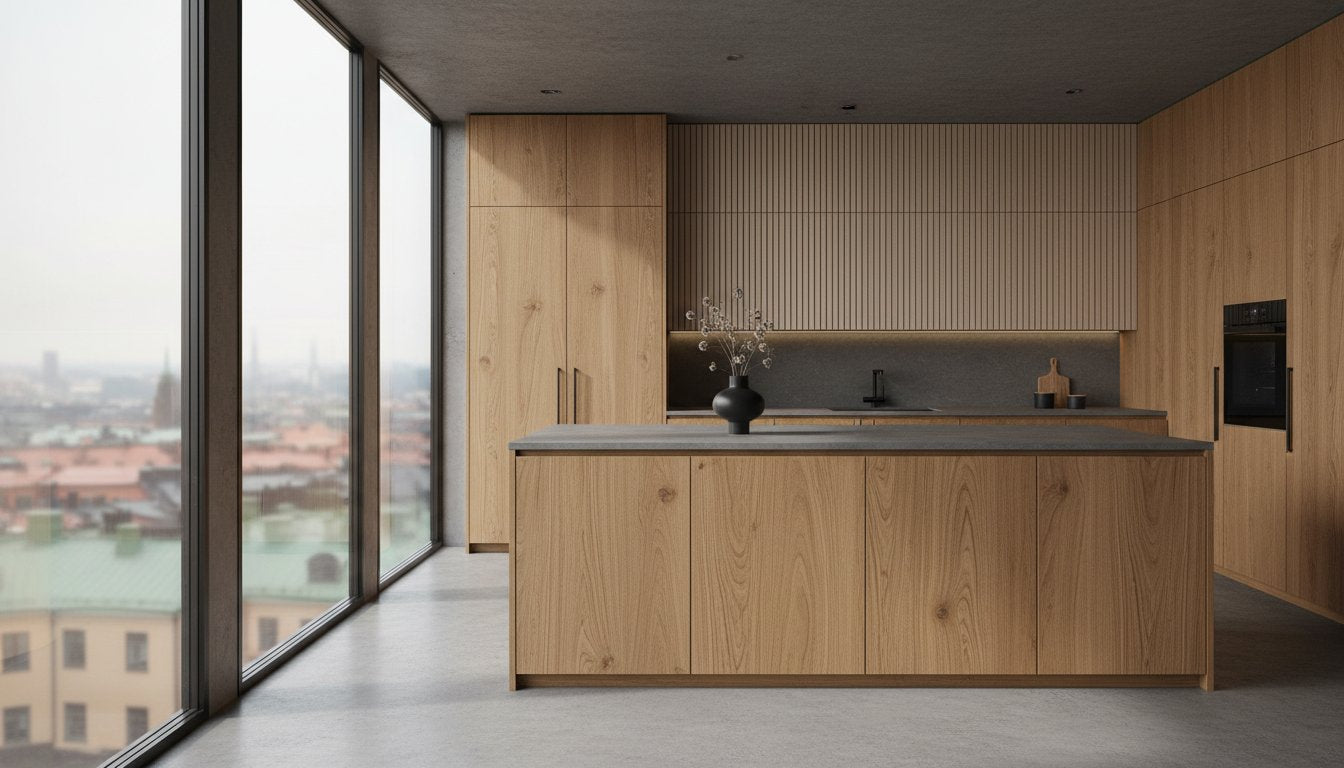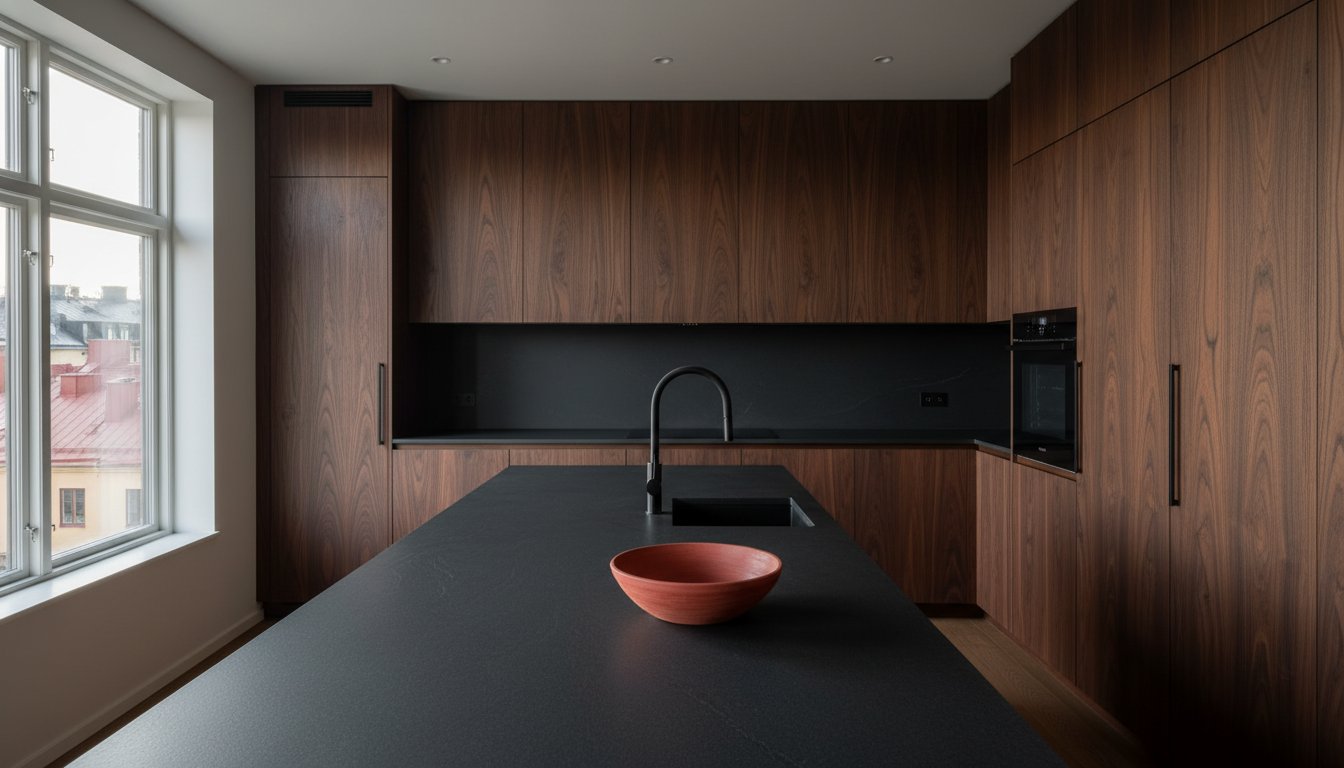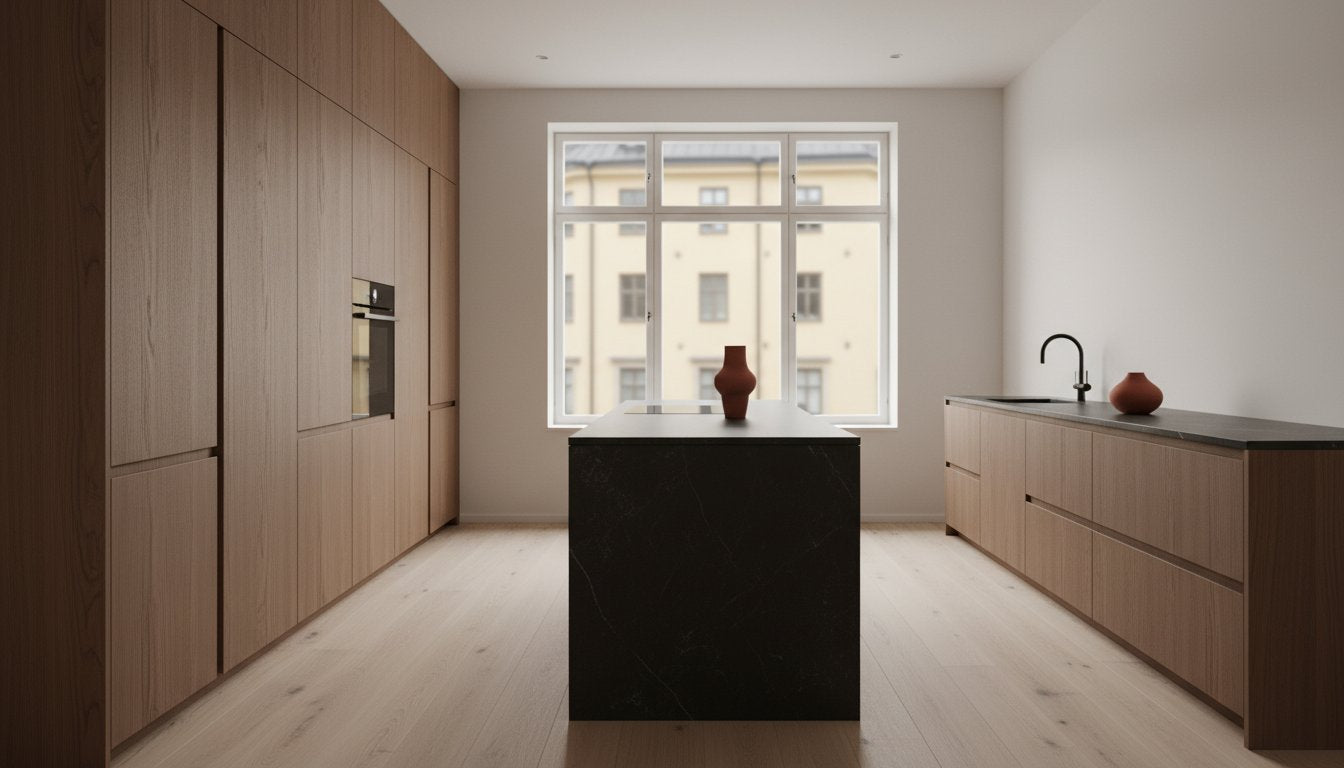
Functionalist kitchens: A guide to timeless design and modern wooden kitchens 2026
Can a kitchen designed almost a hundred years ago truly be the most future-proof investment for your home in 2026? Many believe that a functionalist kitchen requires compromising warmth and luxury in favor of strict rationality, but the truth is the opposite. The pure minimalism of functionalism's design language is, in fact, the perfect stage to highlight the beauty of living materials such as solid walnut and oak. Industry surveys from 2024 show that 65 percent of homeowners now prioritize tactile natural materials to create an environment that feels both grounded and exclusive.
We understand the fear that the kitchen might feel too retro, or that the balance between function and aesthetics will be difficult to find in a modern daily life. In this guide, you will learn everything about the aesthetic of the functionalist kitchen and how to combine historical charm with modern materials that age gracefully. We provide a clear overview of the most important design attributes and guide you through the choice of wood species and fittings that enhance the room. You will get inspiration on how to create a modern wooden kitchen that serves as the foundation of your home for many decades to come.
Key Takeaways
- Learn how functionalism's core of honest minimalism and function creates a harmonious base that stands the test of time.
- Discover how modern wood species like walnut and oak transform a classic functionalist kitchen into a warm and inviting focal point.
- Get to know the specific design details, from lipped doors to visible hinges, that give the kitchen its unique character.
- Understand the value of custom craftsmanship and how the choice of solid wood contributes to a sustainable and circular lifestyle.
What is a functionalist kitchen? The foundations of timeless style
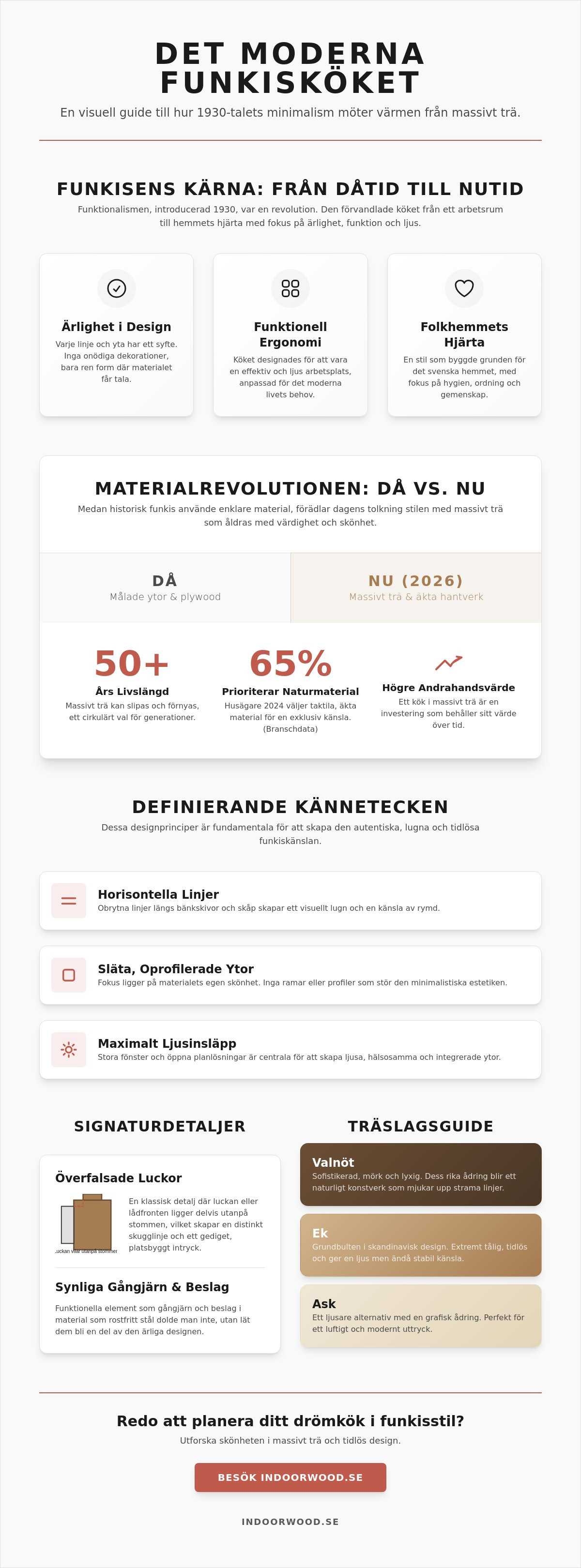
The year 1930 marks a turning point in Swedish architectural history. Through the Stockholm Exhibition, functionalism, or "funkis," was introduced as a radical reaction against the heavy and ornate ideals of the late 19th century. At its core, a functionalist kitchen is about honesty. It is a design philosophy where every line has a purpose and every surface has a practical function. During this era, the kitchen transformed from a dark, secluded workspace into a bright and efficient place for modern life. This is where the foundation for the Swedish welfare state was laid, with a focus on hygiene, ergonomics, and order.
The core of the design is built on geometric shapes and smooth surfaces. Instead of concealing functional elements, they were highlighted. For those planning a kitchen for 2026, functionalism offers the perfect base. It is restrained enough to feel modern, yet thoughtful enough to never go out of style. By stripping away unnecessary frills, a space is created where the quality of materials takes center stage. It is a sustainable approach to interior design that aligns well with today's demands for longevity and natural materials.
The most important characteristics of functionalist design
Horizontal lines are fundamental to creating the calm that characterizes the style. By allowing countertops and cabinet lines to run uninterrupted, a visual spaciousness is created that makes the room feel larger. In a classic functionalist kitchen, profiled doors are conspicuously absent. The focus is instead on the material's inherent character and tactility. Light incidence is another critical factor; large windows and open spaces were part of the 1930s' quest for better public health. Today, we translate this into an open plan where the kitchen is seamlessly integrated with the rest of the home.
The difference between retro and modern functionalism
It's easy to confuse the terms, but the difference is significant. Retro design often involves looking back and recreating specific details from the 1950s or 60s, such as swan-neck handles or pastel-colored doors. Modern functionalism in 2026, on the other hand, takes the principles of functionalism and applies them to contemporary needs and exclusive material choices.
By using solid wood instead of the simpler materials of the past, we raise the bar for what a kitchen can be. We avoid creating a museum feel by combining the strict, historical lines with rich textures from walnut and oak. It's about finding a balance. While early functionalism could sometimes feel sterile, the modern wooden kitchen adds an organic warmth that makes the room inviting without losing its architectural sharpness.
Material choices for functionalist kitchens: Why natural wood wins
Historically, the style is often associated with painted surfaces in mild colors, but for the modern home in 2026, wood takes center stage. A functionalist kitchen in solid wood is not just an aesthetic choice; it is a statement for lasting quality. While functionalism of the past sometimes relied on simpler materials to reach the masses, today we choose to refine the heritage with materials that age with a unique patina. According to industry data from 2024, kitchens made of natural materials have a significantly higher resale value than laminate kitchens, thanks to their ability to be renovated instead of replaced.
The durability of solid wood is unparalleled. It is the most circular choice you can make for your home. A solid oak door can be sanded and refinished multiple times during its lifetime, providing a lifespan of over 50 years. In a kitchen where the design is stripped down, the precision of the joinery becomes crucial. Without profiles or embellishments to hide joints, millimeter accuracy is required. This is where craftsmanship is truly tested. The combination of wood and metal, especially stainless steel details, creates a professional feel that perfectly matches functionalism's industrial roots. If you are looking for inspiration for your project, you can explore our walnut and oak wooden kitchens to see how these materials interact.
Walnut – The ultimate elegance in a functionalist kitchen
The dark, chocolate-brown tones of walnut provide a sophisticated contrast to the often strict and geometric forms of functionalism. It is a wood species that exudes calm and luxury at the same time. In a minimalist home, the rich grain of walnut acts as a natural work of art that softens the straight lines. To truly emphasize the depth of the wood, lighting is critical. By using warm directional light with a color rendering index (CRI) of over 90, you can bring out the subtle shifts in the wood that might otherwise be lost in a dark corner.
Oak and ash – Light woods for a Scandinavian feel
Oak is the cornerstone of Scandinavian design, known for its extreme durability and timeless beauty. An oak kitchen in functionalist style feels light and airy, while also having a weight and stability that can be felt under the fingers. Ash is an interesting alternative for those who want an even lighter expression. Ash's grain is more graphic and distinct, which enhances the kitchen's linear play and creates a dynamic surface. The choice between these often depends on the room's natural light; oak provides a warmer and more golden tone, while ash leans towards a cooler and more modern feel.
Design attributes that define the functionalist kitchen
What makes a functionalist kitchen immediately recognizable is the architectural honesty in every detail. In the 1930s, the goal was to create order through geometry, and this resulted in specific attributes that we today value for their timeless aesthetic. The most characteristic detail is the lipped door. Unlike modern doors that cover the entire cabinet frame, the lipped door rests partly on and partly within the frame. This creates a subtle depth and a relief effect that gives the kitchen a three-dimensional feel without adding unnecessary decoration.
Another supporting pillar of the design is the visible hinges. In a world where we often try to conceal technology, functionalism chooses to celebrate it. Pillar hinges in stainless steel or nickel-plated finishes become like jewelry against the warm surface of the wood. They are not only beautiful; they are a guarantee of stability and durability. Together with the visible frame around the doors, a grid of lines is created that frames the joinery and emphasizes the precision of the craftsmanship. It is a balancing act where every millimeter counts for the final result to feel harmonious.
When it comes to fittings, we see an exciting development leading up to 2026. The classic "swan-neck handles" in chrome remain as a historical reference, but we see a growing interest in more minimalist knobs in brushed metal or integrated grip rails. The choice of handle can completely change the kitchen's expression; a simple brass knob against dark walnut immediately elevates the feel from a practical working kitchen to an exclusive piece of furniture.
Door profile and execution
Completely smooth doors are the hallmark of functionalism. Since there are no profiles to distract the eye, extremely high demands are placed on the quality of the wood and the direction of the grain. Each door must be carefully selected to create a uniform front. For those who want to add a personal touch to their home, wooden kitchens with custom stains are an excellent way to combine classic forms with a unique color tone. This allows you to control exactly how much of the wood's natural structure shines through, creating a seamless transition between the kitchen and other furnishings.
Functional details as decoration
In a true functionalist kitchen, decoration is never superficial; it arises from function. Open shelves in solid wood are a perfect example. They break up large cabinet surfaces and provide space for beautiful everyday objects, while contributing to a lighter atmosphere. To maintain the clean lines, we now often integrate appliances behind wooden fronts, allowing the natural beauty of the material to speak without interruption. The choice of countertop also plays a crucial role. While stainless steel is the historically correct choice for functionality, we see that natural stone such as quartzite or granite provides a modern weight that perfectly complements the organic warmth of the wood.
5 examples of modern functionalist kitchens in wood
Choosing a functionalist kitchen means embracing an aesthetic where the inherent beauty of the material speaks louder than decorations. To succeed with the style in 2026, it's about seeing the kitchen as an integral part of the house's architecture rather than a separate module. By using different wood species and finishes, we can completely change the room's character, from industrial coolness to organic warmth. Here are five concrete ways to interpret functionalism with modern wood materials.
Example 1: The dark walnut kitchen with stainless steel details
In this luxurious interpretation, the deep, chocolate-brown tones of walnut meet the industrial sharpness of stainless steel. It's a combination that exudes both 1930s charm and futuristic appeal. By using a full stainless steel sink against the smooth walnut doors, a workspace is created that is as practical as it is beautiful. To maintain the pure expression, we recommend minimalist knobs in brushed steel that subtly complement the rich grain of the wood.
Example 2: Light ash in a classic functionalist home
For those who want to carefully renovate an original home from the 1940s, light ash is the perfect choice. By allowing the wood grain to run horizontally across the cabinet fronts, a narrow kitchen can be visually widened. The cool tone of ash works excellently with period details such as functionalist brass vents and opal glass globe lamps. This creates an environment that feels authentic yet completely modern in its functionality.
Example 3: Functionalism meets Shaker – A hybrid for the modern home
In 2026, we see a clear trend where we combine the absolute smoothness of functionalism with the characteristic framework of a Shaker kitchen. By placing a completely smooth door within an overlay frame, a kitchen is created that feels both rustic and architectural at the same time. It is a style that is perfectly suited for newly built houses where one wants to add a sense of history and craftsmanship without it becoming too cumbersome.
Example 4: Oak with vertical grain in an open plan layout
In modern homes where the kitchen and living room merge, a design that doesn't scream "kitchen" is required. By using solid oak with vertical grain, a furniture-like feel is created that extends the room's lines. The vertical grain contributes to a sense of ceiling height and elegance. Here, hidden integrations for appliances become crucial to maintain the undisturbed surface.
Example 5: Monochrome functionalism with stained wood
Choosing a kitchen with a custom stain allows for a monochrome color scheme where the wood structure is still visible. By staining oak or ash in a dark gray or warm beige tone, you get a surface that feels velvety and sophisticated. It is an effective way to create a personalized functionalist kitchen that perfectly harmonizes with wall colors and flooring materials.
Regardless of the path you choose, the quality of the material is the foundation for the final result. If you want to see how these wood species can transform your home, you can explore our options for custom-made wooden kitchens directly from the joinery.
Plan your functionalist kitchen with Indoor Wood
Realizing the dream of a genuine functionalist kitchen requires more than just a drawing; it requires a deep understanding of the material and the room's unique conditions. At Indoor Wood, we base our philosophy on craftsmanship without unnecessary intermediaries. By owning the entire chain from carefully selected raw material to finished joinery, we can guarantee a quality that mass-produced alternatives can never achieve. It's about absolute precision in every joint and a deep respect for the living wood that permeates our entire work process.
Every home has its own architectural challenges and specific measurements. Since functionalism is about optimizing every square meter for people, we offer completely custom-made solutions. We adapt cabinet depths, door placement, and the characteristic lipped details to your room's specific geometry. The process of designing a wooden kitchen with us is a creative journey where your vision meets our technical expertise. We always encourage a visit to our showrooms. There you can experience the texture of the materials and see how the light falls on the different wood species in reality.
Why choose a handcrafted wooden kitchen?
The difference between a mass-produced kitchen and a handcrafted solid wood kitchen is immediately noticeable upon the first touch. Where modular kitchens often rely on materials with limited lifespan, we work with raw materials intended to last for 50 years or more. A solid walnut or oak door has a natural weight and acoustic dampening that creates a noticeable calm in the room. Craftsmanship also gives you the freedom to influence every single detail, from the direction of the grain to the exact shade of the surface treatment. It is a long-term investment; a functionalist wooden kitchen ages with a beautiful patina that only becomes more characterful with each passing year.
Book a personal consultation
The path to the perfect kitchen often begins with a professional dialogue. Our experts will help you navigate between different design choices and optimize your kitchen planning based on both aesthetics and modern ergonomics. To prepare for your visit or digital meeting, it's good to have simple sketches and thoughts about which functions are most important in your daily life. In our showrooms, you can explore the possibilities with oak kitchens and see how different wood species harmonize with various countertops and fittings. We see ourselves as your advisory partner, from the initial sketches to the finished result in your home.
Invest in a kitchen that lives with you
A functionalist kitchen is more than just an interior design trend; it is an architectural cornerstone that unites the rationality of the 1930s with the demands of 2026 for tactile natural materials. By choosing solid wood such as walnut or oak, you create an environment where function is self-evident and aesthetics are lasting. We have seen how details such as lipped doors and visible hinges give the room character, while the choice of the right wood adds the necessary warmth to the strict lines.
As a family-owned company with a deep passion for hardwood, we deliver craftsmanship directly from the manufacturer. This means you get the highest quality without costly intermediaries, ensuring that your investment reaches its full potential. Every project is treated with personal commitment and technical precision. Feel free to visit our showrooms to experience the unique texture of the materials and receive personalized service for your next big step in your home.
Discover our timeless wooden kitchens and book a consultation with Indoor Wood
Let your kitchen become a place where sustainability and beauty meet every day for many decades to come.
Frequently asked questions about functionalist kitchens
What is typical of a functionalist kitchen?
The core of a functionalist kitchen is the geometric order and the architectural grid created by the visible frames. Unlike other styles where the doors cover the entire front, the lipped doors rest partly on the frame. This emphasizes the precision of the craftsmanship and creates an honest design where the construction becomes part of the aesthetic expression.
Can you have a functionalist kitchen in a new-built house?
It is perfectly possible to integrate functionalist design into modern new constructions, especially in houses with large light inlets and open spaces. The style serves as a bridge between contemporary minimalism and classic craftsmanship. It gives a new home a soulful anchoring that is often missing in standardized interior choices.
Which wood species is best suited for functionalist style?
The choice of wood species determines the kitchen's ultimate atmosphere and how it interacts with the room's natural light. Walnut is the primary choice for creating a warm and sophisticated contrast, while oak and ash enhance the Scandinavian spaciousness. Ash's graphic grain is particularly effective in emphasizing the horizontal lines in the design.
What does a custom-made solid wood functionalist kitchen cost?
Since each kitchen is customized to unique dimensions and specific material choices, the total investment for the project varies. Because we at Indoor Wood deliver directly from the manufacturer, you gain access to exclusive materials and craftsmanship without unnecessary intermediaries. We recommend a personal consultation to develop a proposal based on your drawings.
How do you care for a walnut or oak kitchen?
Solid wood is a living material that becomes more beautiful over time if properly cared for. Daily cleaning is best done with a well-wrung cloth and a mild detergent to preserve the surface's luster. To maintain the deep protection, surfaces should be treated with hard wax oil every 24 to 36 months, depending on wear.
Which handles should you choose for a functionalist kitchen?
The choice of fittings acts as the kitchen's jewelry and should harmonize with other metals in the room. Nickel-plated "snabelhandtag" (snout handles) provide a historical connection, while minimalist knobs in brushed steel evoke a more modern feel. The important thing is that the handles emphasize the smooth surface of the door without dominating the visual impression.
Are rebated doors harder to clean than smooth doors?
No, the small rebate on the door is designed to seal tightly against the cabinet frame, which can actually act as a barrier to dust entering the cabinets. The construction is robust and lacks complex profiles where dirt can get stuck. A simple wipe along the edges is enough to maintain the kitchen's clean appearance.
Can I combine functionalism with wooden acoustic panels?
Integrating acoustic panels in the same wood type as the kitchen interior is an effective way to create acoustic and visual harmony. It softens the sound environment in rooms with hard materials such as stone and stainless steel. By matching the panels in walnut or oak, a seamless transition is created between the kitchen and the home's other social areas.