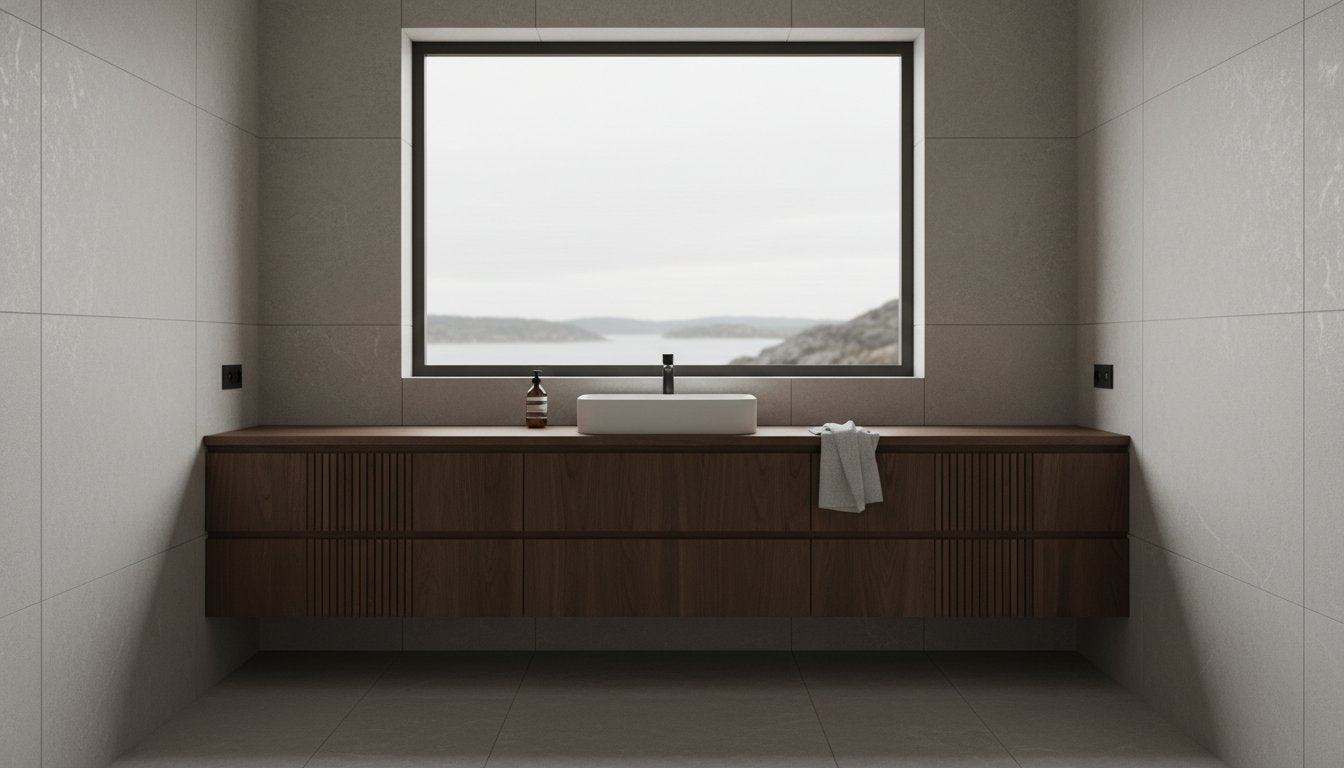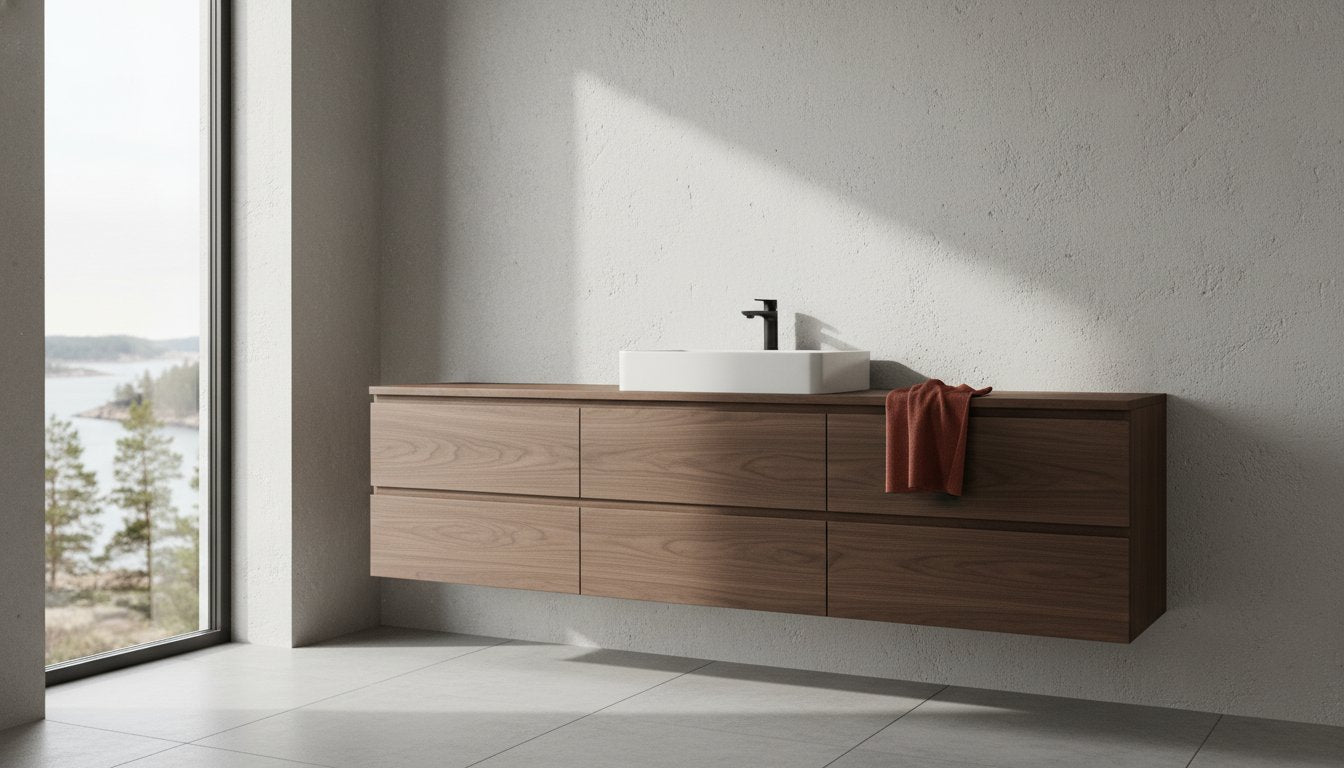
Advantages of wooden bathroom furniture: A guide to sustainable luxury 2026
With the new industry regulations "Safe Wet Rooms 2026", it is actually safer than ever to choose solid wood for your bathroom, despite the common concerns about moisture and wear. There are significant benefits of wooden bathroom furniture that extend far beyond the purely visual, especially now that stricter documentation requirements and improved moisture protection have become standard. In 2026, we will see the bathroom definitely leaving behind its sterile, cold feeling to become a warm, tactile oasis for recuperation, where materials like solid walnut and oak take centre stage.
We know that many people dream of that serene spa feeling but hesitate due to the risk of the wood warping or accidentally buying a cheap imitation. We understand that uncertainty and want to show why solid wood is the ultimate choice for a timeless and sustainable home. In this guide, you will learn how to navigate different types of wood and how the latest industry changes make wood a safer investment than ever. We delve into the art of choosing genuine craftsmanship that not only withstands the stresses of everyday life but actually becomes more beautiful with each passing year.
Key Takeaways
- Learn how natural materials create a harmonious spa feeling by contrasting with the hard surfaces of stone and tiles in the bathroom.
- Discover all the benefits of wooden bathroom furniture and why dense woods like oak and walnut are naturally equipped for humid environments.
- Understand the crucial difference between solid wood and MDF to avoid swelling damage and ensure furniture that ages beautifully.
- Get practical tips on how to strategically plan placement and material choices to maximize the lifespan and aesthetics of your wooden furniture.
- Gain insight into how genuine craftsmanship and the right choice of walnut, oak, or ash materials transform the bathroom into a long-term investment.
Why choose wooden bathroom furniture? The natural spa feeling
There is a special kind of serenity that sets in when you step into a room where nature has been allowed to take its place. In the bathroom, which is often dominated by cold surfaces such as marble, ceramics, and glass, wood acts as a visual and spiritual anchor. One of the primary benefits of wooden bathroom furniture is its ability to break up the hard materials and create a softer balance. It's about transforming a strictly functional space into a private spa oasis where the soul can find peace.
Biophilic design is not just an aesthetic trend for 2026; it's a method for enhancing well-being in the home. When surrounded by natural materials, our stress levels physiologically decrease. Tactility plays a crucial role here. Letting your hand glide over a warm, oiled surface of solid walnut provides a completely different sensory experience than the dull contact with cold plastic or metal. Wood naturally stores heat. This makes the furniture inviting even on chilly mornings. For those seeking technical insights into optimizing material properties, interesting reading is available on treated wood for moisture resistance, which highlights the innovations that make wood so durable in today's modern wet rooms.
Wood has long been a fundamental element in Scandinavian design tradition, but this year we see it taking an even more central role. It is a material that exudes quality and honesty. By choosing solid materials instead of composites, one creates an environment that feels genuine and down-to-earth.
Timeless aesthetics that never go out of style
Every tree has its own unique story, and this is directly reflected in the grain of the furniture. This means that your walnut bathroom vanity is a piece of natural art that no one else owns. In 2026, we see a clear return to darker and richer wood types. Walnut is experiencing a renaissance due to its ability to add depth and exclusivity without feeling heavy. It is a material that ages with dignity and develops a beautiful patina, whether your style is strictly minimalist or classically cozy.
Acoustics and atmosphere in the bathroom
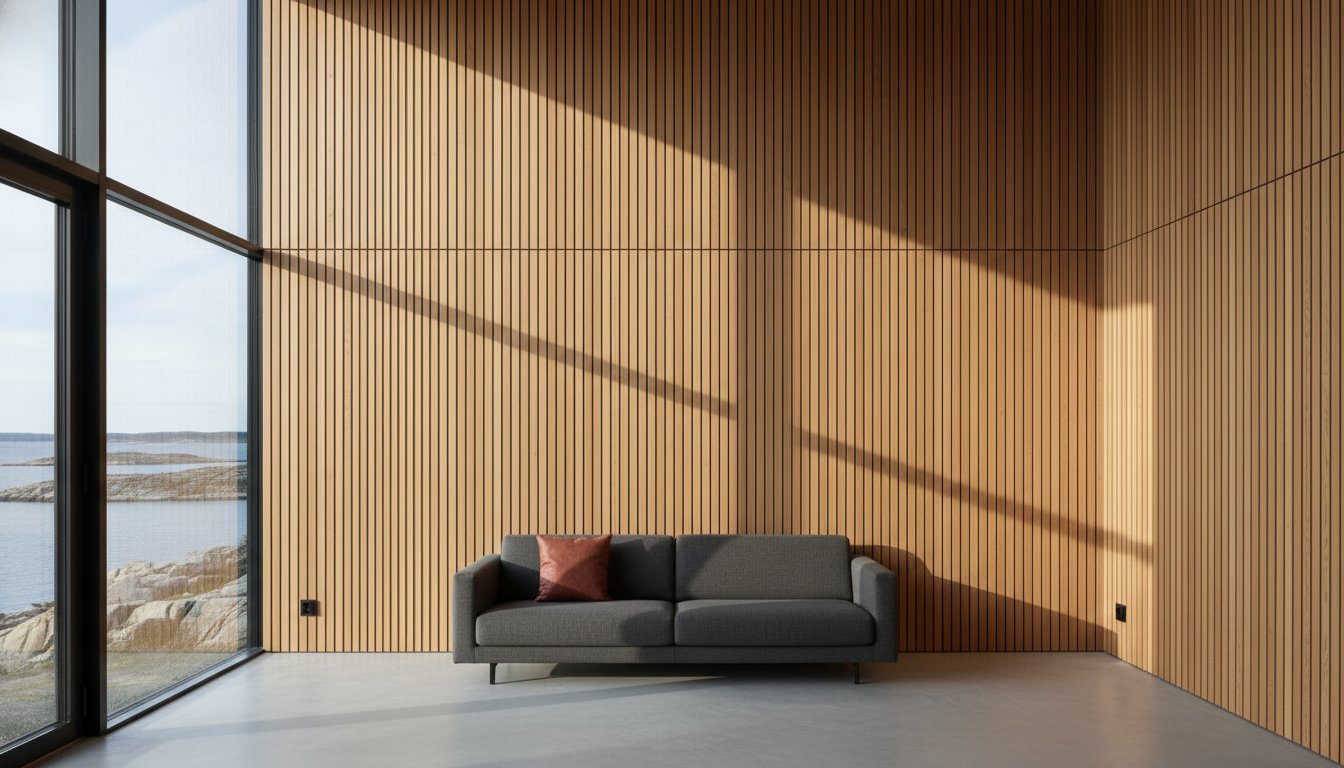
A common problem in large bathrooms is the harsh acoustics where sound bounces off tiled walls. Wood has porous properties that naturally absorb sound waves and reduce echo. By integrating an acoustic panel in walnut or oak, you can dramatically improve the sound environment. This creates a subdued, harmonious atmosphere where the first moments of the morning get the calm setting they deserve. It's about building a room for all senses.
Durability and moisture resistance: Myths vs Reality
Many harbor an old fear that wood in the bathroom inevitably leads to rot or that the furniture will warp. This is a myth. Often, it stems from bad experiences with cheap materials such as veneered particle board or MDF with inadequate edge sealing. The truth is that the benefits of wooden bathroom furniture are most tangible when we talk about high-quality solid materials. The new industry regulations "Safe Wet Rooms 2026" mean that the entire floor surface is now classified as wet zone 1. This places extremely high demands on the bathroom's basic waterproofing layer. This, in turn, creates a significantly safer environment for exclusive wooden furniture than before.
The science behind wood's moisture properties shows that it is about dimensional stability and how the fibers interact with the environment. By using hard, dense types of wood and meticulous surface treatment, we create a barrier that effectively resists water splashes. A hard wax oil penetrates deep into the wood and saturates the pores without creating a dense plastic film. This allows the wood to move naturally without the surface cracking or flaking. This balance between protection and movement is absolutely crucial for the furniture's lifespan in a climate that alternates between humidity and dryness.
Walnut, oak and ash – Nature's own protection
Walnut is known for its exceptional density and minimal moisture movement. This makes the material one of the most stable choices for demanding environments. Oak, on the other hand, contains natural tannins that provide built-in protection against microorganisms. This explains why oak has been the first choice for craftsmen for generations. Ash is a fantastic option for those seeking a lighter tone without compromising on hardness. Investing in a walnut bathroom vanity or oak is therefore not just an aesthetic decision, it is an investment in biological resistance.
Patina – When furniture gets more beautiful with age
There is a fundamental difference between materials that wear out and materials that age. When a piece of furniture made of laminate or plastic gets a scratch, the damage is permanent. This often leads to moisture penetrating below the surface and causing swelling. Solid wood, however, develops a patina that gives the room soul. Small marks and natural color shifts become part of the furniture's unique expression. If after a decade you want to restore the surface to new condition, a light hand sanding and a new coat of oil are often enough. This unique reparability creates lasting value that plastic-based alternatives can never match.
Solid wood vs MDF: Why material choice decides everything
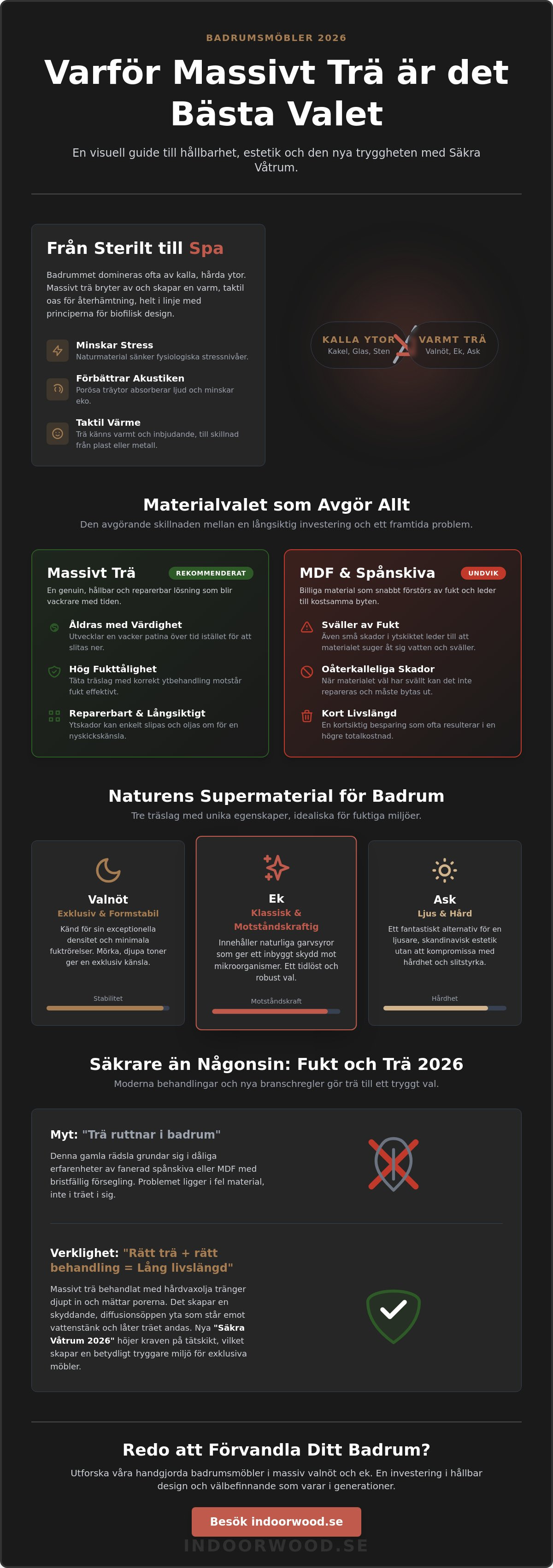
The choice between solid wood and MDF is about much more than just aesthetics. It is a choice between a living, sustainable material and an industrial composition of glue and wood dust. One of the most crucial benefits of wooden bathroom furniture is the material's inherent structure. Solid wood consists of whole lamellas that work together. MDF, or Medium Density Fibreboard, is in practice a sponge of compressed fibers. This fundamental difference in construction determines how your furniture will look and function in five, ten, or twenty years.
When moisture penetrates an MDF core through a small crack in the lacquer, an irreversible process begins. The fibers absorb moisture, and the board begins to swell. Because the material is chemically bonded, it can never return to its original form. This leads to the surface layer cracking and the furniture losing its function. In a detailed comparison of Solid wood vs MDF in the bathroom, it is clear how solid wood handles moisture through natural expansion and contraction without its structure breaking down. It is this biological intelligence that allows wooden furniture to be renovated and restored an infinite number of times, unlike board materials that must be discarded if damaged.
The environmental aspect is another weighty factor in 2026. Solid wood is a renewable raw material that binds carbon dioxide throughout its lifespan. It does not require harmful glues or chemical binders to the same extent as fiberboards. Choosing genuine wood is an active stand for a non-toxic and circular home environment.
Investment versus cost
It is easy to be tempted by the lower purchase cost of MDF furniture, but the calculation looks different over time. Cheaper furniture that needs to be replaced after seven years ultimately becomes a much more expensive affair than a solid investment. The lifespan of a walnut bathroom vanity is measured in decades, not years. By choosing the highest quality from the start, you reduce both your climate impact and your long-term costs. This is the essence of sustainable luxury.
Craftsmanship in the details
The difference in quality becomes most noticeable when you interact with the furniture in everyday life. Solid wood allows for a precision in craftsmanship that board materials can never achieve. It's about the small but ever so important details:
- Joints and corners are executed with natural transitions without unsightly edge bands that risk detaching.
- Solid wood drawers have a weight and acoustics that convey a genuine sense of quality with every opening.
- Custom-made solutions can be adapted with millimeter precision directly in the raw material, giving a built-in and exclusive impression.
Feeling the scent of real oak or walnut when you open your vanity cabinet in the morning is a reminder that you have chosen a material with soul. It is a sensory confirmation that the craftsmanship is carried out with respect for both the raw material and your home.
Plan your bathroom with wood: Tips for a successful result
Integrating natural materials in a wet room requires a well-thought-out strategy to ensure that aesthetic values endure over time. By planning placement and combining materials correctly, all the benefits of wooden bathroom furniture can be maximized without compromising functionality. Although modern moisture protection according to 2026 industry standards provides a safer foundation, wooden furniture should be placed where it is not exposed to direct water from showers or bathtubs. The goal is to create zones in the room where the wood can breathe and serve as a central focal point.
The choice of countertop is crucial for both protection and style. Combining a solid oak or walnut vanity with a natural stone or ceramic top creates a beautiful contrast while providing a completely waterproof surface around the sink. Lighting also plays a fundamental role. By using warm lighting with a high color rendering index, the wood's natural structure and depth are highlighted, enhancing the peaceful atmosphere during your morning and evening routines. Choosing a supplier with deep knowledge of how different types of wood react to humidity is the most important step for a secure investment.
Color scheme and material encounters
When you decorate with wood, exciting encounters between different textures are created. The deep tones of walnut marry magnificently with warm metals like brass and copper, evoking a sense of classic luxury. For a more Scandinavian feel, light oak works excellent against dark natural stone or matte, earthy tiles. Many people today choose to let the solid wood in the bathroom run as a common thread through the rest of the home, from the kitchen to the living room, to create a cohesive and harmonious overall feeling.
Simple care instructions for the bathroom
No advanced science is required to keep your wooden furniture in top condition. The simplest and most effective protection is daily wiping. Make sure to wipe away water splashes immediately so that moisture does not remain on the surface. To maintain the wood's luster and resistance, you should re-oil the furniture when the surface starts to feel dry or dull, which is usually sufficient to do once a year. Avoid strong cleaning agents with bleach or acids. A mild soap solution is all that is needed to clean without damaging the wood's natural protective barrier.
Would you like to explore how our craftsmen can help you realize your vision? See our exclusive selection of solid wood bathroom furniture and find inspiration for your next project.
Indoor Wood: Bathroom furniture created with passion
Behind every piece of furniture at Indoor Wood lies a deep respect for craftsmanship and an uncompromising attitude towards beauty. We have chosen to work directly with carefully selected manufacturers, which allows us to guarantee the highest quality in every detail. By cutting out unnecessary intermediaries, we can offer exclusive materials at a price that reflects the furniture's actual craftsmanship value. When we talk about the benefits of wooden bathroom furniture, we refer to the kind of quality that can be felt at your fingertips when touching a surface of solid walnut or oak.
Our expertise lies in noble woods. We specialize in walnut, oak, and ash, materials that require both technical knowledge and aesthetic sensibility to truly shine in a wet room. For the discerning customer, we don't just offer standard sizes. We know that every bathroom has its unique conditions and challenges. Therefore, the option for custom-made solutions is a natural part of our offering, where we adapt vanity cabinets and tall cabinets to your specific needs. One of the great benefits of wooden bathroom furniture from a specialist is precisely this flexibility combined with the material's longevity.
The journey from our showrooms to your home is a secure and personal experience. As a family business, we value long-term relationships and handle every assignment with personal commitment. It is a reassurance for you as a customer to know that we stand behind every fiber in the furniture we deliver, from the initial selection of raw materials to the finished product in your bathroom.
Why choose a vanity from Indoor Wood?
Our focus is on sustainable forestry and the use of genuine fine wood. It's about creating furniture that is not only beautiful to look at but also ethically produced. We combine functional storage with a timeless design that endures through changing trends. Before your purchase, we offer personal advice to ensure you choose the right wood type and surface treatment for your specific environment. We act as your advising partner to transform your vision into reality.
Create a complete solution with wood
To create a truly harmonious home environment, you can advantageously let the bathroom speak the same language as the rest of your home. By matching the bathroom with a wooden kitchen in walnut or oak, you create a visual continuity that exudes exclusivity and tranquility. Also explore our range of tall cabinets in solid walnut and other accessories to build a complete solution. We invite you to visit our showrooms to experience the weight, scent, and unique character of the materials in person. It is only through physical contact that one fully understands the difference between a solid wood furniture piece and an industrial imitation.
Create your dream bathroom with nature's finest materials
Choosing solid wood for the bathroom is a decision that combines timeless aesthetics with long-term sustainability. We have seen how materials like walnut, oak, and ash not only withstand humid environments but actually contribute to lower stress levels through their warm, natural presence. The main benefits of wooden bathroom furniture lie in the material's unique ability to age with dignity and its fantastic reparability. These are qualities that industrial board materials or plastic-based alternatives can never match over time.
By working directly with manufacturers without intermediaries, we at Indoor Wood can offer the highest quality hardwoods, crafted to last for generations. Whether you are looking for a bespoke solution or want to be inspired by our ready-made collections, our craftsmanship and passion are at your service. Feel free to visit our showrooms in Stockholm or Gothenburg to truly experience the weight and texture of our furniture. Explore our exclusive solid walnut bathroom vanity units and let us help you transform your bathroom into a personal oasis where every detail exudes quality and care.
Common Questions About Wooden Bathroom Furniture
Can wood really withstand the humidity in a bathroom?
Yes, high-quality solid wood tolerates humidity excellently thanks to modern ventilation and the right surface treatment. By saturating the wood's pores with a high-quality hard wax oil, a natural barrier is created that prevents water from penetrating the fibers. However, it is important that the bathroom complies with current industry regulations for ventilation so that moisture can be effectively removed after showering and bathing.
Which type of wood is best for bathroom furniture?
Walnut and oak are the most optimal choices for wet rooms due to their high density and natural resistance to movement. Walnut's exceptional stability makes it particularly suitable for environments with fluctuating humidity, while oak's natural tannin content provides built-in protection. Ash is also a very good option thanks to its hardness and beautiful, light character.
How often do I need to oil my wooden bathroom furniture?
As a rule of thumb, you should oil your furniture once a year or when the surface starts to feel rough and dull. Regular maintenance is one of the most important benefits of wooden bathroom furniture as it preserves both the aesthetic appeal and the protective barrier. By spending a few minutes on maintenance, you ensure that the furniture ages beautifully and maintains its resilience for decades.
Can I have a wooden countertop by the sink?
It is perfectly fine to have a wooden countertop, but it requires more frequent daily wiping of water splashes. For a more carefree everyday life, many of our customers choose to combine a solid wood vanity unit with a countertop in natural stone or ceramic. This creates a beautiful material contrast while making the most exposed surfaces around the sink completely maintenance-free.
Is solid wood bathroom furniture more expensive than other options?
The investment cost for solid wood is higher than for furniture made of MDF or particle board, but its lifespan makes it a more economical choice over time. A solid wood piece of furniture rarely needs to be replaced; it can be sanded and re-oiled to look like new again. This creates lasting value for your home that industrially manufactured furniture in simpler materials can never match.
How do I best clean a walnut vanity unit?
Use a soft, slightly damp cloth with a mild soap solution to gently clean your walnut vanity unit. It is important to avoid strong chemicals, bleach, or scouring pads that can scratch the wood or dissolve the protective oil. After cleaning, you should always wipe the surface dry with a clean cloth to prevent moisture from remaining.
Is it possible to combine wooden furniture with underfloor heating in the bathroom?
Yes, it is perfectly fine to combine wooden furniture with underfloor heating as long as the furniture is made of a dimensionally stable material such as solid walnut or oak. However, it is important that the bathroom has a stable temperature and that the underfloor heating is regulated in a way that avoids sudden and drastic temperature changes. A stable environment is key for the wood to stay in good condition and maintain its shape over the years.
What is the difference between wood veneer and solid wood?
Solid wood consists of solid pieces throughout the entire construction, while wood veneer is only a thin surface layer glued to a core of MDF or particle board. Solid wood offers unique benefits for wooden bathroom furniture as it can be sanded countless times if damaged. Veneer, on the other hand, is very sensitive to moisture, which can penetrate behind the surface layer and cause swelling that cannot be repaired.